| Dates | 19 October to 2 November 2026 |
| Tour organiser | Greentours |
| Tour coordinator | Marie-Christine de Laubarède |
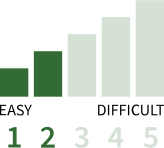
| Difficulty rating | 2/3 |
| Max. participants | 25 |
Send to: Marie-Christine de Laubarède
Send to: Marie-Christine de Laubarède
Send to: Marie-Christine de Laubarède
Illinois is where the wonderful Eastern Broadleaf Forests of the Atlantic half of North America meet the wide-open prairie lands.
Our journey takes us from Chicago on the shores of mighty Lake Michigan southwards with ever-increasing species richness to the Shawnee National Forest, the most heavily forested part of the state.
The fabulous autumn colours are legendary, and our tour is designed to follow their peak southwards through the state. Illinois is blessed with two of America’s finest Arboreta: The Morton Arboretum on the fringes of Chicago and the Starhill Forest Arboretum, described by an IDS commentator as ‘the Heart of Oakness’ (with indirect apologies to Conrad).
Illinois’ forests contain over two billion trees comprised of 98 species. Higher well-drained areas covered in diverse forests are dominated by Acer saccharum (Sugar Maple), Fagus americana (American Beech), Tilia americana (American Basswood), and Aesculus glabra (Ohio Buckeye) which are the common species.
Sloping land looks a picture at this season clothed in Quercus alba (White Oak), Quercus velutina (Black Oak), Quercus rubra (Northern Red Oak), Carya ovata (Shagbark Hickory), Carya tomentosa (Mockernut Hickory), and Carya cordiformis (Bitternut Hickory).
Along rivers and streams are floodplain forests where Acer saccharinum (Silver Maple), Fraxinus pennsylvanica (Green Ash), Ulmus americana (American Elm), Ulmus rubra (Slippery Elm), and Populus deltoides (Eastern Cottonwood) are the prominent species, whilst above the waterways’ immediate effects are forests comprising Quercus bicolor (Swamp White Oak), Quercus michauxii (Swamp Chestnut Oak), Carya laciniosa (Shellbark Hickory), and Acer rubrum var. drummondii (Swamp Red Maple).
We will visit atmospheric swamp forests with abundant Taxodium distichum (Swamp cypress) and Nyssa aquatica (Water Tupelo), the Acer rubrum (Red Maple) and Betula alleghaniensis (Yellow Birch) dominated Indiana Dunes National Lakeshore, and see upwards of twenty species of oak, plus plenty of intriguing hybrids.
A feature of this tour will be the considerable number of monumental and champion trees we will see. At the end of the trip, we will visit the exceptional Missouri Botanical Garden, now vying with RBG Kew as the arbiters of all things botanical!
Kris R. Bachtell
Kris is the Vice-President of Collections and Horticulture at the Morton Arboretum in Chicago where he has worked for 43 years. In his graduate years he did a thorough evaluation of Potentilla fruticosa cultivars performance under midwest U.S. conditions. The publication in the American Nurseryman magazine resulted in significant changes to the selections nurseries produced for sale almost immediately. He is passionate about propagation and has travelled extensively in China plant collecting often with Paul Meyer Director of the Morris Arboretum. Lastly, he has worked closely with the late Dr George Ware, Dendrologist at The Morton Arboretum in his work to introduce elms that possess excellent tolerance to Dutch Elm Disease. Over 60,000 Accolade and Triumph elms were sold in the United States in 2024.
Guy Sternberg
A long time life member of IDS, is the co-founder with his wife Edie of Starhill Forest Arboretum, the most comprehensive research Quercus collection in North America and the first institution given ArbNet status worldwide. He was the founding president of the International Oak Society and a leading member of several conservation and arboriculture organizations. Guy serves as adjunct research associate in botany with the Illinois State Museum, adjunct faculty in biology for Illinois College, and a past president and a founding member of the Illinois Native Plant Society (central chapter). His certifications include ISA certified arborist (IL-0669-A), Illinois Tree Farmer 897, and retired Illinois Landscape Architect 157-000197. He has organised and led tree tours throughout the area we will visit and has written several tree reference books including the latest Native Trees of North America.
Ian Green, Greentours
Ian is the co-founder of Greentours and since graduating in Ecology, has led over 180 tours in various fields of natural history, and has organised many, many more. This has taken him to countries all over the world and has fine-tuned his knowledge of all plants and fauna. Ian has led over 10 IDS tours.
Arrive Chicago
Transfer to Hotel Arista, Naperville
We will meet at the Hotel Arista, Naperville, on the western fringes of Chicago.
Welcome dinner.
Morton Arboretum, Lisle, Illinois
Kaneville Tree Farms, Kaneville, Illinois
The Morton Arboretum is vast! Around 1,700 acres in total area. It is divided into many sections. One such, the Schulenberg tallgrass prairie, is justly famous, recreating the native prairie that prior to European settlement, covered 220,000 sq. miles in North America, “from Canada to Texas and Indiana to Nebraska.” Of course, trees are scarce in the prairies. Nevertheless, about 40 species of trees are found in native prairies, though as scattered individuals. We will explore the Oak Collection, and the Arboretum is also home to a fantastic collection of Acers which will be putting on quite a show at this season. In fact, the arboretum has collections of most of the more important tree genera in North America so you will be hard-pressed to decide which ones to visit given the time available – there is a walnut collection, a buckeye collection, a beech collection and on the west side, a birch collection. There is also an elm collection, a linden collection and a European collection.
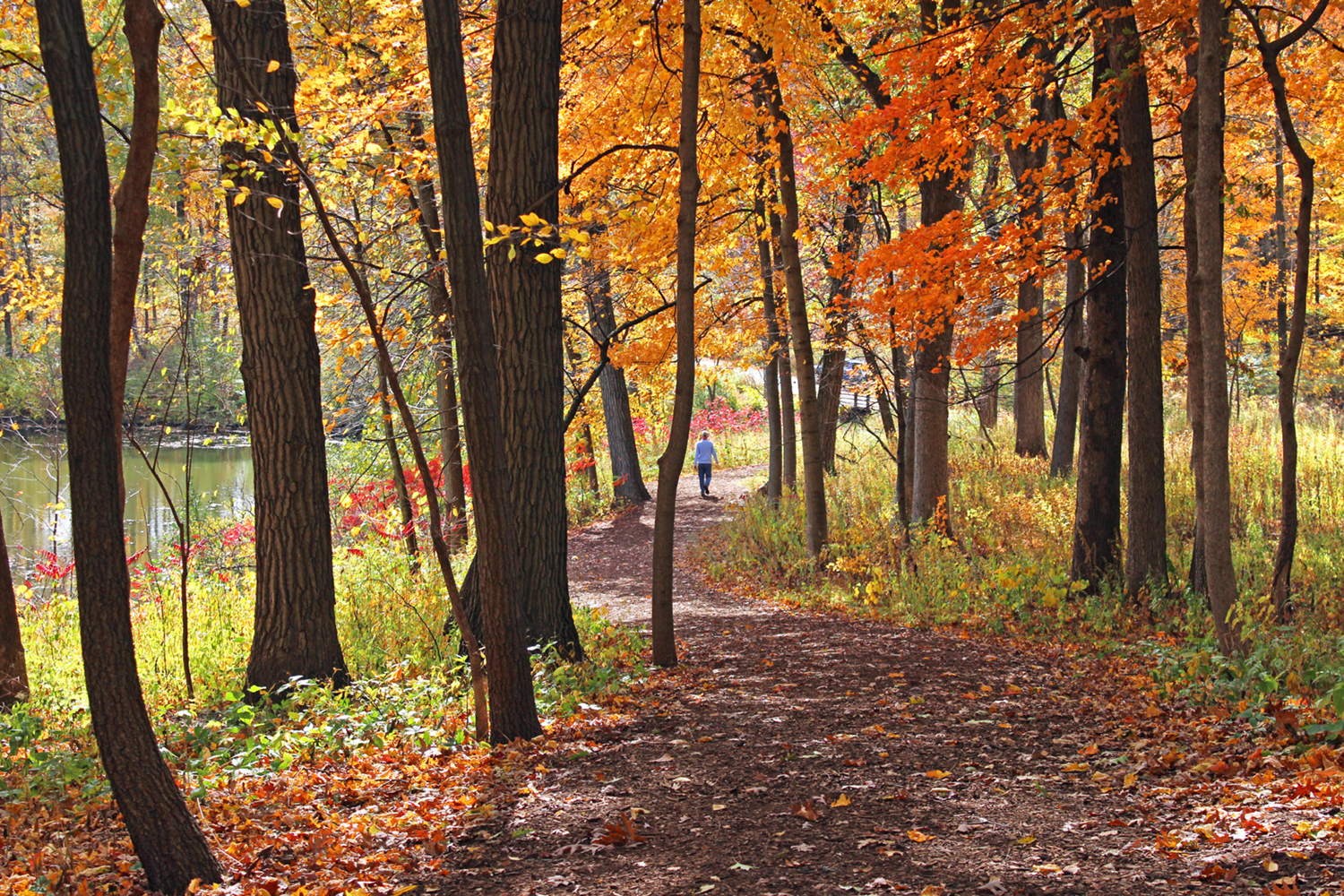
Sterling pond in fall at The Morton Arboretum © The Morton Arboretum
In the afternoon we will have the opportunity to visit a commercial grower at Kaneville Tree Farms, Kaneville. Here they specialize in growing high quality specimen trees from 5" to 12" in trunk diameter. Owned and operated by the Damgaard family since 1975, Kaneville Tree Farms was originally established to supply larger, specimen quality trees for commercial landscape projects.
Overnight: Hotel Arista, Naperville
Starved Rock State Park, Utica, Illinois
We will spend the day amidst the striking and surprising landscapes of Starved Rock State Park. Around 15,000 years ago a catastrophic cataract coursed through the area cutting deeply into the very friable St Peter sandstone resulting the deeply eroded landscape visible today.

View from Illinois River Road © Gary Halvorson, Oregon State Archives
The park is rich in diverse plant life, including white and red oaks, maples, hickories, and a good variety of conifers including Pinus strobus, Thuja occidentalis, Juniperus virginiana, and Tsuga canadensis. There are stands of Acer saccharum, and in some of the canyons Acer saccharinum. Amongst the many tree species we will see along the trails here are Carpinus caroliniana, Tilia americana, Cercis canadensis, Ostrya virginiana, Prunus virginiana and Alnus glutinosa (introduced).
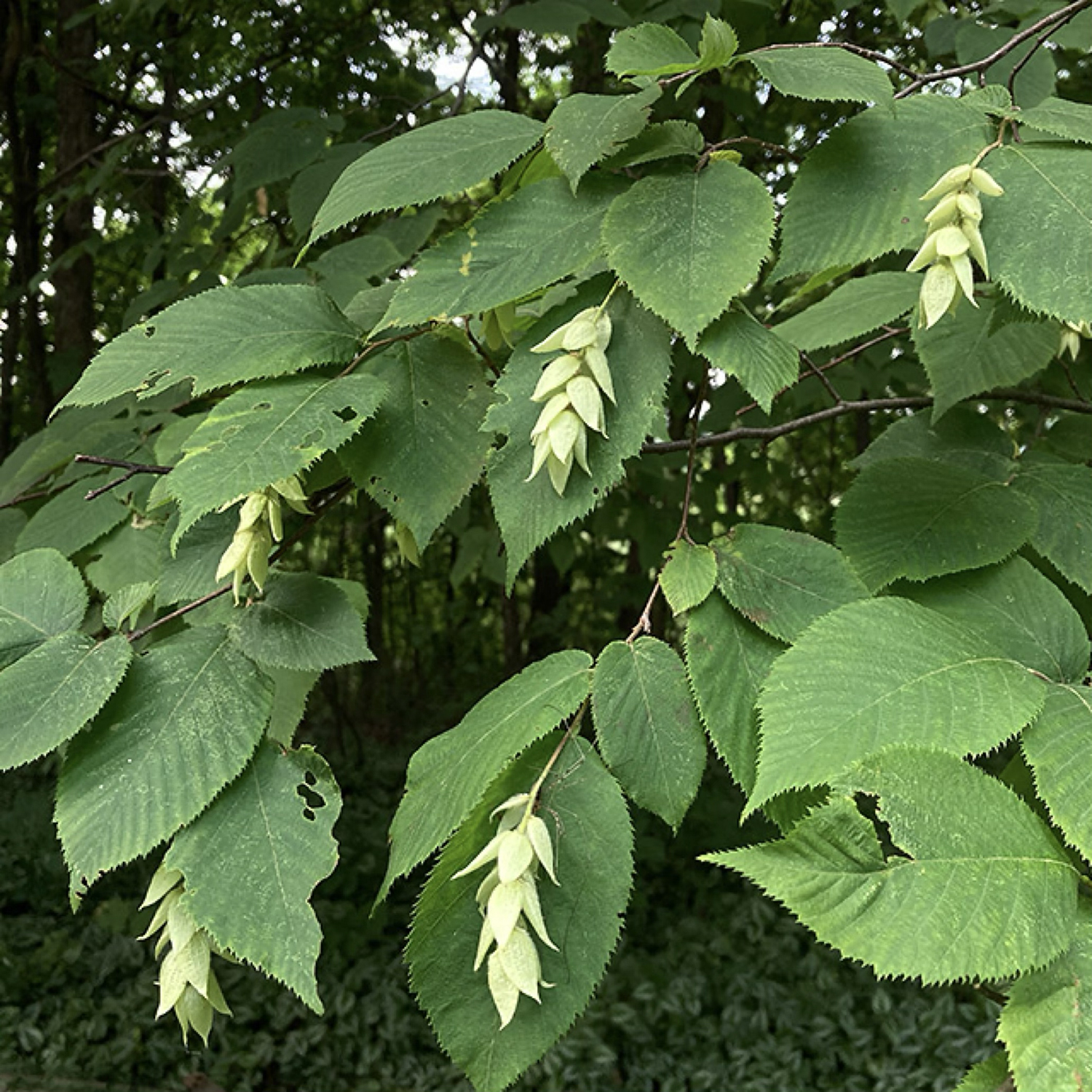
Ostrya virginiana (American hop hornbeam)
The variety of shrubs is even more impressive. We will encounter both Rhus typhina and Rhus glabra, as well as Euonymus atropurpureus which hopefully will still have some of its colourful hanging fruits. We will find Zanthoxylum americanum, Berberis thunbergii (introduced), Diervilla lonicera, Cornus alternifolia, Rhamnus cathartica and Ribes cynosbati. There are also a variety of Viburnums including Viburnum rafinesqueanum, Viburnum prunifolium and Viburnum opulus (introduced).
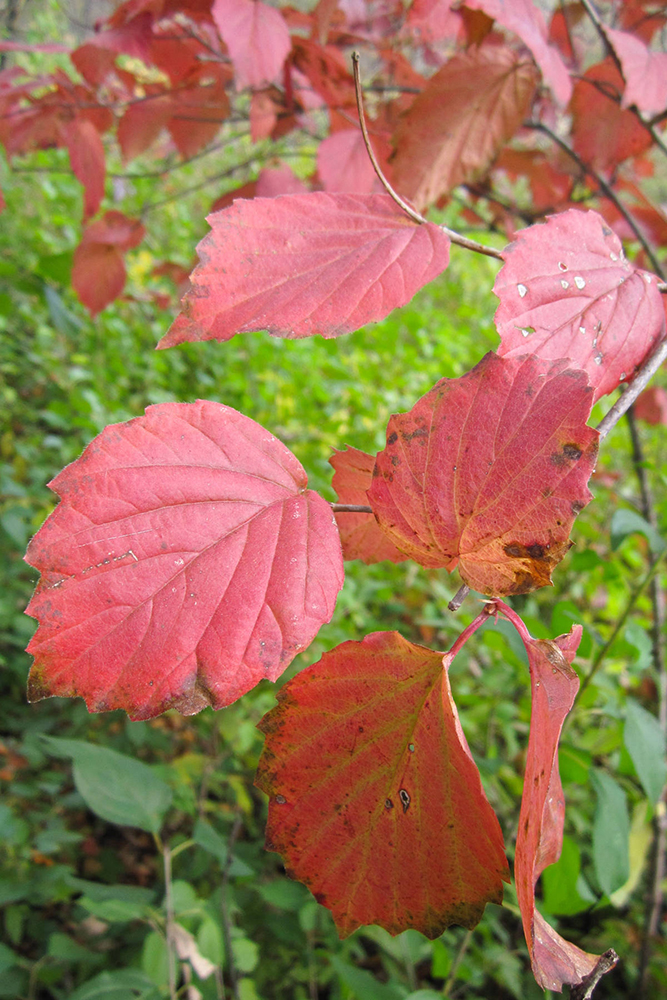
Viburnum rafinesquianum © Pollination Press LLC
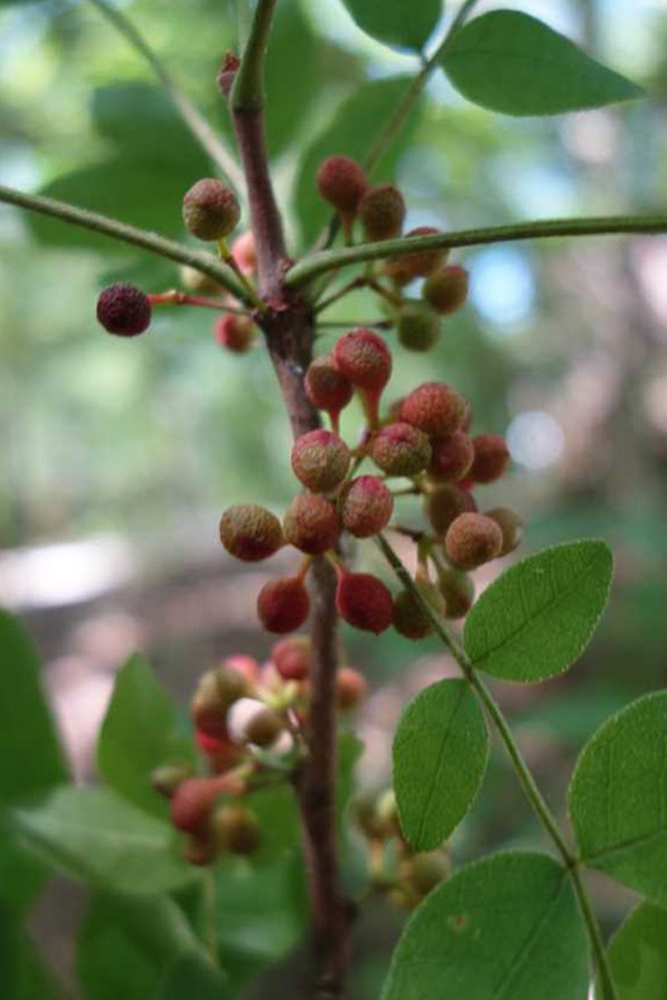
Zanthoxylum americanum © Missouri Botanical Garden
Overnight: Hotel Arista, Naperville
Chicago Botanic Garden, Glencoe, Illinois
Graceland Cemetery, Illinois
We will spend the morning in the Chicago Botanic Garden. The Garden’s permanent plant collections cover 385 acres and currently hold more than 2.8 million living plants. The current permanent Living Collection includes trees, shrubs, vines, hardy perennials, and tropical plants, for a total of more than 14,000 taxa. Though the Chicago Botanic Garden’s woody plant collection is less diverse than Morton it does still have extensive woody collections displayed in an ornamental garden setting, demonstrating landscape possibilities.
In the afternoon we will visit the Graceland Cemetery, the final resting place of many of Chicago’s most eminent citizens. It is also well known for its beautiful trees and has been given the status of Arboretum in recognition of this. We will take a wander through the peaceful aisles visiting some of the most important trees.
Overnight: Hotel Arista, Naperville
Indiana Dunes National Lakeshore, Porter, Indiana
East of Chicago along Lake Michigan’s southern shore is the renowned Indiana Dunes National Lakeshore. We will start in the fens of the inappropriately-named Cowles Bog where Quercus velutina (black oak) woods stand out for their exceptional floristic diversity. The National Park Service maintains the natural status of this area by using regular controlled burns, as was done historically. Fire-tolerant plants are a key component of many Midwestern landscapes. Quercus rubra and Q. velutina are the main oaks here with some Q. alba present as well. Betula alleghaniensis (yellow birch) and Acer rubrum (red maple) are the dominant associated tree species present and are found along the edges of the fen and on scattered islands. There is also a liberal sprinkling of Betula papyrifera (paper birch) and Pinus strobus (white pine) and the combination of autumn colour with the blue waters of Lake Michigan stretching out before us and the Chicago skyline, a hazy image on the far horizon, makes for a sublime scene. Back in the bog are Lindera benzoin (spicebush) and Toxicodendron vernix (poison sumac), along with Hamamelis virginiana (witch hazel), Cornus sericea (red osier) and Rubus (blackberry).

Indiana Dunes National Lakeshore © Christine Livingston, Indiana Dunes Tourism
After lunch we will visit Pinhook Bog. This bog, designated as a National Natural Landmark, is a true bog, not a fen like Cowle’s Bog. This type of bog is typical of regions much farther north in the boreal forest region, but it is the only one of its type in Indiana and very unusual this far south. Many orchids and carnivorous plants grow here though at this season it will be the multitude of colorful pitcher plants, including Sarracenia purpurea (purple pitcher plant), that make a special sight. Floating islands of Pinus strobus (white pine), Larix larcina (tamarack), an unusual tree for northwest Indiana, and Quercus rubra (red oak) grow in the acid bog. On a windy day one can see the islands tilting back and forth as the trees sway in the wind. Uplands adjacent to the bog have an oak and maple overstory, where fine specimens of Quercus alba can be seen.
Overnight: The Neighborhood, Grand Beach
Warren Woods State Park, Michigan
Lunch and afternoon at Fernwood Botanical Garden and Nature Preserve, Michigan
This morning, we will start in the beech-maple forest of Warren Woods State Park, a National Natural Landmark since 1967. The Galien River meanders through these woodlands adding to the beauty of this special place. The woods are named for Edward Kirk Warren (1847–1919), the inventor of the featherbone corset (which replaced the whalebone corset with ‘bones’ made from the quills of turkey feathers and secured his fortune), who bought 150 acres of the woods and 250 acres of the dunes. The park, leased by private owners to the state of Michigan, is home to the last climax beech-maple forest in Michigan. Occupying 200 acres this mesic forest has had minimal past and no current human disturbance. It has specimens of Fagus grandifolia (North American beech) and Acer saccharum (sugar maple) that are 125 feet tall, with trunks greater than 5 feet in diameter. We’ll also meet several giant Quercus rubra. Other trees that can be found here include Acer rubrum, Prunus serotina, Liriodendron tulipifera, Fraxinus americana, Tilia americana, and also Quercus alba, Q. macrocarpa, and Q. muehlenbergii.
The remaining area in the park consists of floodplain oak-hickory forest with different species of Acer and Fraxinus, as well as Salix nigra (black willow). We’ll also see Quercus bicolor and Q. palustris along with Carya ovata, C. cordiformis, Celtis occidentalis and Aesculus glabra.
We can expect some prize autumn colour at Fernwood Botanical Garden and Nature Preserve, an afternoon walk will take us down to the St Joseph River past Stewartia pseudocamellia, Acer saccharum, Sassafras albidum, Quercus alba, Q. rubra and others. Fernwood began as the country home of Kay and Walter Boydston and became a popular gathering place for those who shared Kay’s love of nature, horticulture, and the craft arts, before opening to the public in 1964. One of the best things about Fernwood is the native springs that flow down the hill in various small streams through the woodlands. The constant moisture from these springs creates a wonderful habitat for many ferns, notably Polystichum acrostichoides (Christmas fern), as well as Onoclea sensibilis, Osmundastrum cinnamomeum and Cystopteris bulbifera (bulblet fern).
Overnight: The Neighborhood, Grand Beach
Taltree Arboretum & Gardens, Valparaiso, Indiana
Jasper-Pulaski Fish & Wildlife Area, Indiana
Sitting atop the Valparaiso Moraine, Taltree Arboretum and Gardens boast 330 acres of woody plant collections, formal gardens, wetlands, woodlands, and prairies. Taltree’s vision is of a place where people can relax, find inspiration, and learn about the native landscape, horticulture, and ecology. The Oak Islands plantations at Taltree were started in the late 1990s by Jim Hitz with acorns obtained from your tour leader Guy Sternberg. Since then, the collection has expanded to more than 70 specimens. Based on geography, the oak collection is divided into three areas representing Temperate Zone oak diversity in Asia, Europe, and North America. Within these areas ‘oak islands’ were created by planting different species of oak from the designated region, along with other plants that live naturally with those oaks. Native oaks at Taltree include Quercus macrocarpa, Q. alba, Q. bicolor, Q. rubra, Q. velutina, Q. ellipsoidalis, Q. coccinea, Q. imbricaria, Q. × leana, and Q. × hawkinsiae.

Quercus velutina © Guy Sternberg
In the afternoon we will head south to the Jasper-Pulaski Fish & Wildlife Area. This nature preserve protects 8,142 acres of wetland, upland, and woodland game habitat, providing an ideal stopover for migratory birds. More than 10,000 sandhill cranes stop during fall migration.
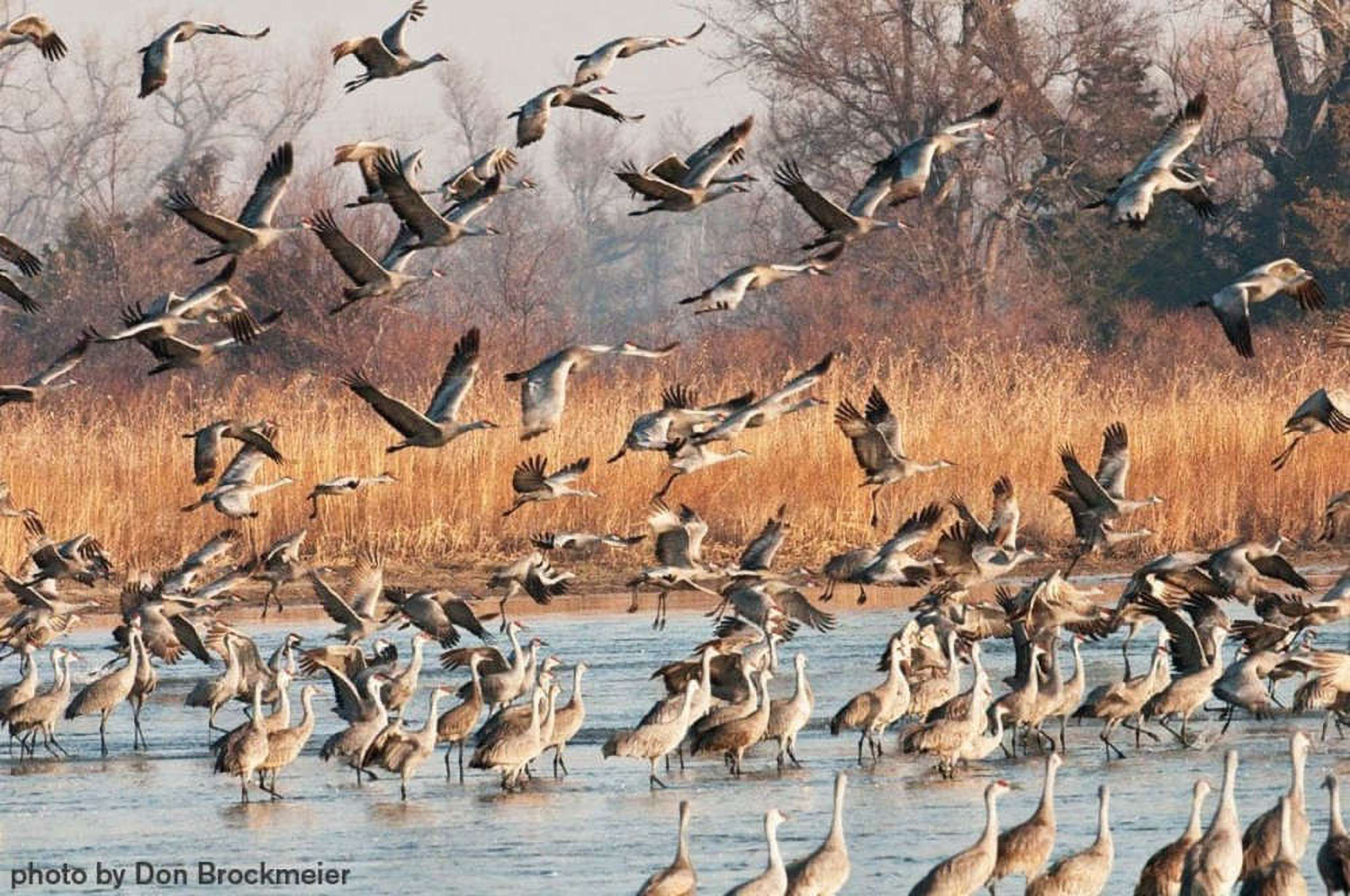
Sand Cranes at the Jasper-Pulaski Fish and Wildlife Area © Don Brockmeier
We will explore Quercus palustris (pin oak) bottomland forest and Q. alba (white oak) upland forest. Jasper-Pulaski supports a complex of community types that are now rare in Indiana. Sand dunes support Quercus velutina savannas, some of which have prairie openings. Between the dunes are acid flats and depressions with an understory of Vaccinium angustifolium (blueberry), Gaylussacia baccata (huckleberry), and a variety of herbaceous species. The depressions are a complex of sedge meadows, wet prairies, and marshes.
Overnight: Doubletree by Hilton Bloomington
Bloomington, Illinois
North Menard County, Illinois
This morning, we will meet guide Guy Sternberg in Bloomington at Double Tree and the bus will proceed with him to visit Paul and Karen Kieser who have some very special trees at their place just outside Bloomington. At one stage their house was lifted and moved as the road was being revised, and it now is next to the original family house that has the former State Champion Fraxinus quadrangulata! And behind the house across the street is one gigantic tree, a 300-plus-year-old Quercus macrocarpa with a 42.3-metre crown spread, and a 2.1-metre diameter trunk.
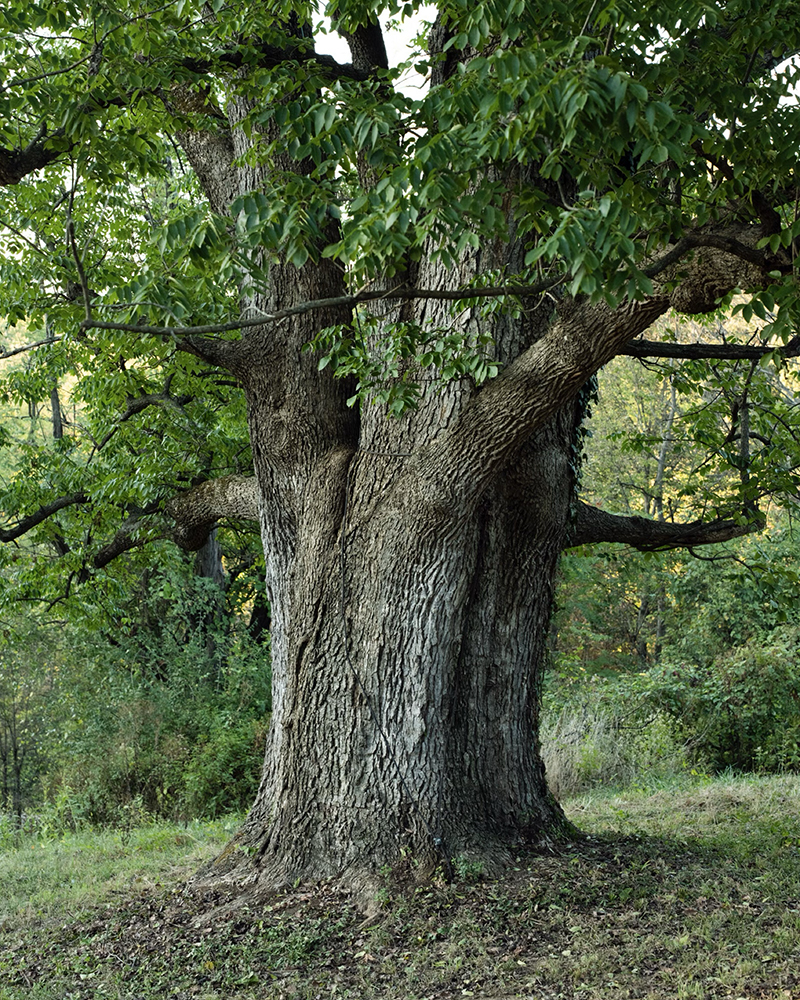
Fraxinus quadrangulata
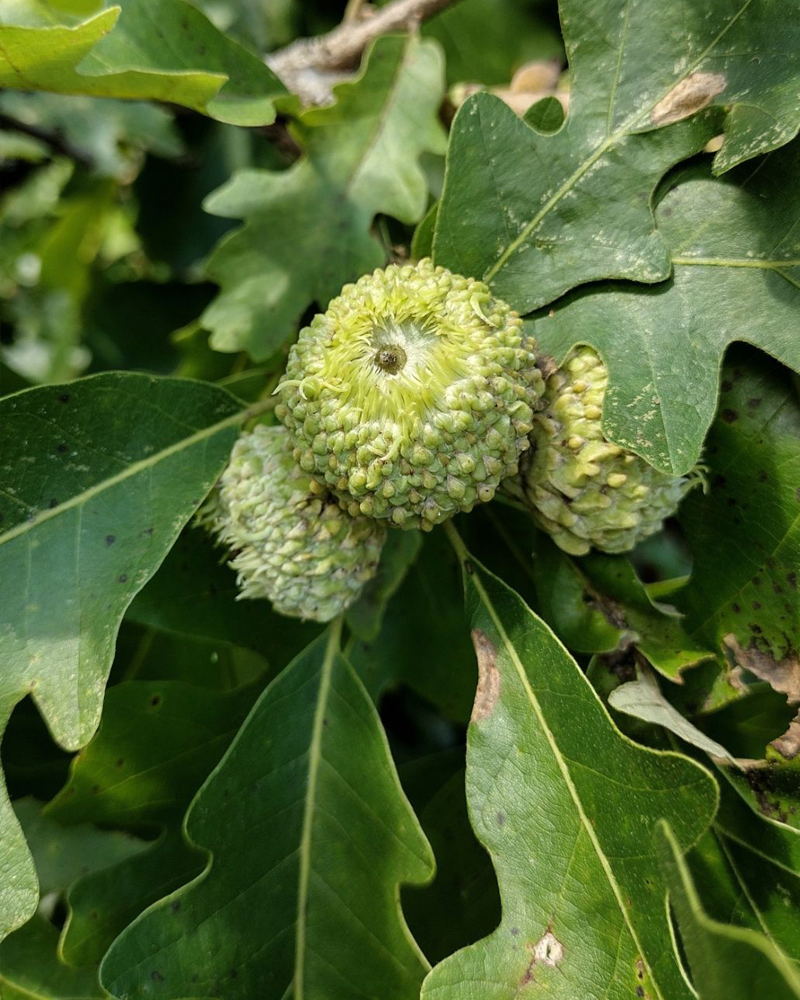
Quercus macrocarpa
We will then head for Kirby Cemetery in North Menard County where we will visit a champion Quercus marilandica and see an adjacent impressive Celtis occidentalis there too. Later we will see Morus rubra × alba, the ‘Lincoln Trail’ ortet. Arriving at Riverbank Lodge in Petersburg, we will see one of the first specimens of Quercus × warei and learn its story. Its certified cultivar name is the Riverbank Oak. The parents of this hybrid are Quercus robur Fastigiata Group, from Europe (cultivated in America) and Quercus bicolor, native to Eastern North America. This imposing tree, strictly columnar, appears to grow straight through the roof of the Lodge! (Some of these locations allow seed collection if you wish.) Later at Starhill Forest we will see some of the registered next-generation trees derived from it.
Overnight: Riverbank Lodge, Petersburg
Riverbank to Oakland Cemetery, Illinois
Elkhart, Illinois
New Salem and Wayside Park, Illinois
Starhill Forest Arboretum, Illinois
We will start early, taking a look a fine Liriodendron tulipifera and Catalpa bignonioides at the Oakland Cemetery and learning a bit about President Lincoln, with much more to follow later.
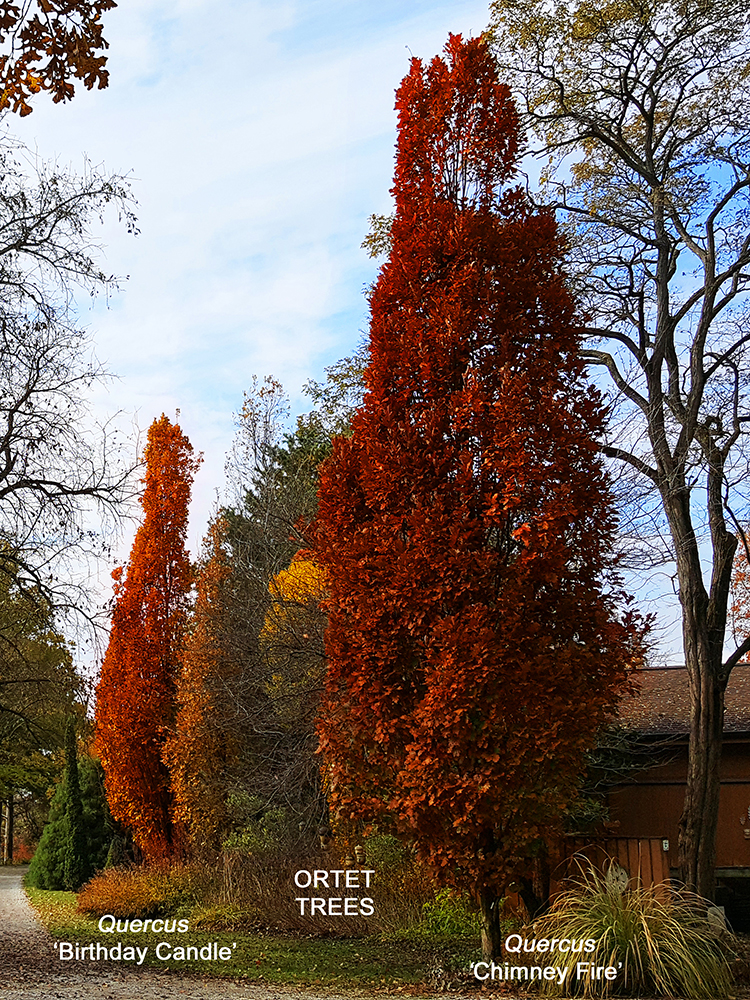
Quercus x warei ‘Birthday Candle’, (left) and Quercus x warei ‘Chimney Fire’, ortet trees
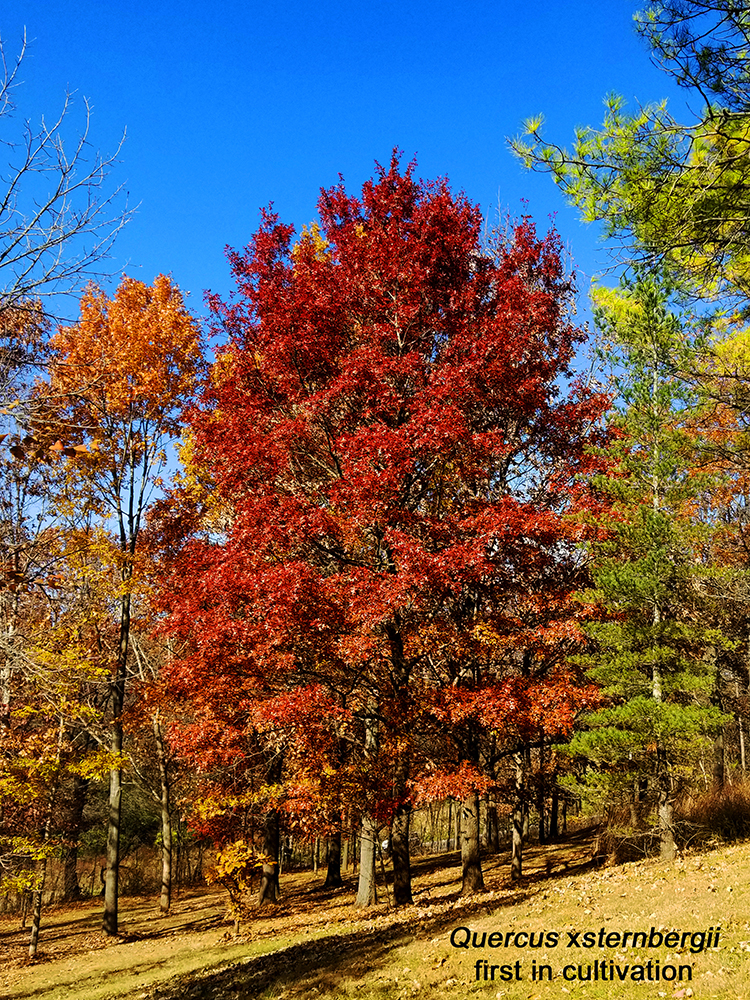
Quercus x sternbergii, first in cultivation

Quercus bicolor foliage © William Cullina
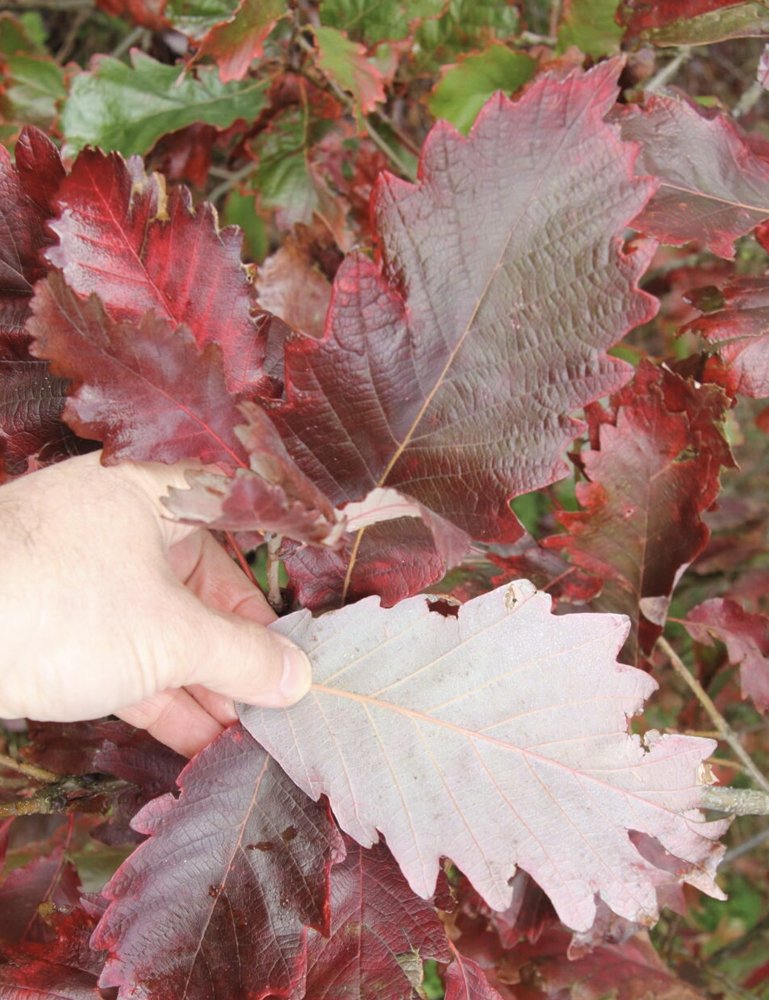
Quercus michauxii foliage © Pan Global Plants
Then we will embark to Elkhart Nature Preserve to see a forest dominated by Fraxinus quadrangulata, some of the few ash trees still standing after the Emeral Ash Borer killed millions of every other ash species. These are ancient trees, with some preceding the founding of America in 1776. The property is a private sanctuary, government certified and closely protected, so everyone will need to stay close and disturb nothing. Littering and un-sanctioned collecting are forbidden throughout the tour, but especially here. We will have access only because your guide is a volunteer there and has the lock combination. We will discuss the management steps as we continue in the bus to our next destination.
Leaving Elkhart, we will proceed to south to New Salem State Historic Site. In 1831, as a drifting young man and leaving in 1837 as a lawyer with a purpose, Abraham Lincoln would eventually become the sixteenth President of the United States. We will look at the 1934-restored log buildings of the historic village which is also not short of tree interest – there’s a multi-stemmed Juglans nigra × (black walnut) with unusually long and narrow nuts, likely a rare hybrid. Near that location we will see the sprouting remains of the National Champion Prunus munsoniana (Wildgoose plum), which has sprouted new growth thanks to some extra special care following a tornado. We also will look at historic trees, remnants of trees, and locations where others once could be seen, noting their special origin.
We will take our packed lunch there and then visit a Champion Crataegus mollis at Wayside Park and Farmer’s Point restored historic schoolhouse where we will see a variety of Carya and Quercus species, before heading east to Starhill Forest.
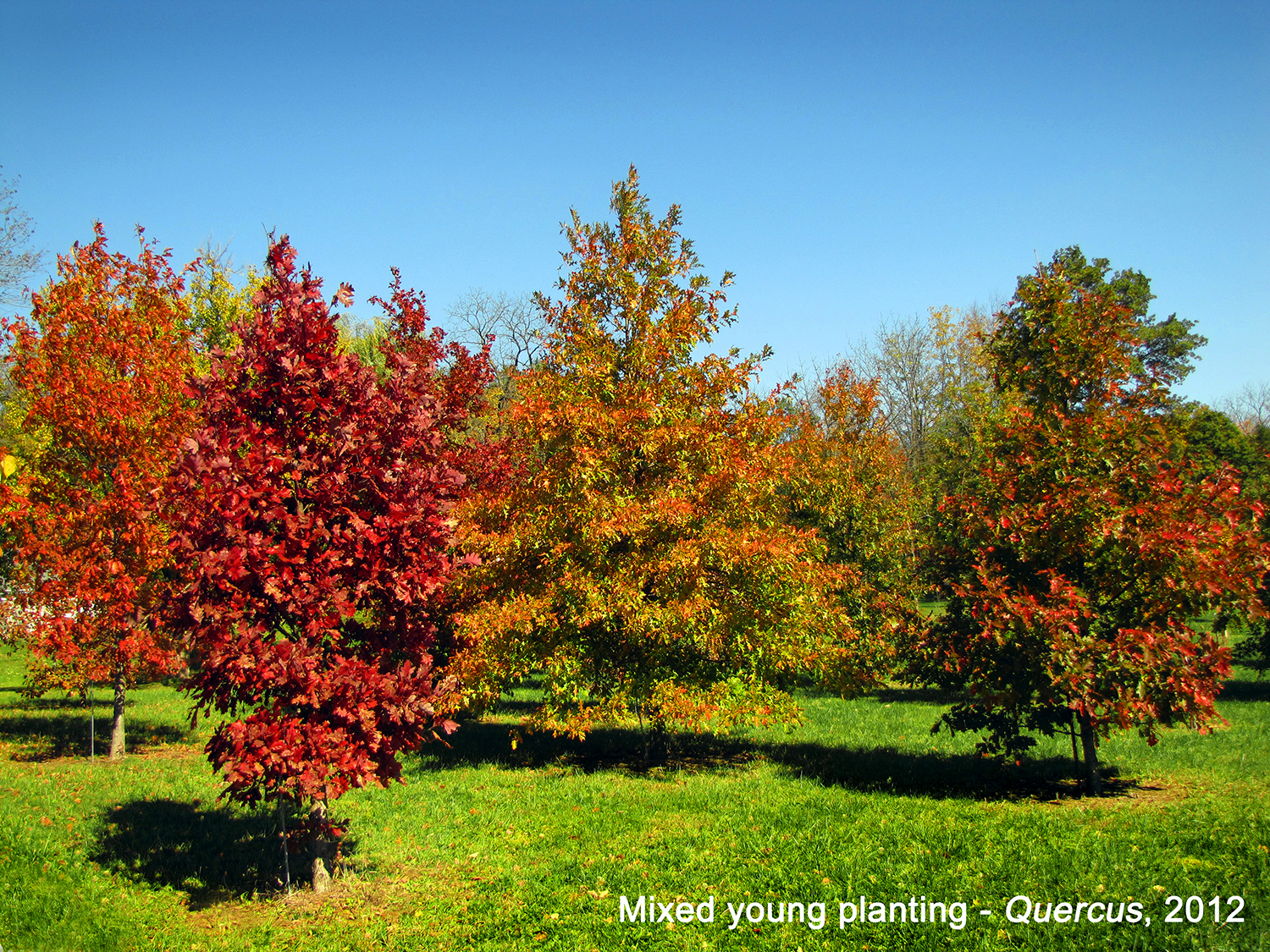
Quercus, mixed young planting 2012
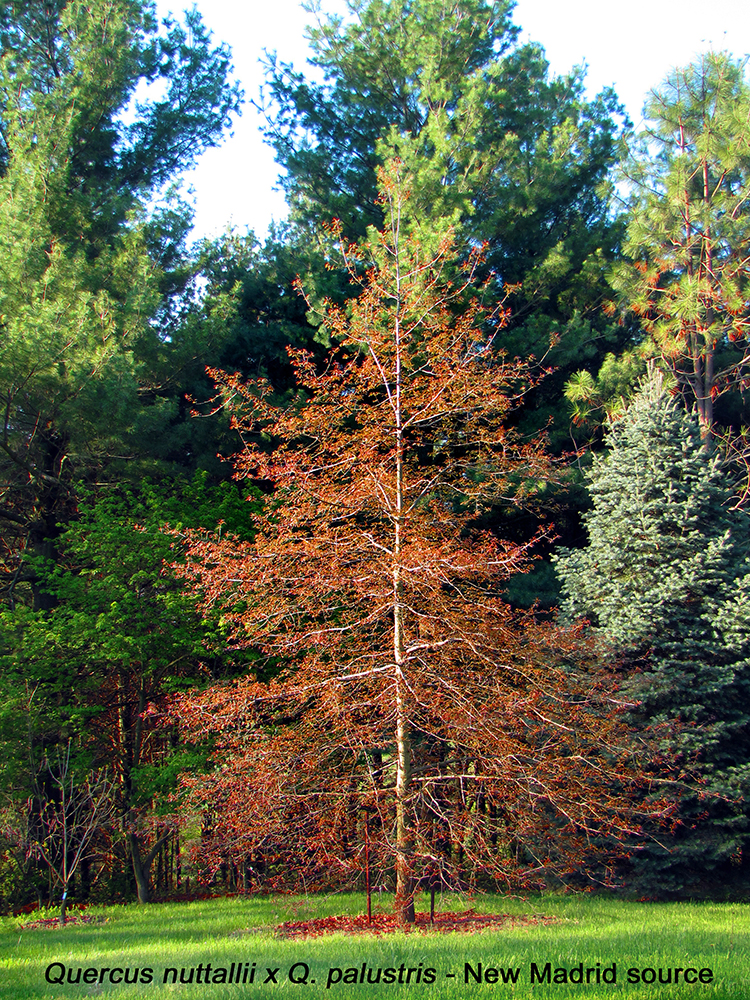
Quercus nuttallii x palustris New Madrid source
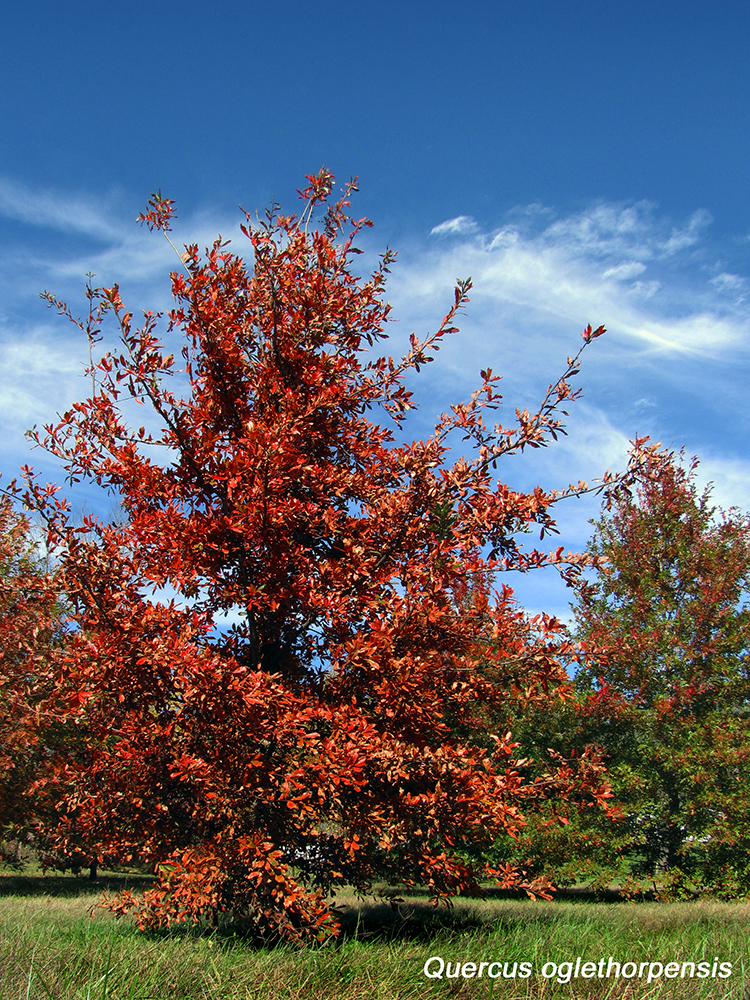
Quercus oglethorpensis wild source
We will spend the rest of the afternoon at the renowned Starhill Forest Arboretum. Edie and Guy Sternberg founded Starhill in 1976 when they purchased 19 hectares of land where they would make their home and, as Guy puts it, “make a little arboretum for our own use.” Twenty-five hundred taxa of woody plants later, the Arboretum has now become the official Arboretum of Illinois College in Jacksonville, having been placed in trust to them. The main collection at Starhill is the quercetum, which includes over 750 accessioned oaks representing 250 taxa, of which ~100 are pruned tropical oaks wintered in a cool greenhouse while hundreds of more hardy trees can be seen throughout the property. The collection of fastigiate oaks commands attention: various hybrids of fastigiate Quercus robur Fastigiata Group (English Oak) with New World White Oaks have created cultivars better suited to conditions in the US and some displaying unusual fall colouring due to subsequent re-crossing. Several originated here from propagation of the Riverbank Oak. Also notable are some fine trees of Maclura pomifera whose cannonball fruits on one named female are both striking and heavy. We will have some time to wander the more distant areas of the arboretum, exploring the native forest around Rock Creek where no less than 60 species of woody plants have been viewed from an overlook platform. As the daylight fades the bus will return to Riverbank Lodge for dinner in Petersburg.
Overnight: Riverbank Lodge, Petersburg
Gisi Walnut, Illinois
Stone Historic Farm Pecan grove, Illinois
Cotton Hill Park, Illinois
Oak Ridge Cemetery, Illinois
We will start early again this morning with a brief stop near the Gisi home where an impressive Juglans nigra dates from the mid-1800s and then move on to Stone Farm to view a pioneer Carya illinoinensis (pecan) plantation dating back to 1858. This fabulous grove of trees was planted from seed collected locally from wild trees along the Sangamon River. Next, on to Springfield (a busy day…) to take a look at an intriguing (‘Taco Oak’) Quercus × bebbiana ortet.
Cotton Hill Park is on the southern shore of Lake Springfield, a 2000-acre reservoir just outside the famous city. We can eat our packed lunches there at the park. The main feature will be a certified National Champion tree of Quercus deamii a hybrid between Q.macrocarpa and Q. muehlenbergii. Also in the park is an impressive Quercus muehlenbergii (chinkapin oak) and a few more Fraxinus quadrangulata (blue ash). Moving on, during a stop at Lincoln’s Home National Park we can see two historic Diospyros virginiana and walk through Lincoln’s home if there is interest and time. Souvenirs may be bought at the visitor centre.
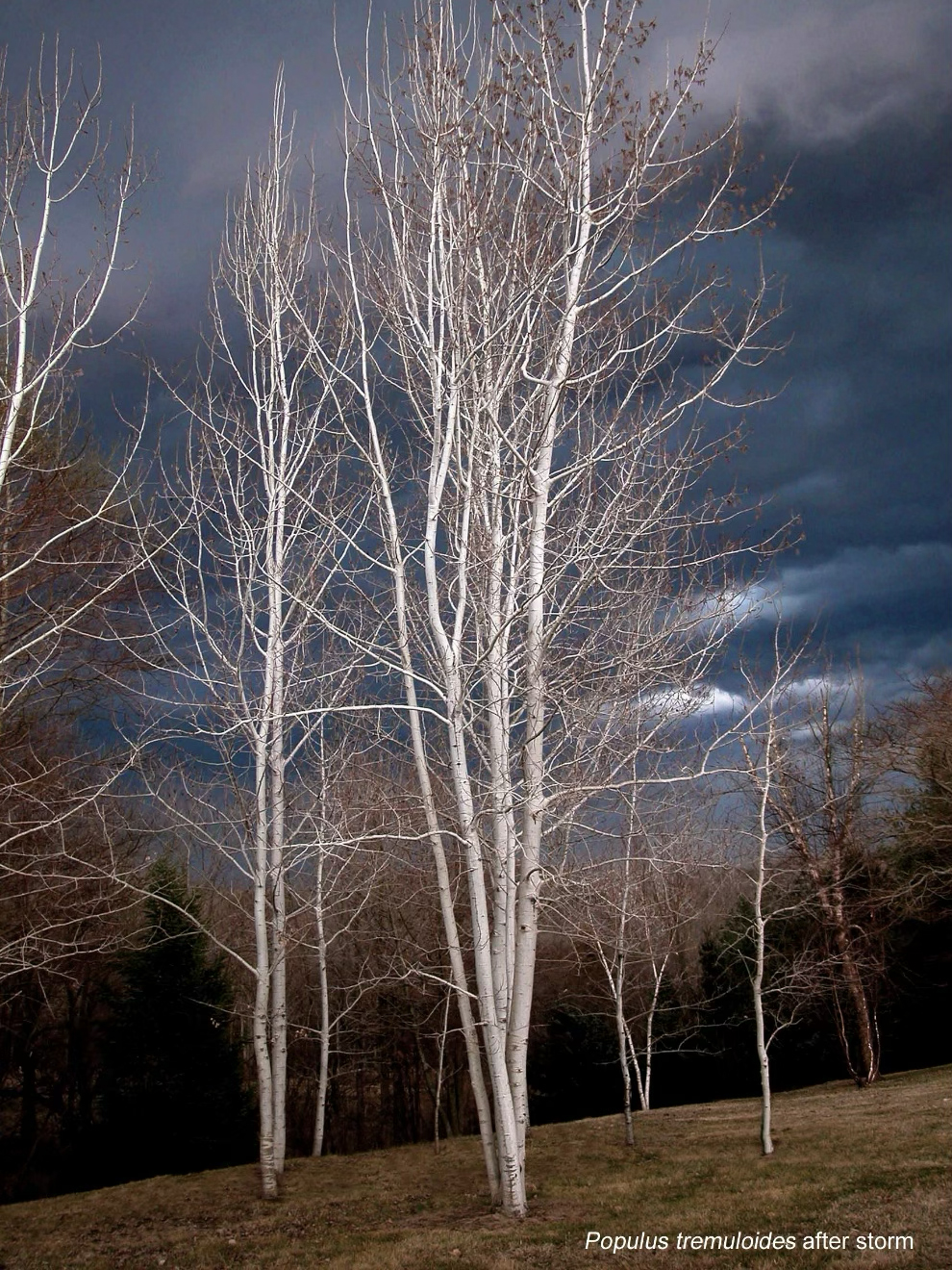
Populus tremuloides after storm
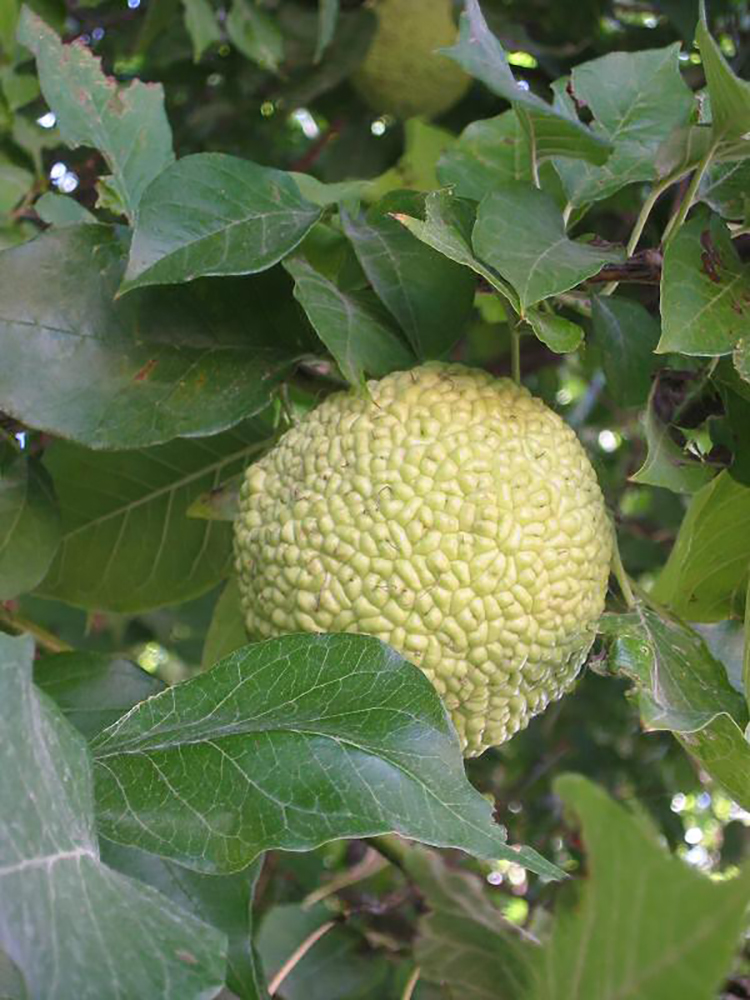
Maclura pomifera
In the afternoon well pass a champion Quercus × runcinata and many old Quercus and other trees during a drive through Oak Ridge Cemetery. Oak Ridge’s main claim to fame is that President Lincoln was buried there in 1865. It also contains other memorials (to the Korean and Vietnam Wars, and to World War II) and a collection of notable trees, some predating the establishment of the Cemetery in 1860. The trees, including 700 of them donated by Starhill Forest, prompted national designation as the Living Memorial site for Illinois following the 911 invasion.
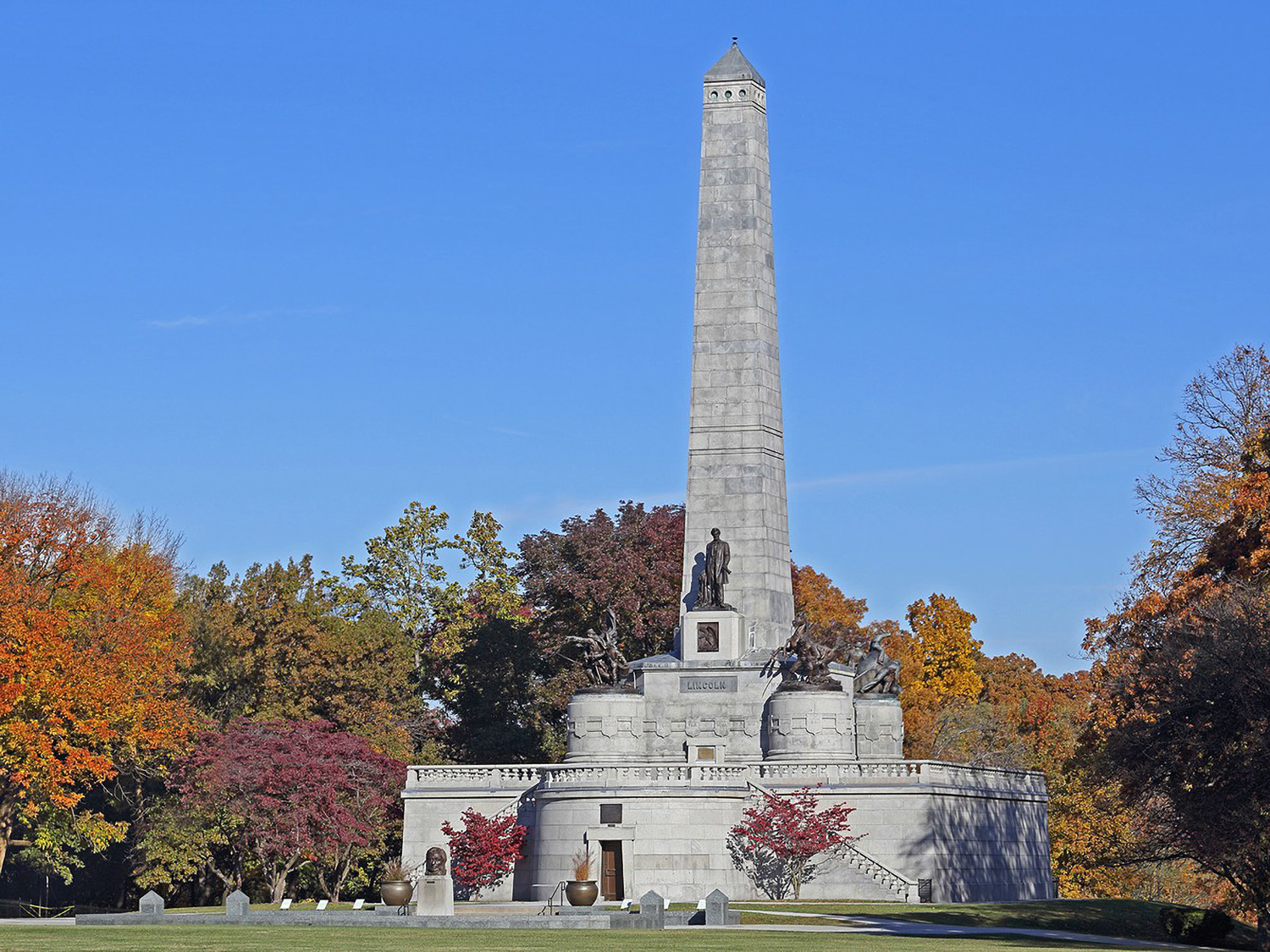
Abraham Lincoln’s tomb at Oak Ridge Cemetery
We will also find what we still believe is the largest tree in Springfield: a Populus deltoides (cottonwood) almost 30 metres high and with a trunk circumference of 7 metres. It was heavily damaged by a recent durecho storm two years ago and is being stabilized by volunteer arborists as this is being written. Another impressive tree is a historic Maclura pomifera (Osage orange), thought to have been planted in 1865 and boasting a 4.9-metre circumference. Near the Bell Tower is a majestic Magnolia acuminata (cucumber magnolia), the only magnolia native to Illinois. As dusk approaches the group will again return to Riverbank Lodge for dinner in Petersburg.
Overnight: Riverbank Lodge, Petersburg
Cantral then to Marion
We will make a stop at Cantral to see an original settlement with a Catalpa speciosa dating back to the founding of the pioneer farm in 1821. There will be a couple of historical items to see and photograph there as well if we have time. Again, this is restricted private property not generally accessible, so please stay close.
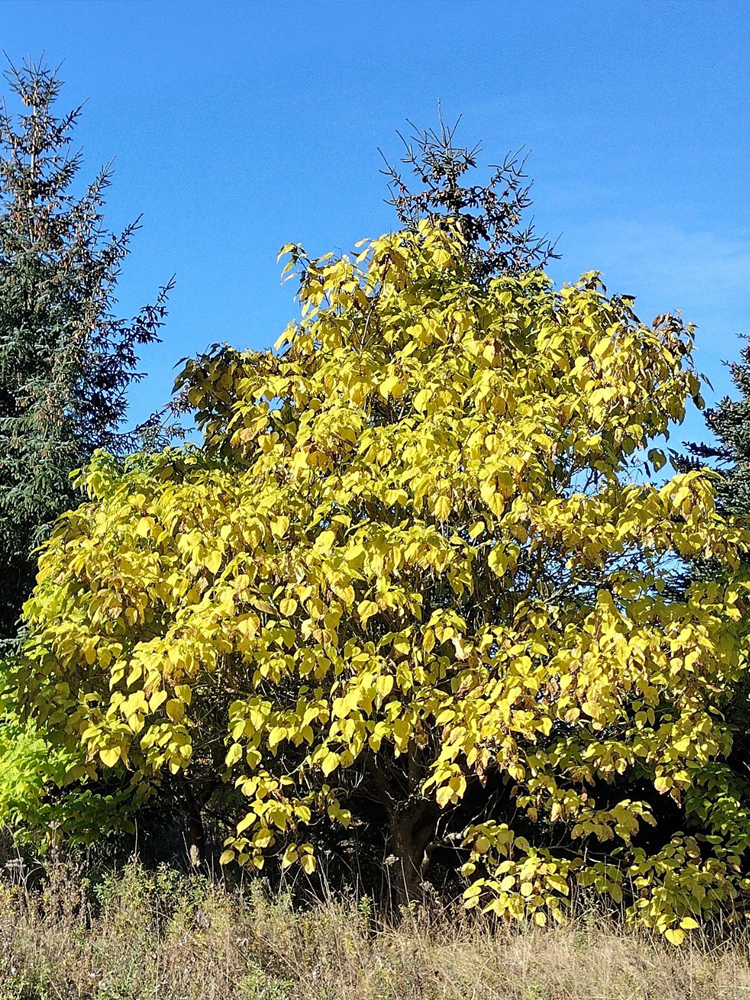
Catalpa speciosa © Dr John Grimshaw
Then we will head south to Marion, stopping for lunch along the way.
Overnight: Marion Drury Inn & Suites
Heron Pond – Little Black Slough Nature Preserve, Illinois
Section 8 Forest, Cache River State Natural Area, Illinois
Garden of the Gods xeric rock cliffs for sunset
This morning, we will head for the Heron Pond-Little Black Slough Nature Preserve, a 30-hectare pond within the enormous Cache River State Natural Area, set up to protect what remains of a vast wetland ecosystem. It is mostly level ground but bring your walking stick. Heron Pond is mainly dominated by Taxodium distichum (bald cypress), mostly of a relatively young age (perhaps 100–150 years old) as the area was selectively logged during the reconstruction of Chicago after the disastrous fire of 1871.

Taxodium distichum at Heron Pond in Cache River State Natural Area © V. Miguel / CC BY-SA 3.0
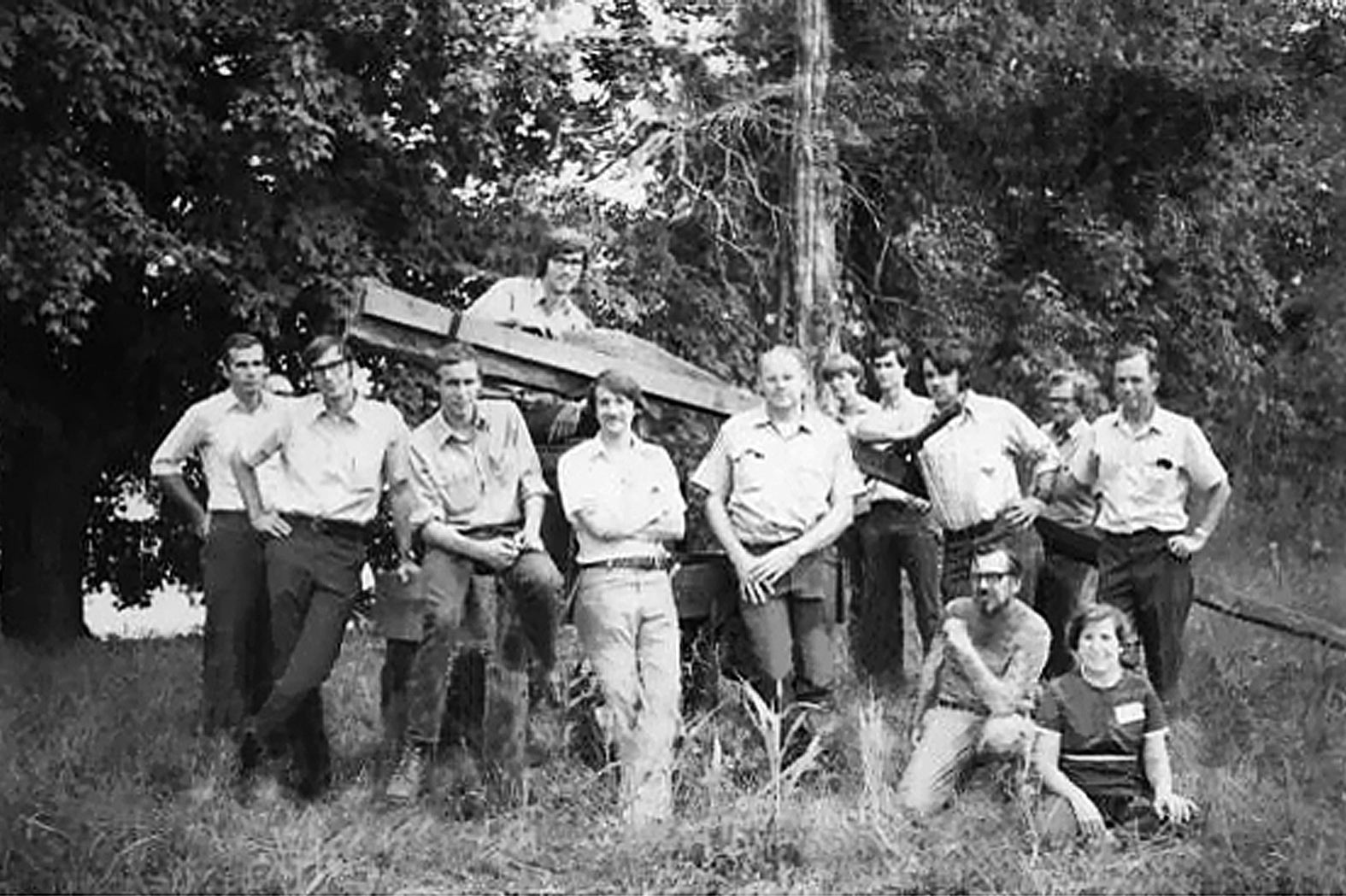
The 13 people who founded the American Natural Management Association, the first Natural Areas Inventory, and the Natural Areas dedication and documentation throughout the Midwest. This meeting began in the afternoon following the ceremonial dedication of a new nature preserve that will be on our tour. From left to right: Max Hutchison, Marlin Bowles, Jack White, Guy Sternberg (top, back), Jerry Paulson, John Schwegman, Mark Swayne, Mike Homoya, John Garton, Cliff Germain, Julius Swayne, Barbara Fell, and George Fell. Taken at Max’s house near Heron Pond by the old sorghum press, 6 October 1972. © Sharron Hutchison
Along our walk we will find large specimens of Quercus michauxii (swamp chestnut oak) and many other trees. A floating boardwalk allows us deep into the pond, with massive cypresses towering around and ahead of us, and a short fork in the trail will take us to the Illinois champion Quercus pagoda, one of eleven such Champions in the Nature Preserve and surrounding wild lands and swamps, for a photo-op. Diversity is impressive at Heron Pond, and aside from species mentioned above we also might find Acer drummundii, A. negundo, A. saccharum, Fraxinus species (if they are still alive), Asimina triloba, Itea virginica, Lindera benzoin, Bignonia capreolata, Liquidambar styraciflua, Carpinus caroliniana, Nyssa aquatica, Carya aquatica, C. laciniosa, Quercus shumardii, Q. velutina, Catalpa speciosa, Rosa palustris, Celtis laevigata, Cephalanthus occidentalis, Ulmus alata, and U. americana. We will plan to have our packed lunch there.
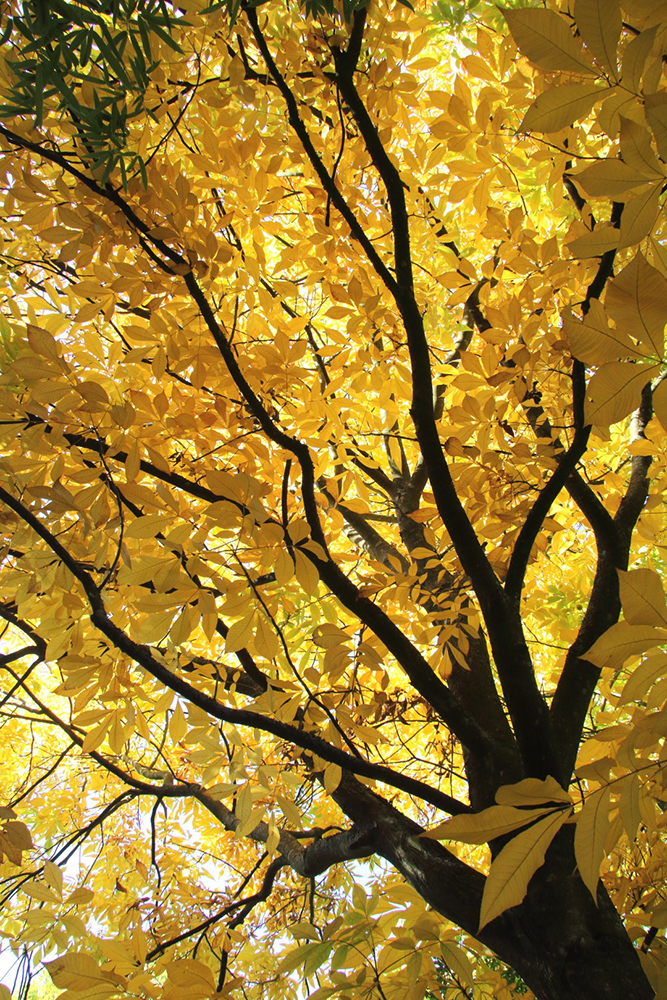
Carya laciniosa © Pan Global Plants
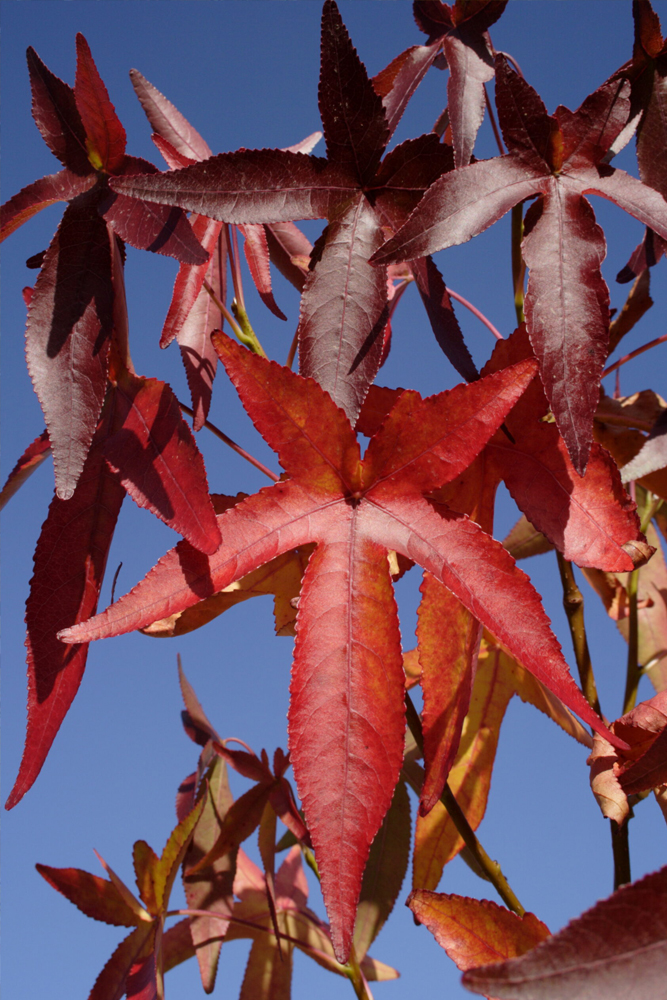
Liquidambar styraciflua © Pan Global Plants
The 132 hectares of the Section 8 sanctuary contain high-quality examples of swamp and bottomland forest, both natural communities of the Coastal Plain. Bald cypress and Nyssa aquatica (swamp tupelo) dominate the swamps, and on the higher ridges several species of oak might be found: Quercus lyrata, Q. pagoda, Q. palustris, and Q. michauxii. The Taxodium are truly magnificent, some estimated to have been growing for a millennium – this area was never fully logged.
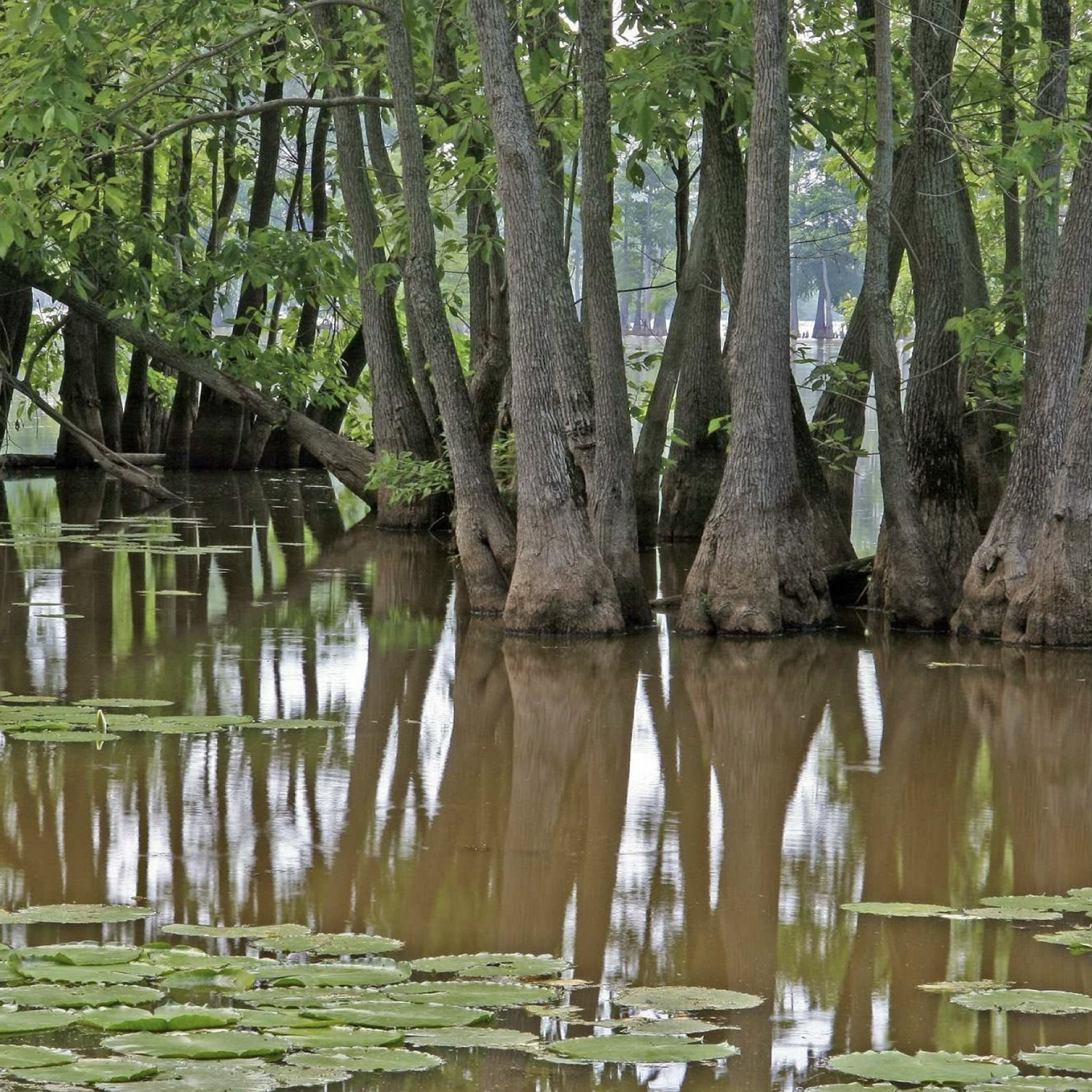
Nyssa aquatica (Water Tupelo)
If we have time, we will visit the Garden of the Gods xeric rock cliffs late that afternoon. We will pass a variety of wind and rain sculpted sandstone formations en route to a fabulous sunset vantage point overlooking mile after mile of the scenic Shawnee Forest woodlands.
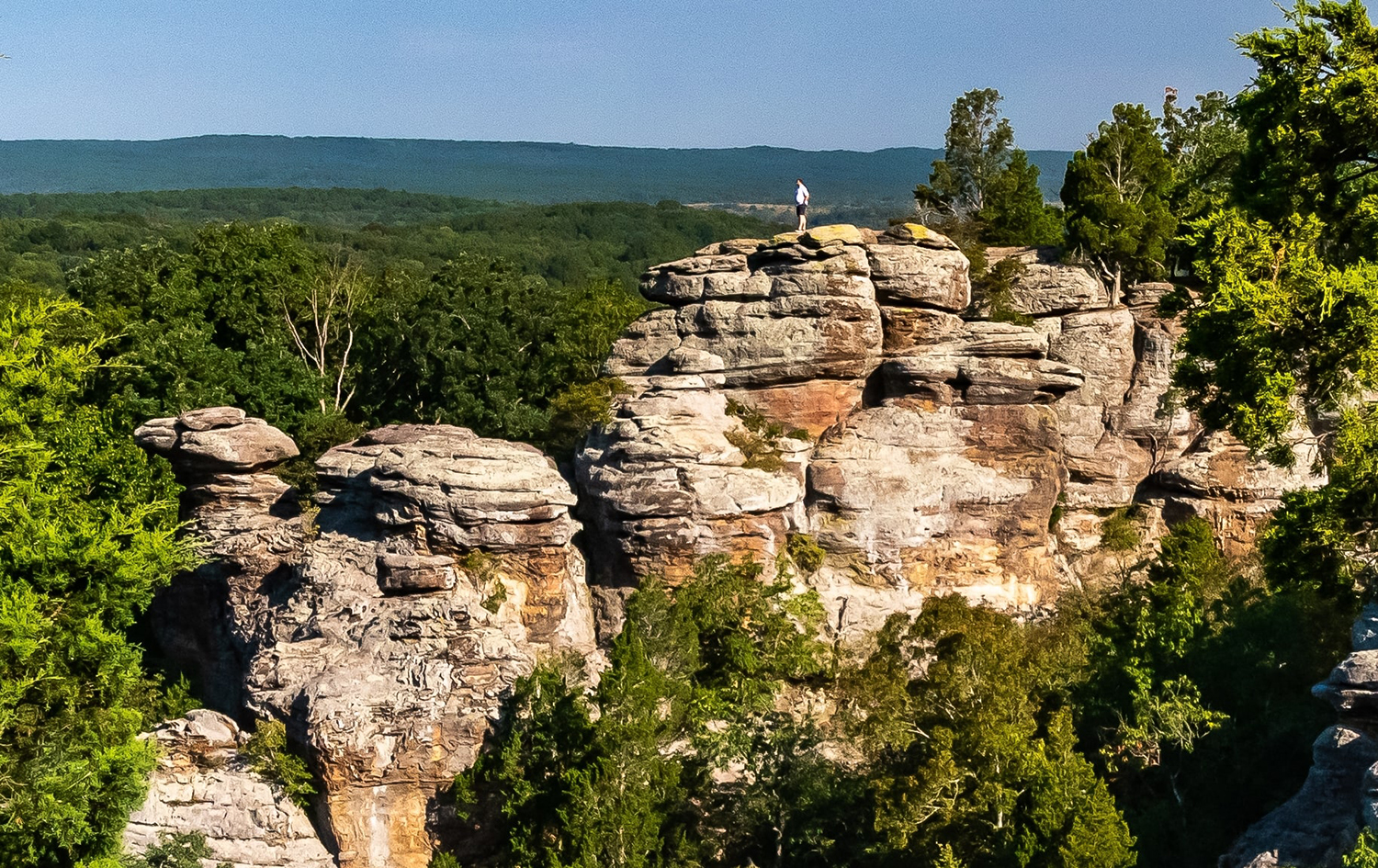
Camel Rock in Garden of the Gods, Illinois © Rose Palmer
Overnight: Marion Drury Inn & Suites
Alto Pass
LaRue-Pine Hills National Natural Area, Illinois
Afternoon: Longshadow Gardens, Illinois
We will stop briefly at the Alto Pass overlook in morning light to photograph Bald Knob and see large specimens of Quercus stellata, Q. alba and other trees. Then we will move on to the Federal Pine Hills Natural Area.
Snake Road winds along the base of the Pine Hills Area – so-named because no less than three venomous snakes migrate across this road each fall in substantial numbers - the timber rattlesnake, the copperhead, and the western cottonmouth. And guess when? Yes, the end of October! We will of course take due care here though there is plenty to distract us from the threat of these reptiles: Quercus shumardii (Shumard oak), Q. pagoda (cherrybark oak), Q. palustris (pin oak) and Q. macrocarpa (bur oak) are plentiful. Due to the possible encounter with venomous snakes, you must stay close to the guide and remain near the middle of the road surface.
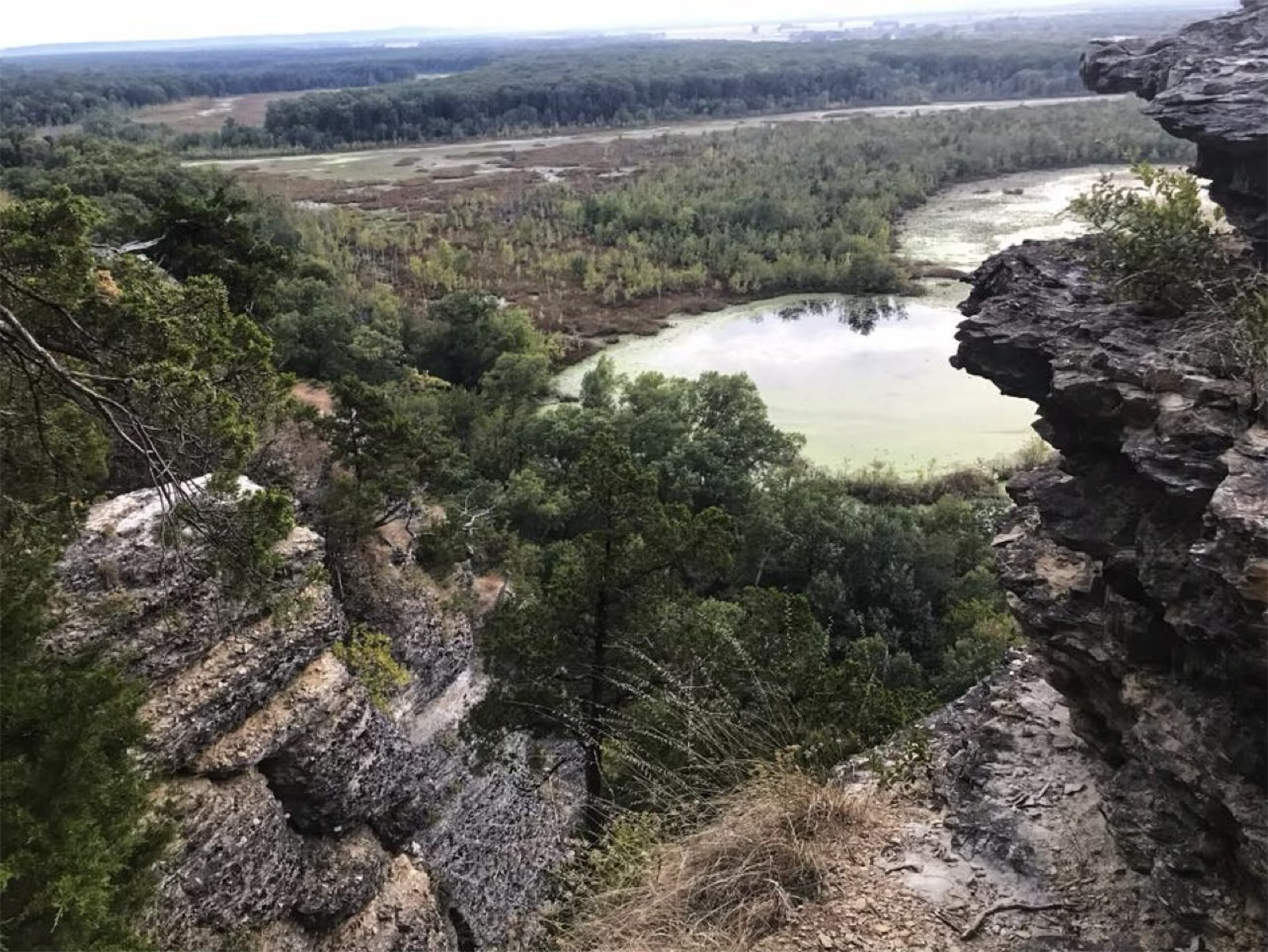
Pine Hills National Natural Area
White limestone bluffs tower above us topped with scattered Pinus echinata (shortleaf pine) and Juniperus virginiana (red cedar) and many other trees. The area has many fabulous clifftop views from handily constructed lookouts, so if our bus can make it, we can gaze out over the LaRue Swamp and the Valley of the Mississippi below. Walking along the bluffs we probably will find Carya glabra (pignut), C. ovata (shagbark), C. tomentosa (mockernut) and C. cordiformis (bitternut) hickories and along the exposed edges there will be shrub species such as Vaccinium and Amelanchier along with some interesting xeric herbaceous flora.
After lunch in Pamona we will spend the afternoon at Longshadow Gardens – Daniel and Charlotte Ward are manufacturers of dry-cast limestone garden sculptures shipped worldwide, and their property has fabulous views from the highest Ozark point in Jackson County. There is a growing arboretum in situ too. Longshadow Gardens sits within the Shawnee National Forest, and from the top of a huge storage silo the view of the surrounding greenery is magnificent. Impressive vistas lead down from the buildings at Longshadow, lined by stately trees displaying autumn colour, past a 12-metre-deep artificial lake, to the pièce de résistance of the Gardens: a grotto hidden in the sandstone cliffs. This is another possible place to find small dry-cast souvenirs that you will see nowhere else.
Overnight: Marion Drury Inn & Suites
Ferne Clyffe State Park Canyons, Illinois
Giant City State Park, Illinois
Missouri Botanical Garden, St. Louis, Missouri
We will spend the morning at the Ferne Clyffe State Park Canyons on a trail that leads us through a mesmerising mesophytic forest and rock formations loaded with herbaceous canyon flora. We will admire Carya ovata (shagbark hickory) and Carya laciniosa (shellbark hickory) with its just-as-shaggy bark and learn to tell the difference. There is sinewy Carpinus caroliniana (musclewood), the truly hard ironwood of Ostrya virginiana (eastern hop hornbeam), the turpentine-like scent of Lindera benzoin (spicebush) leaves, the straight trunks of Fagus grandifolia (American beech) reaching up to their canopies high above, taller-still Liriodendron tulipifera (tulip trees) and, lining the tops of the rocky cliffs above us, the gnarled trunks of red cedar along with Opuntia at ground level. The differences between the right and left canyon walls as you hike in will amaze you.
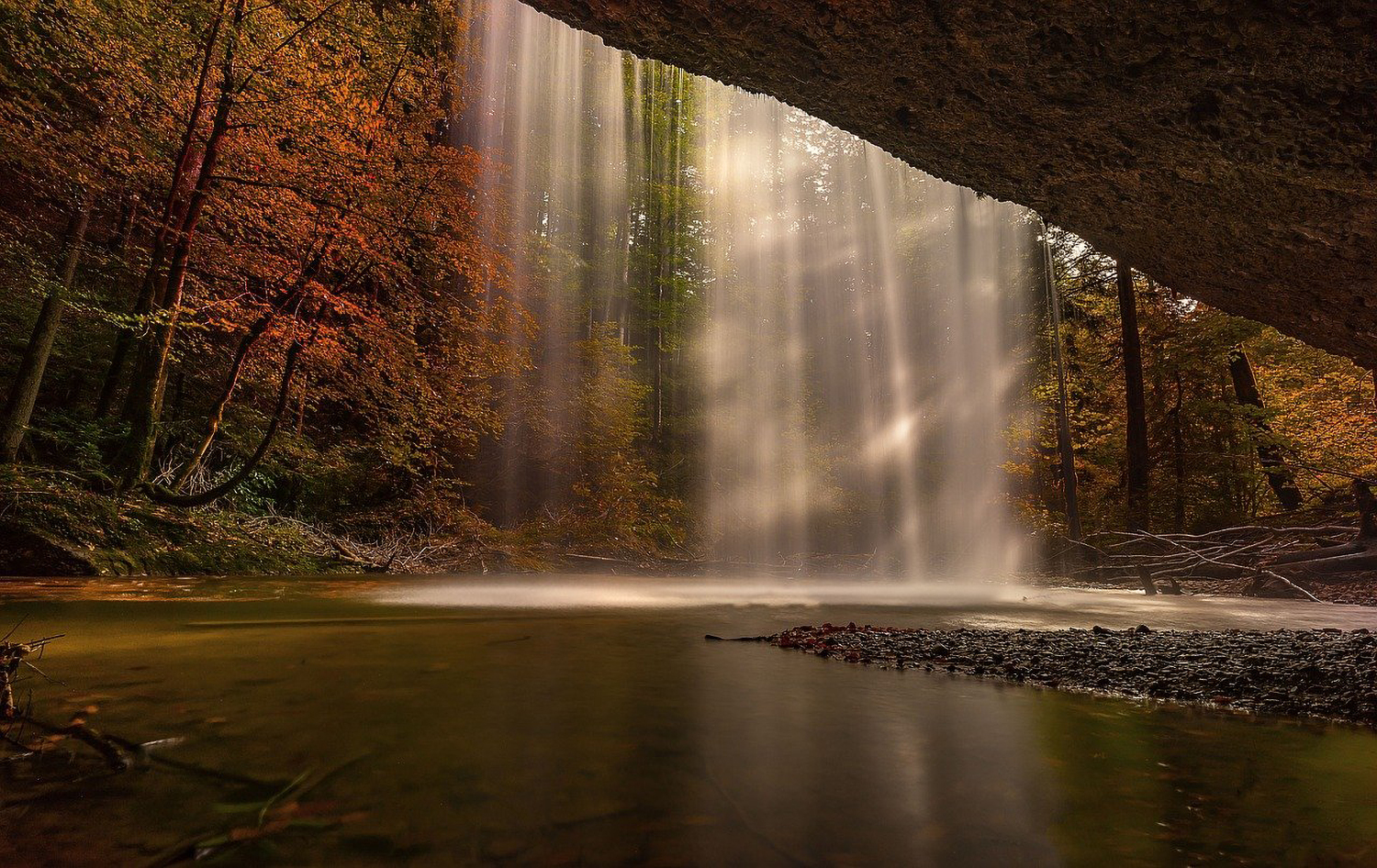
Ferne Clyffe State Park
If time allows, we will also stop and explore the Giant City State Park, whose interesting geomorphology is matched by a diverse woody flora. Then we are on to St. Louis.
The Missouri Botanical Garden's stated mission is ‘To discover and share knowledge about plants and their environment in order to preserve and enrich life.’ Founded in 1859, the Missouri Botanical Garden is one of the nation’s oldest botanical gardens and is recognised National Historic Landmark. The Garden is a centre for botanical research and science education. It is now world-famous for research to the extent that it is vying with Kew and the Morton as the arbiters of all things botanical. The Garden itself has 79 acres of beautiful horticultural display, including a 14-acre Japanese strolling garden, historic architecture, and one of the world’s largest collections of rare and endangered flora. A few of the original Maclura hedgerow trees planted by founder Shaw can be seen behind the dome as well, and examples of the first introduction of Metasequoia in 1947 will be found behind the Shaw home. Guy is arranging for a tour by one of his friends there, but if he is called away Guy will lead it himself.
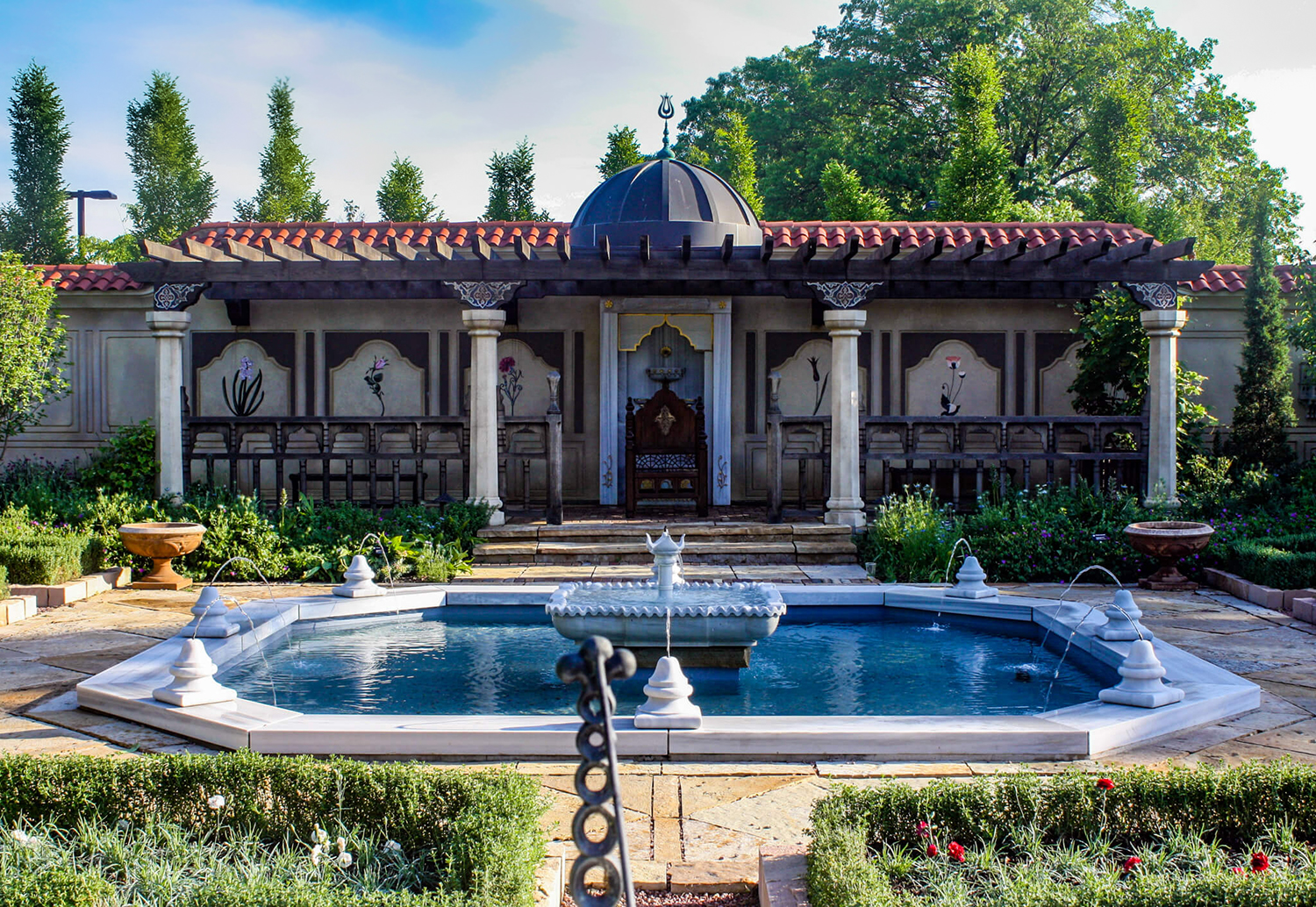
The Ottoman Garden, an enclosed space of eastern tranquility at Missouri Botanical Garden © stephentravels.com
Overnight: The Last Hotel, St. Louis
End of tour and departures from St Louis
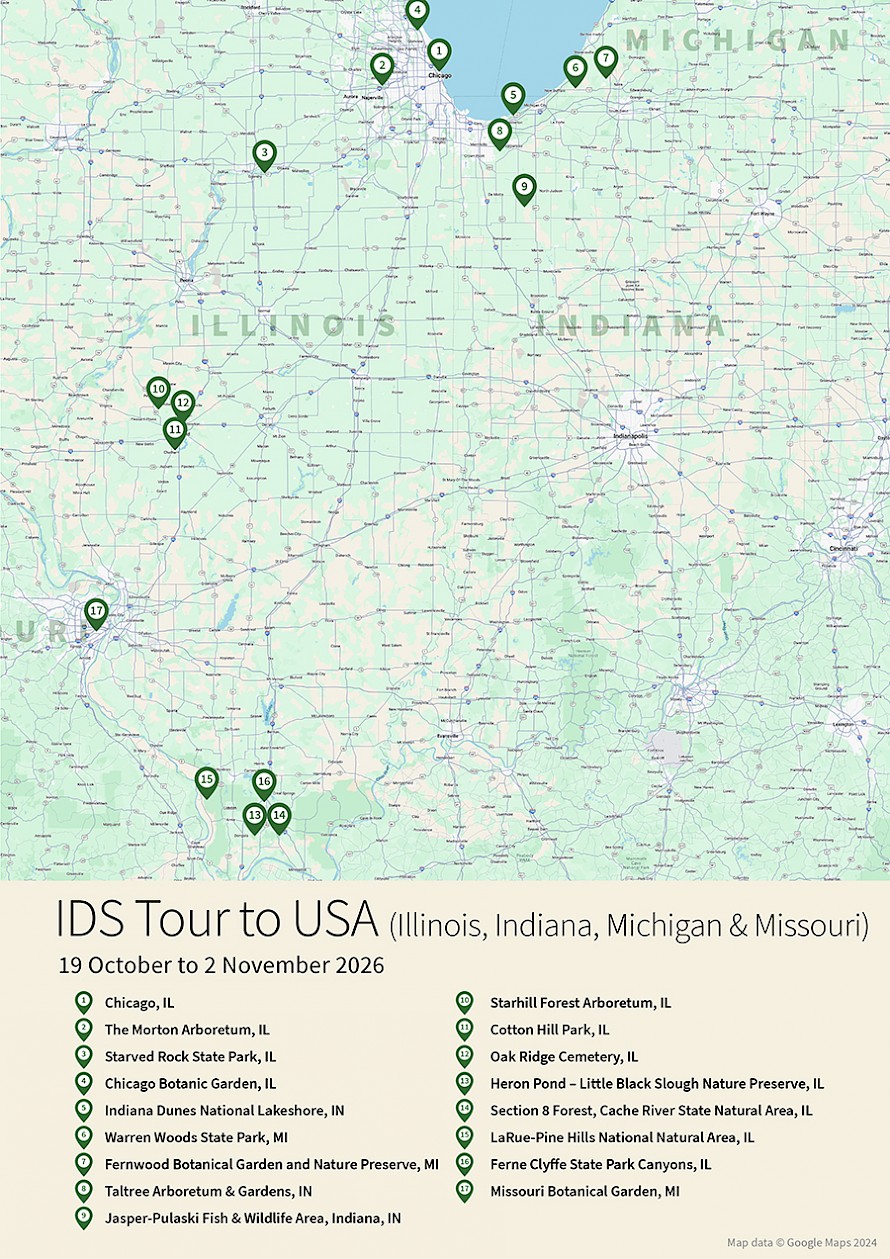
| Location | Chicago, Illinois, Michigan, Indiana and Missouri |
| Tour dates, arrival | Monday 19 October 2026 |
| Tour dates, departure | Monday 2 November |
| Tour organiser | Greentours |
| Tour coordinator | Marie-Christine de Laubarède |
| Tour botanists | Kris R. Bachtell Ian Green, Greentours |
| Availability | The tour is restricted to 25 participants |
| Accessibility | Walking difficulty: 2–3 |
| Tour costs | £6,515 per person (based on two people sharing) A deposit of £800 per person will be payable by 1 February 2026. |
| What’s included | All meals, accommodation, local transport, guides, entry fees, tips and wine with meals. |
| What’s not included | International flights, additional alcoholic drinks, minibars, laundry, and travel insurance. |