| Dates | 22 April to 25 April 2027 |
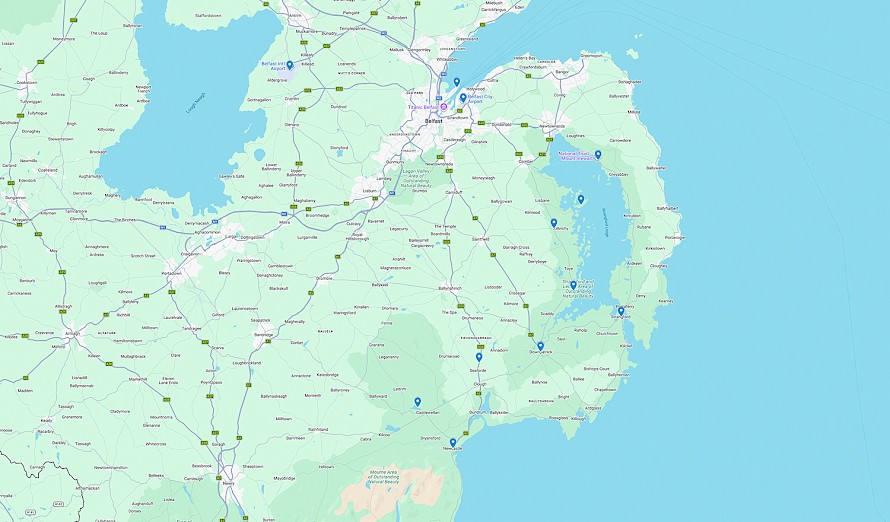
| Location | County Down, Northern Ireland |
| Tour Organiser | Suzie Scott |
| Difficulty rating | Level 2: Easy with mostly longer walks, and occasional uneven ground |
| Max. participants | 20 |
Send to: Suzie Scott
Send to: Suzie Scott
Send to: Suzie Scott
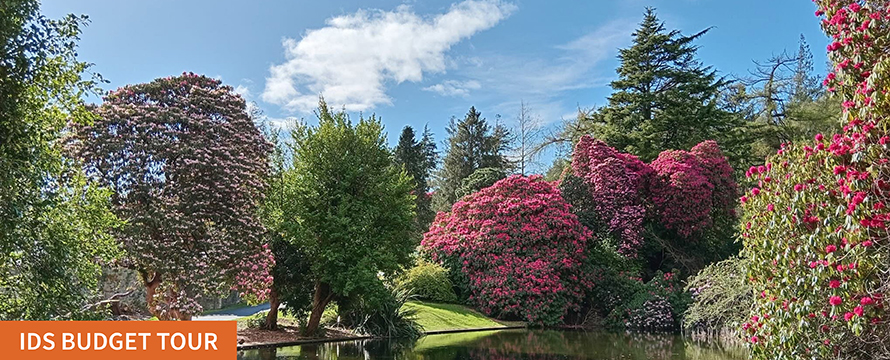
An affordable IDS weekend tour to explore some of the finest gardens in County Down, Northern Ireland.
County Down in North East Ulster has long been synonymous with beautiful gardens. Those we are visiting lie on either side of the extensive sea inlet of Strangford Lough, and the presence of the Gulf Stream means that a surprising range of plants from around the world can be grown so far north (we have an equivalent latitude to Hudson Bay).
However, despite our unusually benign climate the area has suffered the effects of two major storms of late, Storm Darragh in December 2024 quickly followed by Storm Eowyn in January 2025. These ‘Extratropical cyclones’ with wind speeds of over 90mph wreaked havoc in Northern Ireland, creating ongoing challenges for owners of historic gardens and tree collections. We will visit four gardens, with an optional visit to Mountstewart on Sunday morning.
Three of the four gardens are in private ownership, Myra, Mahee and Seaforde, whilst the fourth, Castlewellan is now in the care of Newry and Mourne District Council.
• Myra is a very private and personal arboretum, the work of David Good and family who have been planting extensively over the last 40 years.
• Mahee is the creation of the late Paddy Mackie and contains a hugely impressive collection of magnolias, rhododendrons and camellias.
• Seaforde has been in the ownership of the Forde family for over 400 years and much of the wild treasures which the late Patrick Forde collected on his travels in China, Bhutan and India are now reaching maturity.
• Castlewellan Arboretum was awarded an IDS plaque in 2018 and has just reopened after a multi-million pound heritage lottery restoration.
• Mount Stewart (National Trust) needs little or no introduction, suffice to say it was voted as one of the top 10 gardens in the world with UNESCO World Cultural Heritage in 2019.
ACCOMMODATION
I have listed a number of potential Hotels, Bed & Breakfast, Guest House options for accommodation. In addition, the Northern Ireland Tourist Board website, Booking.com or Air B&B are all useful resources for finding a place to stay, to suit your budget. The price for each ranges from the cheapest (£), to moderately priced (££), to the most expensive (£££).
If anyone would like to camp please get in touch with me directly.
Killyleagh, Downpatrick and Newcastle are the three main towns near the gardens. Killyleagh town is probably the most central location and has a number of options which I have listed. We plan to eat together in Downpatrick on the first evening, Killyleagh on the second and the third night – probably Killyleagh as well if that helps you in your search.
Killyleagh (good location)
1. Dufferin Coaching Arms, Killyleagh (££)
Literally next door to the pub where we will meet for supper on the second night.
Website https://www.dufferincoachinginn.com/
2. Hamilton House, Killyleagh (£)
Two apartments.
Website https://www.booking.com/hotel/gb/hamilton-house-holiday-apartment.en-gb.html
Contact: Philip 07885 688280
3. Ivy Apartment, Killyleagh (£)
Website https://ivyapartment.co.uk/
Contact: Rory & Jill 07813 939916
4. The Old Schoolhouse, Comber (£)
Website http://theoldschoolhouseinn.com/
5. Tracey’s Farmhouse, Strangford Lough, near Mahee (£)
Self catering cottage / three bedrooms (brilliant home made bread)
Website https://traceysfarmhousekitchen.com/
6. Turtle Cottages, Mahee Island (Airbnb)
This beautifully situated property is on Mahee Island and owned by the Mackie family.
Website https://www.airbnb.co.uk/rooms/45250848?source_impression_id=p3_1781268653_P3fIXJRpfldD-KfQ
Contact: Tara Mackie
Downpatrick
Downpatrick is the county town of Down and burial place of St Patrick. It is well placed for all the visits and we will have supper together in Denvir’s Hotel on the first night.
1. Denvir’s Hotel, Downpatrick (££)
Website https://denvirs.com/
Country House Bed & Breakfast Accommodation, all personally known to me:
1. Ballymote House, Downpatrick (££)
Website https://www.ballymotehouse.com/
2. Nutgrove House, Downpatrick (£££)
Very close to Seaforde Gardens
Website http://www.nutgrovehouse.com/
3. Ballydugan House, Downpatrick (£££)
Website https://ballydugan-country-house.hotelsinnorthernireland.com/
Newcastle
Where the Mountains of Mourne sweep down to the sea. Well placed for Castlewellan and Seaforde Gardens.
1. Backpacker hostel (£)
Website https://hutthostel.com/
2. Enniskeen Hotel, Newcastle (££)
This is a family run hotel just outside Newcastle. Lovely views.
Website https://enniskeenhotel.co.uk/
3. Slieve Donard Hotel, Newcastle (£££)
More corporate and expensive, but well placed. Good for golf.
Website https://marineandlawn.com
Castlewellan
Hillyard House Hotel, Castlewellan (££)
Literally just by the entrance to Castlewellan.
Website https://www.hillyard-house.co.uk/index.html
Seaforde
Creeghduff Lodge, Clough Bed and Breakfast (between Castlewellan and Seaforde) (£)
Please contact the owner (Sarah Royle) directly if you wish to book as a better rate than booking.com
Email: blakeleyfarm@gmail.com
Contact: 028 4481 2062 or Mobile 07971648301
TRANSPORT
As a budget tour participants will be responsible for their own travel during the tour, but you will need a car! Unfortunately it is just not possible to visit the gardens by public transport.
You can either come by ferry with your own car, or fly and hire a car.
By Ferry
The shortest crossing from the UK (by sea) is from Cairnryan, Scotland to Belfast. (2 hours 15 minutes)
Website https://www.stenaline.co.uk/routes/cairnryan-belfast
Alternatively you can travel from Birkenhead, England to Belfast (8 hours). You can choose an overnight option.
Website https://www.stenaline.co.uk/routes/liverpool-belfast
There are two routes from England/Wales to the Republic of Ireland:
1. Holyhead to Dublin
Website https://www.stenaline.co.uk/routes/holyhead-dublin
2. Fishguard to Rosslare
Website https://www.stenaline.co.uk/routes/fishguard-rosslare
– then it is an easy drive north to County Down.
By Air
There are two airports served by: EasyJet, Aer Lingus, Loganair, Ryanair, and British Airways
1. Belfast International Airport (BFS) (approximately ± 1 hour drive to Downpatrick)
Website https://www.belfastairport.com
2. Belfast City Airport (BHD) (smaller of the two airports, approximately ± 45 minute drive to Downpatrick)
Website https://www.belfastcityairport.com/
Alternatively, Dublin Airport (DUB) which caters for more international flights.
Website https://www.dublinairport.com/
From Dublin Airport (approximately ± 2 hour drive north to County Down).
Arrive at accommodation.
A welcome communal supper at Denvir’s Hotel, Downpatrick
Morning
Myra Castle, Strangford
The IDS last visited Myra Castle in 2012, so it will be interesting to return. We can see how the teenage Taiwania cryptomerioides (Taiwan cedar) we presented then is doing.
Myra is located on the southern shore of Strangford Lough, and was built by the Craig-Laurie family in 1844, but inherited unexpectedly by the Wallace family in 1900. The Craig-Lauries must have been responsible for planting most of the mature trees across the Estate. Regular planting seems to have stopped until the 1970s leaving a gap, but has been much increased from the mid 1990s onwards by David Good (IDS Member) and his family.
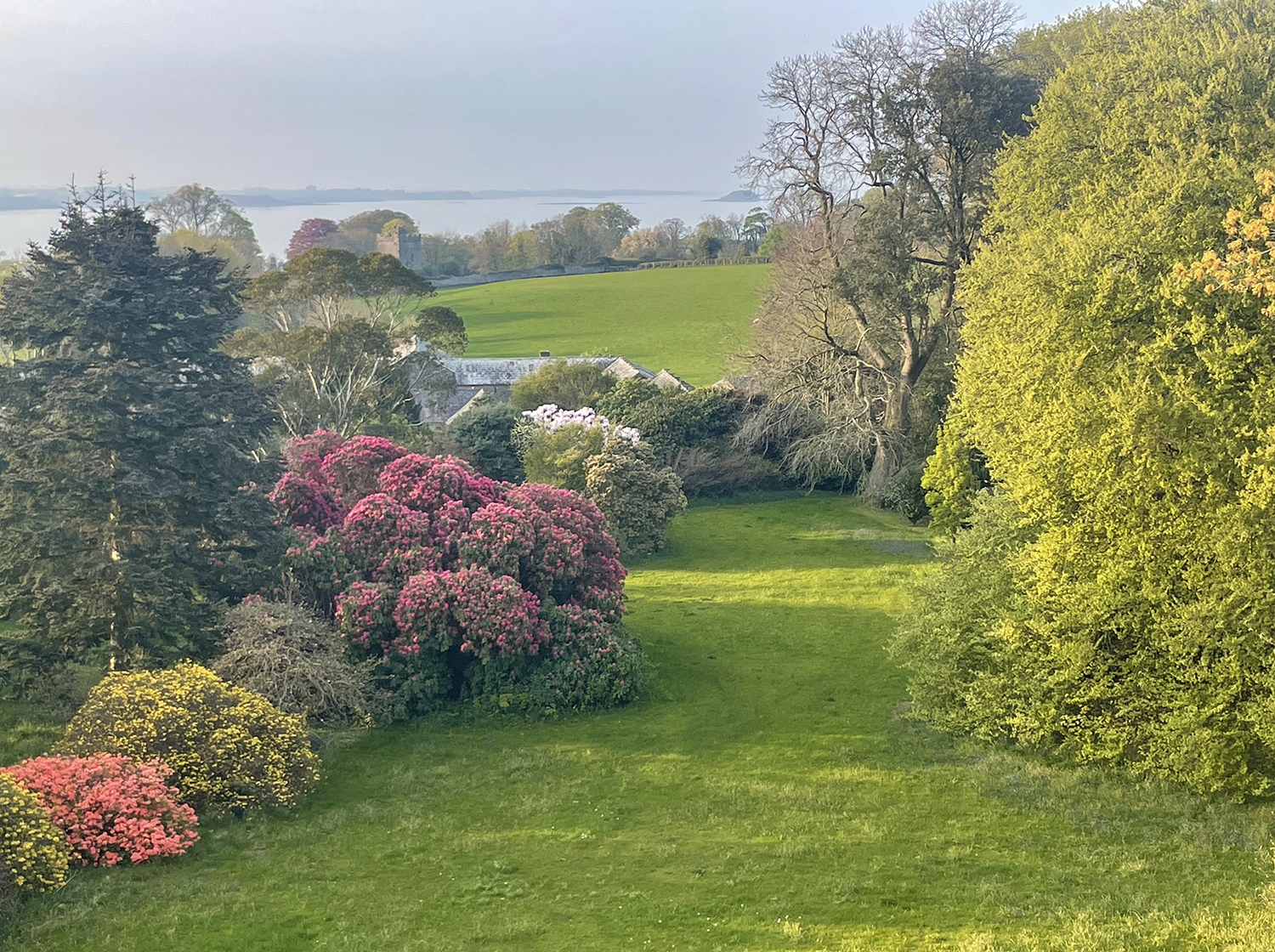
View from Myra to Strangford Lough with Rhododendron arboreum
Collapsing mixed plantations have been cleared and re-planted, mostly in oak. The land behind the castle which had long been neglected and become something of a green wilderness has also been cleared and re-planted in stages with a growing collection of different trees and shrubs including oak, lime, cherry, magnolia, cornus, rhododendron, camellia and plenty of unfashionable conifers to retain the Victorian character of the Estate.

Nothofagus fusca, Rhododendron (Matador group) ‘Matador’, R. ‘Grace Seabrook’, and R. morii at Myra
In essence, Myra is a mixture of the old and the new, but with those newer plantings, especially of magnolia and rhododendron now coming into their own.
Pub lunch at Balloo House, Balloo
Afternoon
Mahee Island, Comber
After lunch at Balloo we will head north following the shoreline of Strangford to Mahee Island, home of Julie and the late Paddy Mackie (parents of Tracy Hamilton Vice President for Ireland).
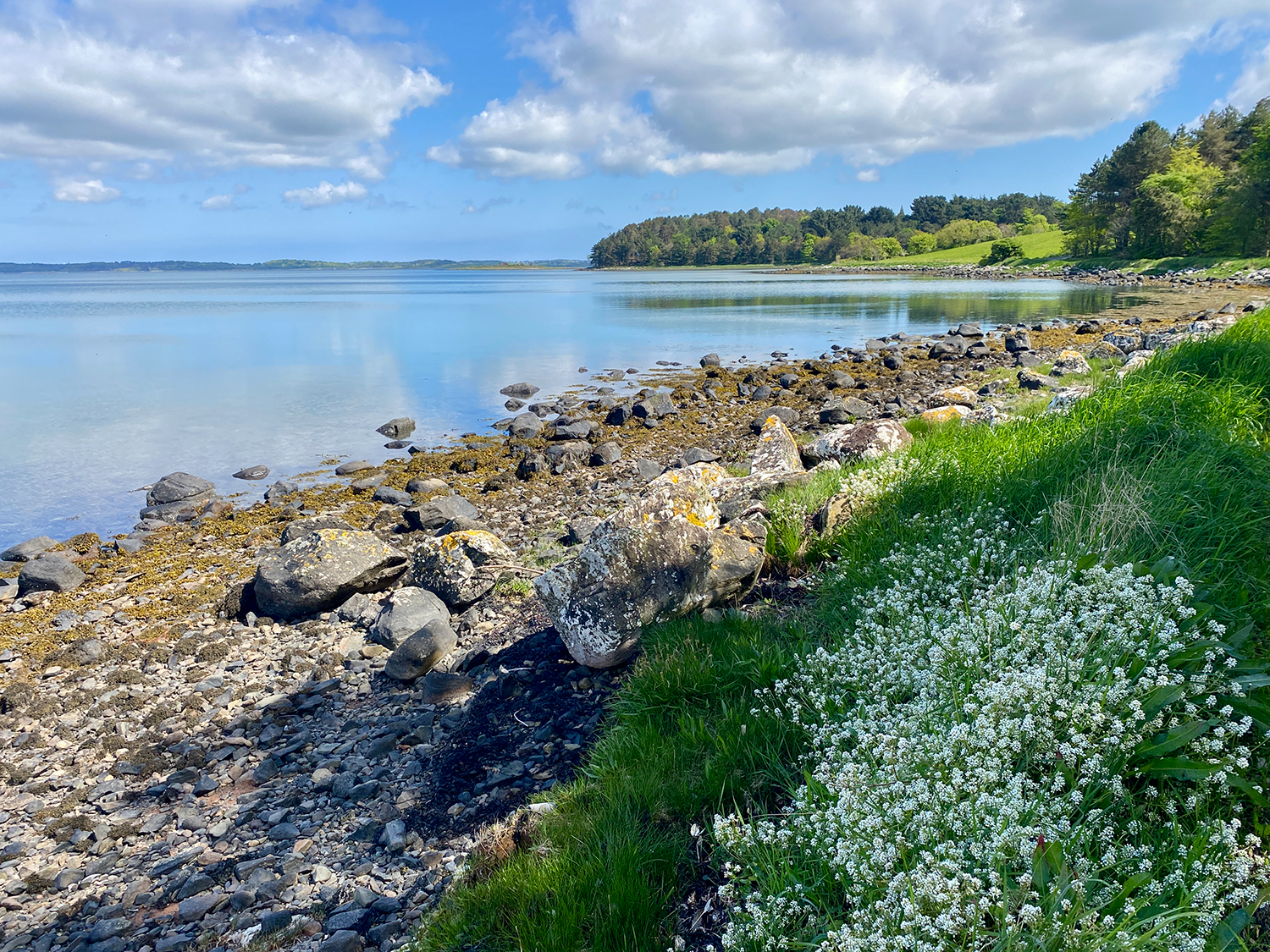
The approach to Mahee Island on Strangford Lough
A drowned drumlin on the west side of Strangford Lough, the garden was coaxed into existence by one individual over the course of a lifetime. Paddy Mackie began work on this windswept, barren landscape in 1959, slowly transforming it into an extraordinary 35-acre woodland garden.
The first trees planted were Scots and Corsican pine and sycamore. Silver birch, scarlet willow, Japanese larch and eucalyptus followed as well as Monterey pine and cypress, Norway maple, common cherry, beech and horse chestnut. Once the shelter belt was established, the island’s microclimate permitted the cultivation of a wide variety of tender subjects and southern hemisphere plants like echiums and tree ferns. There are wonderful plantings of eucalyptus, euchryphia species, and magnolias. It is best known however, for its collection of rhododendrons with extensive plantings of choice species and tender hybrids. Paddy was awarded the J. A. Waley medal in 2021 awarded annually by the RHS to an individual who has been involved with the practical cultivation of rhododendrons.
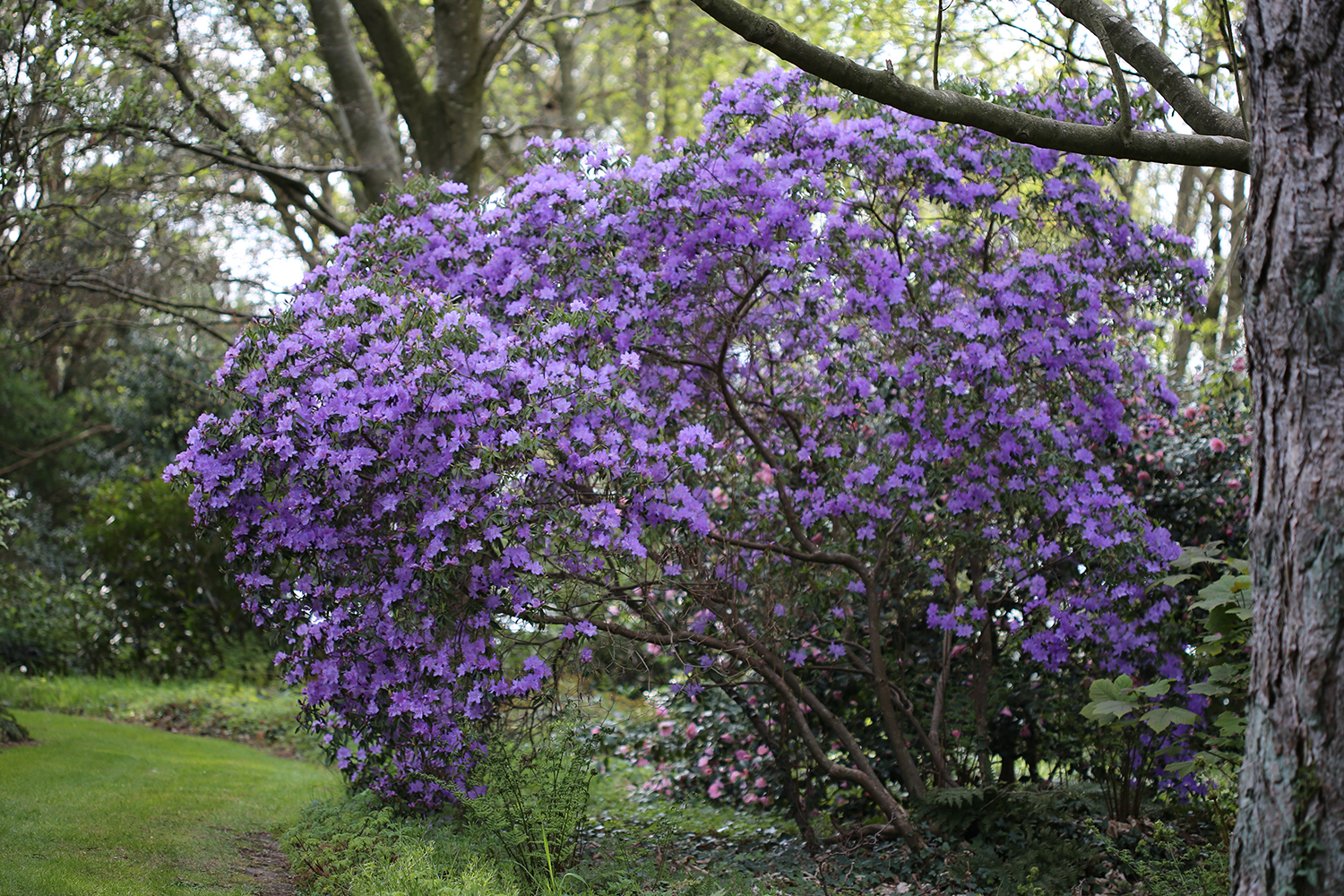
Rhododendron augustinii at Mahee
Supper at The Dufferin Arms, Killyleagh
Morning
Castlewellan Arboretum, Castlewellan
The IDS presented a plaque to Castlewellan Arboretum back in 2018 in recognition of its ‘unique heritage and importance’, and to help create awareness of the decline of the property.
Thankfully much has been achieved since then and in 2021 a £2.69 million grant from the National Lottery (with match funding from Newry & Mourne District Council who are responsible for the gardens) initiated a four-year restoration programme. Despite a serious setback with two massive storms in 2024 and 2025, the arboretum has now reopened and this is a wonderful opportunity to see all that has been achieved, especially as Neil, our guide was Consultant on the project.
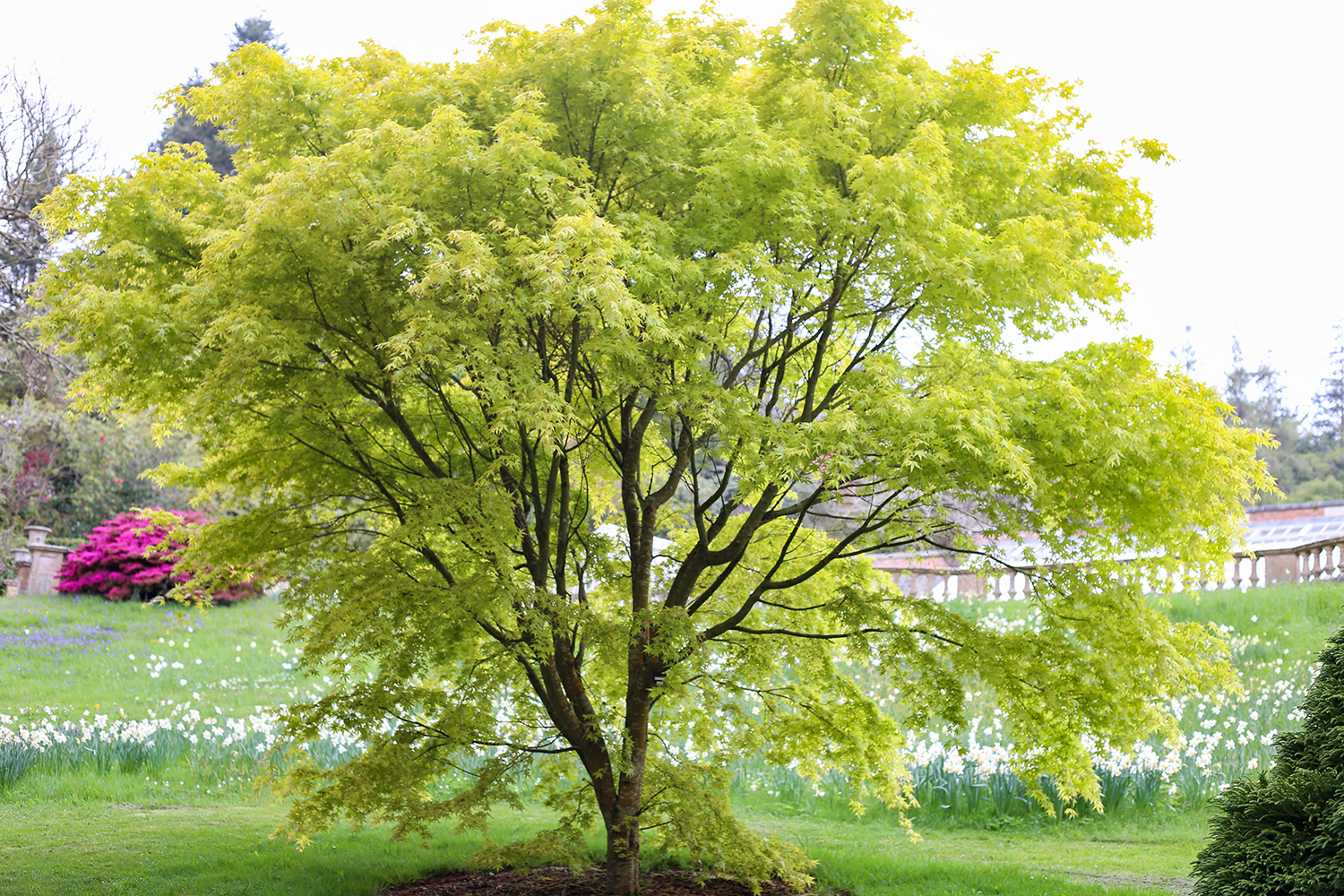
Acer palmatum ‘Katsura’ at Castlewellan Arboretum
We will also be guided by Alwyn Sinnamon, the Head Gardener. Castlewellan lies on the edge of the beautiful Mourne Mountains, just a few miles from the Irish Sea. The demesne dates from medieval times when the lands were held by the powerful Magennis family, who retained it until purchased by the Annesley family in 1741. It was Hugh Annesley, the 5th Earl of Annesley (1831–1908) who devoted his life to building up the present tree collection with the help of his Head Gardener Thomas Ryan. By the early 20th century there were over 3000 different species of rare plants from all over the world thriving in the garden.

An unnamed pre-1910 cross by Thomas Ryan, Head Gardener to 5th Earl Annesley of Rhododendron thomsonii and R. fortunei
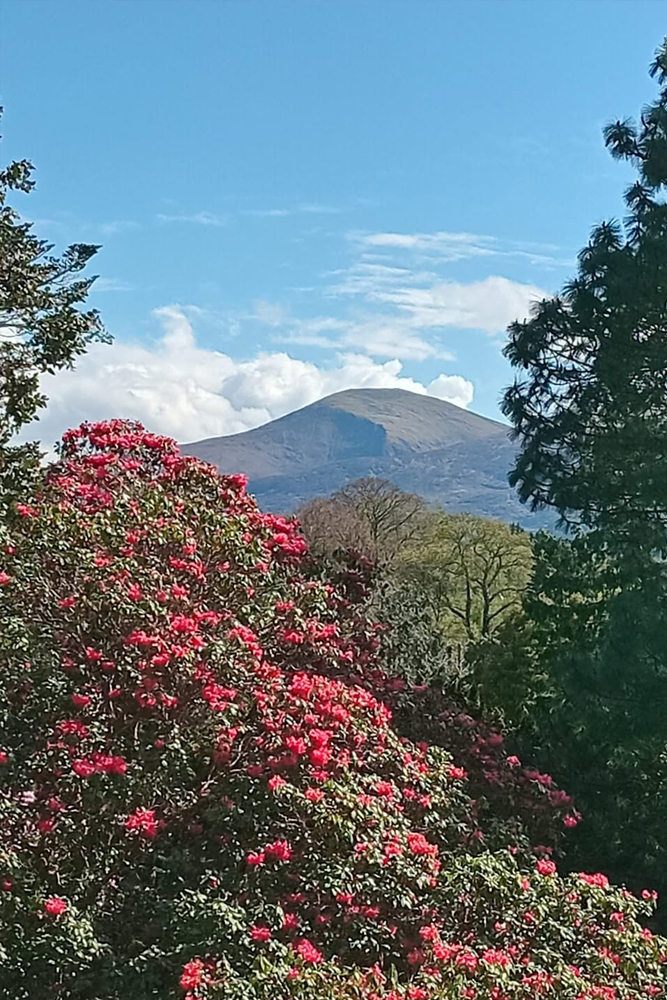
Looking towards Slieve Donard in the Mourne Mountains from Castlewellan Arboretum
The number of extraordinary individual trees is too many to mention here but there are notable champions and specimens of Podocarpus, Juniperus, Torreya, Eucryphia, Cupressus, Drimys, Nothofagus, Abies and many other genera. Two fine Wellingtonia, Sequoiadendron giganteum – which are quite likely to have been in the first batch of trees released by the Veitch Nurseries, grown from seeds brought back from North America by William Lobb, survive – and flank the steps leading into the lower part of the arboretum. Castlewellan is an absolute treasure chest and a dendrological delight.
Lunch at Seaforde Café or The King’s Inn Castlewellan.
Afternoon
Seaforde Gardens
Website https://www.seafordegardens.com/
After lunch in the cafe we will visit Seaforde, home of Lady Anthea Forde (IDS member) and family. This wonderful estate with magnificent views up to the Mourne Mountains contains a garden filled with botanical treasures, many grown from wild collected material by the late Patrick Forde. He made many plant hunting trips to China, Africa and South America as well as eight expeditions to the Himalayas. Many of his plantings are reaching maturity, and grow happily at Seaforde.
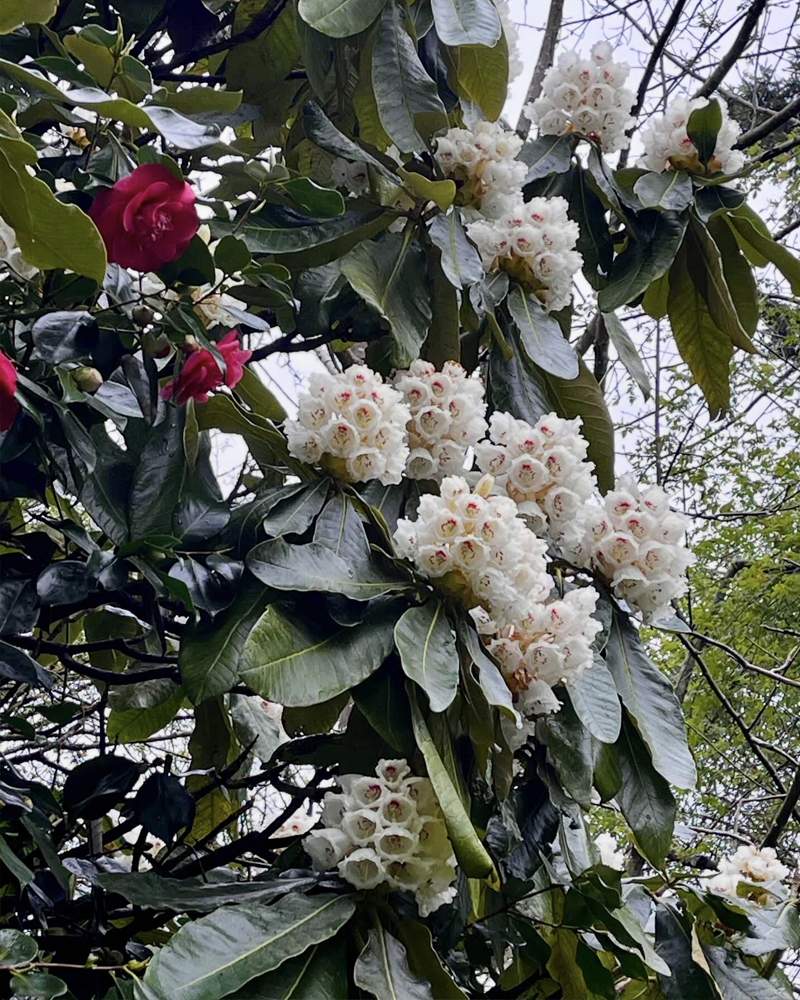
Rhododendron suoilenhense
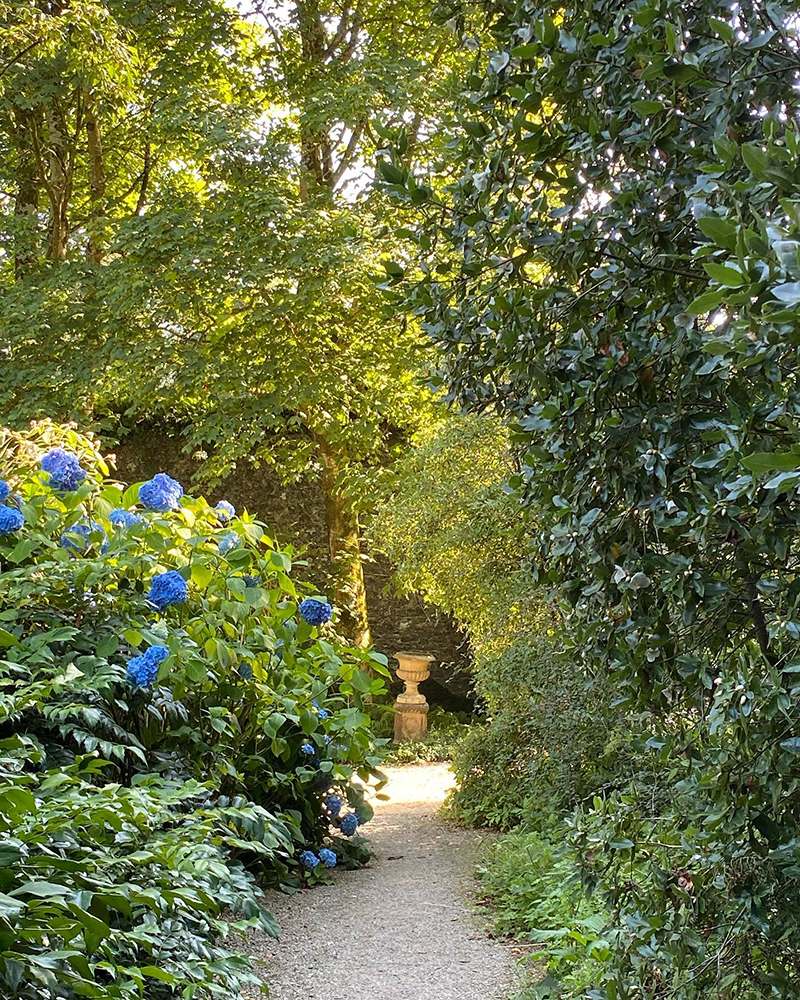
Seaforde gardens
The principal gardens are situated within and adjacent to the old walled garden, whose structure dates from the first half of the 18th century. One of the highlights is the hornbeam maze (Carpinus betulus) planted in 1975 to celebrate Anthea and Patrick’s 10th wedding anniversary. Within this protected space grow an array of semi tender and rare plants. One of the glories of the garden are the Eucryphias, and Seaforde hold the National Collection with over 20 different species and cultivars. A very successful IDS Study weekend on Eucryphia was held back in 2018 with the expertise of the late Seamus O’Brien and John Anderson. Other highlights include one of the very first Sequoiadendron giganteum to be grown in Ireland during the 1850s and 1860s, planted by The Rt. Hon Colonel William Forde MP.
Another notable champion is the vertically branched Crimean pine, Pinus nigra subsp. pallasiana.
Supper, to be confirmed.
Optional visit to Mount Stewart, Newtownards (National Trust).
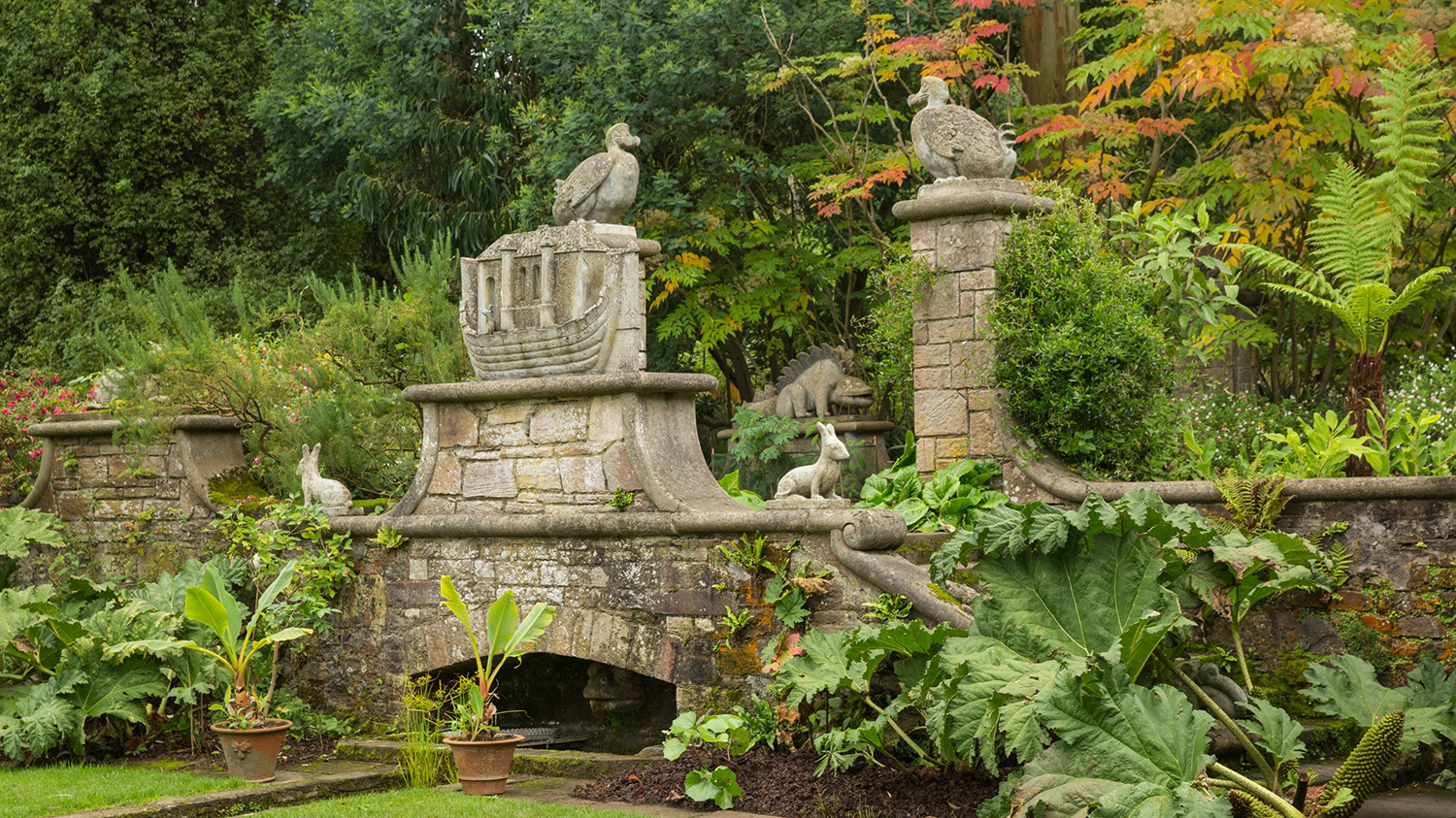
The Dodo Terrace at Mount Stewart, Newtownards
End of tour and departures.

Neil Porteous
I am delighted that Neil Porteous will be joining us as our expert guide and botanist for the weekend.
Neil is an historic gardens consultant, gardener and plantsman working across a huge range of Ireland’s finest gardens. Recent and current projects include Castlewellan (which we are visiting), Anne’s Grove in Co Cork, Brook Hall owned by the Gilliland family in Derry, and Glenarm in Co Antrim where planting decisions are closely tied to climate, management and long-term intent.
He was formerly head gardener at Mount Stewart in Co Down and the National Trust’s gardens advisor for Northern Ireland. He has a love of garden history and received his MA in Garden History at Bristol. He has travelled extensively in Australia, New Zealand, India, China and Vietnam on numerous plant-hunting expeditions and is a frequent contributor to BBC’s Gardeners Question Time, as well as being a much sought after speaker.
| Tour | IDS Budget Tour |
| Location | County Down, Northern Ireland |
| Tour dates, arrival | Thursday 22 April 2027 |
| Tour dates, departure | Sunday 25 April 2027 |
| Tour organiser | Suzie Scott |
| Botanists | Neil Porteous, historic gardens consultant, gardener and plantsman |
| Availability | Maximum number of participants: 20 |
| Accessibility | Level 2: Mostly easy but with some uneven ground and steep sections. Options for slightly longer walks. |
| Weather conditions | It’s Ireland, come prepared! (be sure to pack waterproofs and good walking boots). |
| Tour cost | The cost per person is £280 |
| What’s included | All entry fees to gardens (except Mount Stewart which is an optional extra on Sunday morning), three evening dinners, two lunches, IDS administration costs, organisers costs, guide, and plaque/presentations to garden owners. |
| What’s not included | Accommodation, breakfasts, incidental refreshments, alcohol, travel insurance and transport. Entrance to Mount Stewart is not included. National Trust members go free, and for non members admission is £16.00 pp. |