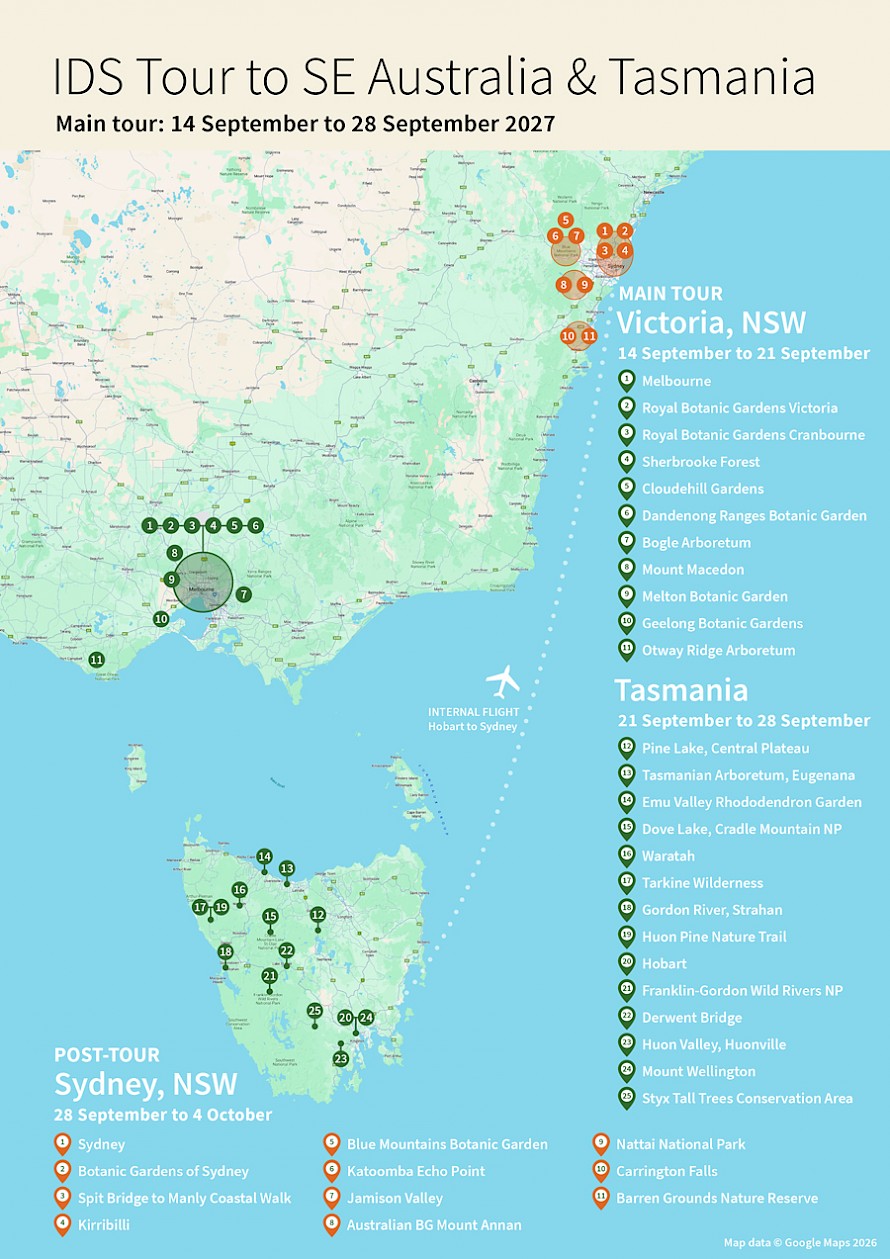
| Dates | 14 September to 4 October 2027 |
| Location | South East Australia & Tasmania |
| Main Tour | Tuesday 14 September to Tuesday 28 September |
| Post-tour | Tuesday 28 September to Monday 4 October |
| Tour organiser | Greentours |
| Tour coordinator | Marie-Christine de Laubarède |
| Assisted by | Simon Grant, IDS VP for Australia |
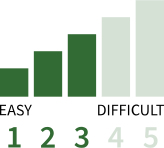
| Difficulty rating | Main tour: Level 2 to 3 (easy with mostly short walks of less than 2 km but some moderate walks up to 4km, occasional uneven ground). Post-tour: Level 3 to 4 (a mix of easy and moderate walks of up to 4 km, with some up to 10km, including some lengthy steep sections and occasional uneven ground). |
| Max. participants | 25 |
Send to: Marie-Christine de Laubarède
Send to: Marie-Christine de Laubarède
Send to: Marie-Christine de Laubarède
Our tour starts in Victoria, where a varied topography and climate has resulted in a richly varied and often distinctive woody flora encompassing the range from semi-arid fire-dependant bushlands through to wet rainforest.
The best examples of the remaining forested lands in Victoria are now well-protected and we will visit a range of them including the tall Mountain Ash dominated Sherbrooke Forest. Victoria is the home of many of Australia’s finest gardens, botanic gardens and arboreta. During our five days in Victoria we will visit the Royal Botanic Gardens, Melbourne and the Australian native collections at royal Botanic Gardens, Cranbourne, amongst others. The tour will also visit fine exotic collections at the Dandenong Ranges Botanic Garden, Emu Valley Rhododendron Garden and Otway Ridge Arboretum, private gardens at Mt Macedon and along the way meet several Australian IDS members including some of Australia’s finest plants collectors, Bob Cherry and Alistair Watt.
Tasmania not only supports the richest areas of cool temperature rainforest in Australia but also superb heaths and bogs, wild rivers, and dramatic mountains whose woody flora is as unique and distinctive as its famous mammals. Tasmania’s special status is recognised in that much of the western mountains and coasts have been designated a World Heritage Area. Even if its flora and fauna was not of international importance, the grandeur and variety of the scenery would have ensured its designation. We will visit the Myrtle and Sassafras forests of Huon, explore the wild World Heritage Area around Lake St Clair and Cradle Mountain. There are weird Banksias, gorgeous white and red Waratahs, an immense variety of conifers, and huge, towering Eucalypts.
Post tour (optional)
For the tour extension we will move back to the mainland and New South Wales where the dry bushlands offer a complete contrast to Tasmania. We will explore the Sydney sandstone environments to see the beautiful Angophora costata, the World Heritage listed Blue Mountains National Park, dry sclerophyll forests of Nattai NP and the heathland vegetation of a hanging swamp at Barren Grounds Nature Reserve. Here we will be able to enjoy Waratahs flowering in the wild as well as visit wonderful collections of Camellias and Araucarias in a variety of local and botanic gardens in Sydney including Royal Sydney Botanic Gardens with its fine historic collections as well as the Blue Mountains Botanic Gardens. And a night out at the Opera too!
Arrive Melbourne
Welcome Dinner
Overnight: Radisson Flagstaff Gardens Melbourne
Melbourne Botanical Garden & Cranbourne Botanic Garden
Melbourne Gardens extends over 38 hectares and houses a collection of more than 8,500 species of plants from around the world, including amazing and diverse plant collections such as camellias, rainforest flora, cacti and succulents, roses, Californian species, herbs, perennials, cycads, plants from Southern China and, in the Rare and Threatened Species Collection, plants from south-eastern Australia. Of particular note is its collection of native Acacias. Its first director, Ferdinand von Mueller, one of Australia’s most important botanists, brought in many plants but was controversially replaced in 1873 by William Guilfoyle who changed its style into a more picturesque garden. Guilfoyle was subsequently also responsible for the creation of many parks and gardens throughout Victoria.
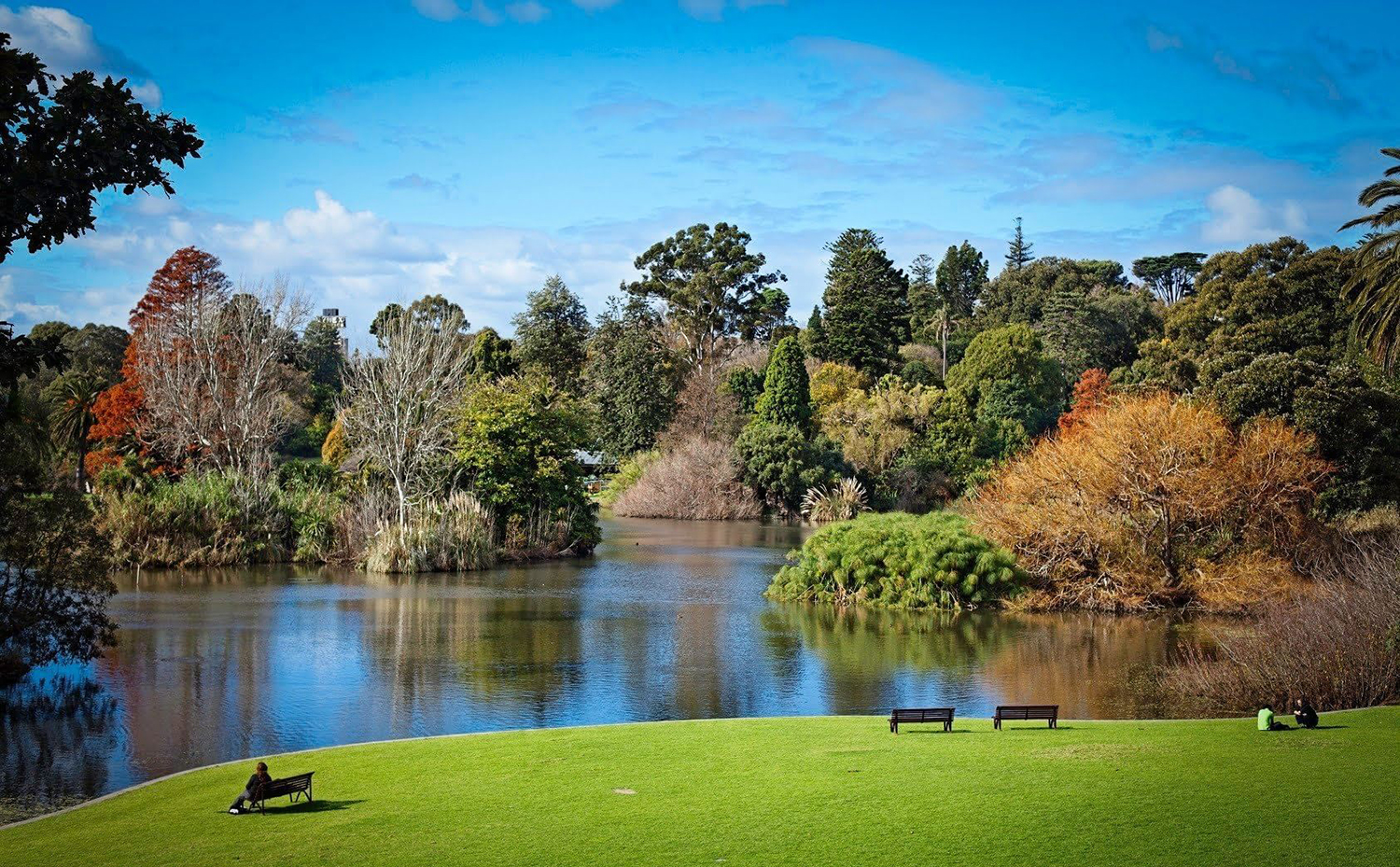
Royal Botanic Gardens Victoria, Melbourne Gardens.
Cranbourne Botanic Garden is a uniquely modern design (established in 1970) showcasing native dryland plants. The natural bushland within the extensive gardens has over 450 indigenous plant species; it is a precious remnant of the vegetation that once covered the broader region and is actively managed to control the number of non-indigenous plants and exotic weeds. Its central feature, the Red Sand Garden, is designed to mimic the seasonal flushes of wildflowers seen in central Australia.
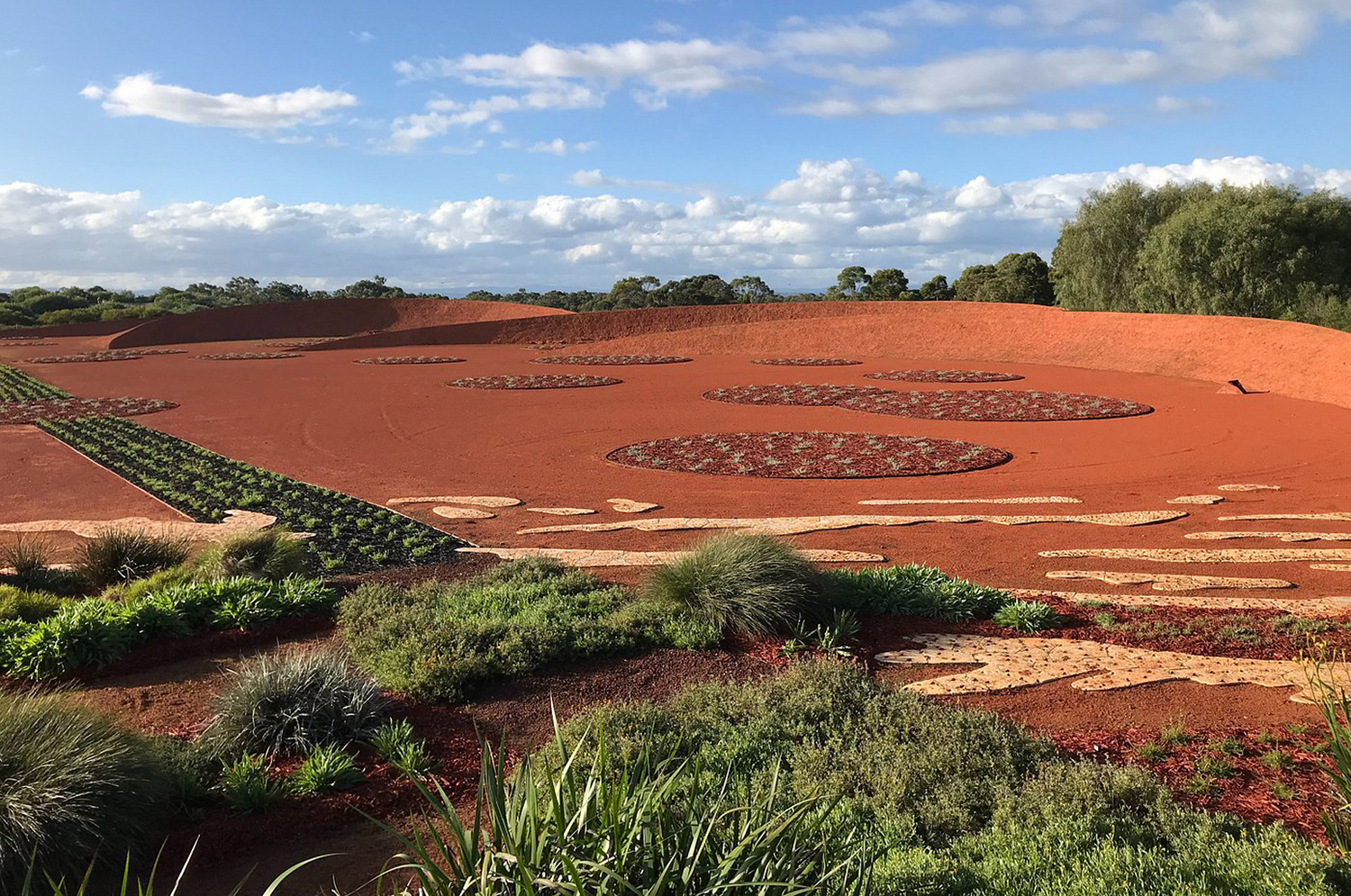
The Red Centre, Cranbourne Botanic Garden.
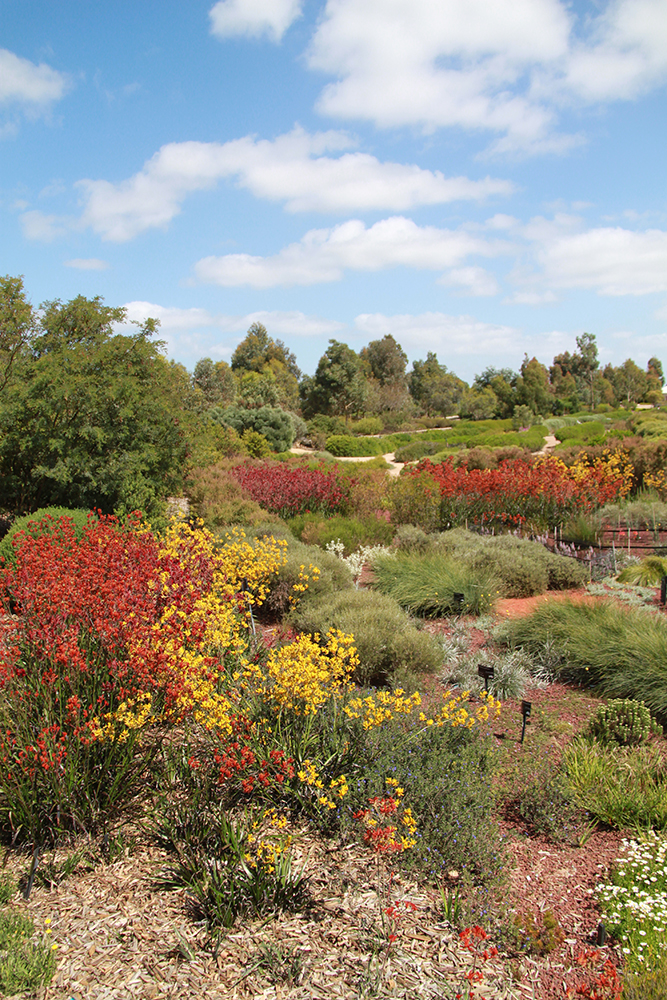
Cranbourne Botanic Garden view © Janna Schreier
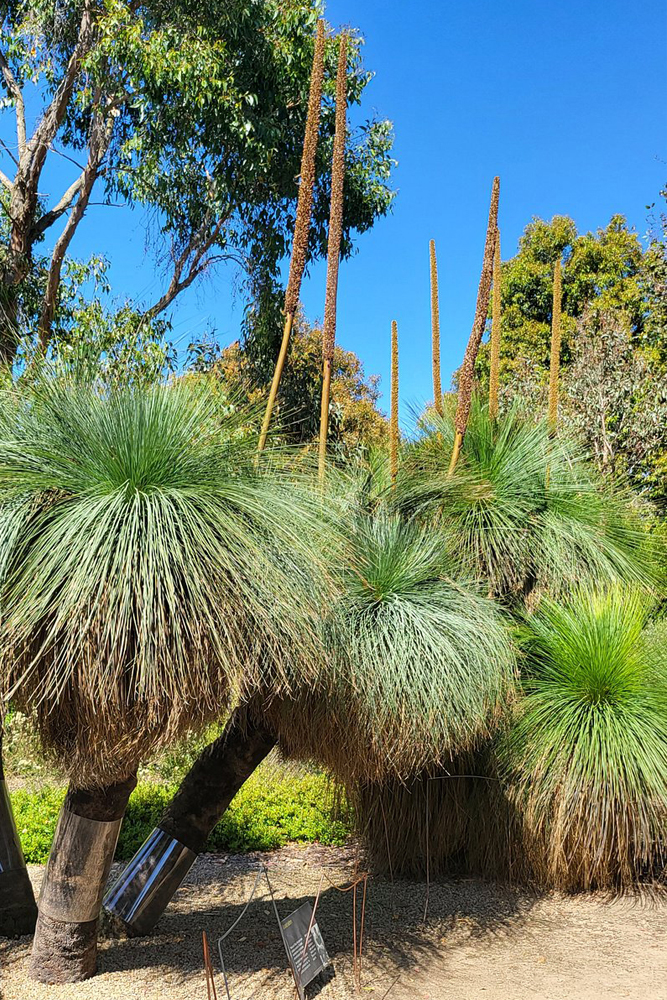
Xanthorrhoea, Cranbourne Botanic Garden.
Overnight: Radisson Flagstaff Gardens Melbourne
The Dandenongs: Sherbrook Forest, Cloudehill Gardens and the Dandenongs Ranges Botanic Garden
Sherbrooke Forest is a much-loved Melbourne icon. Covering the southern part of the Dandenong Ranges National Park the 800-hectare Sherbrooke is home to remnant Mountain Ash (Eucalyptus regnans) forest. These are among the world’s tallest flowering plants growing some 100 metres tall and living up to 500 years. The undergrowth is a mixture of Tree Ferns: (Dicksonia), and Sassafras (Atherosperma moschatum). A network of walking trails to picturesque sites such as the Sherbrooke Falls and O’Donohue Picnic Ground, provides easy access to this spectacular habitat – wet sclerophyll forest, which is also home to Blackwood (Acacia melanoxylon), Southern Sassafras (Atherosperma moschatum), Blanket Leaf (Bedfordia arboresecns), Messmate Stringybark (Eucalyptus obliqua), Woolly Tea-Tree (Leptospermum lanigerum) and Tree Lomatia (Lomatia fraseri). There’s a range of smaller trees too including Hazel Pomaderris (Pomaderris aspera) and Cherry Ballart (Exocarpos cupressiformis). Various shrubs line the trails notably Common Cassinia (Cassinia aculeata) with fluffy heads of white flowers and the lovely Victorian Christmas Bush (Prostanthera lasianthos).
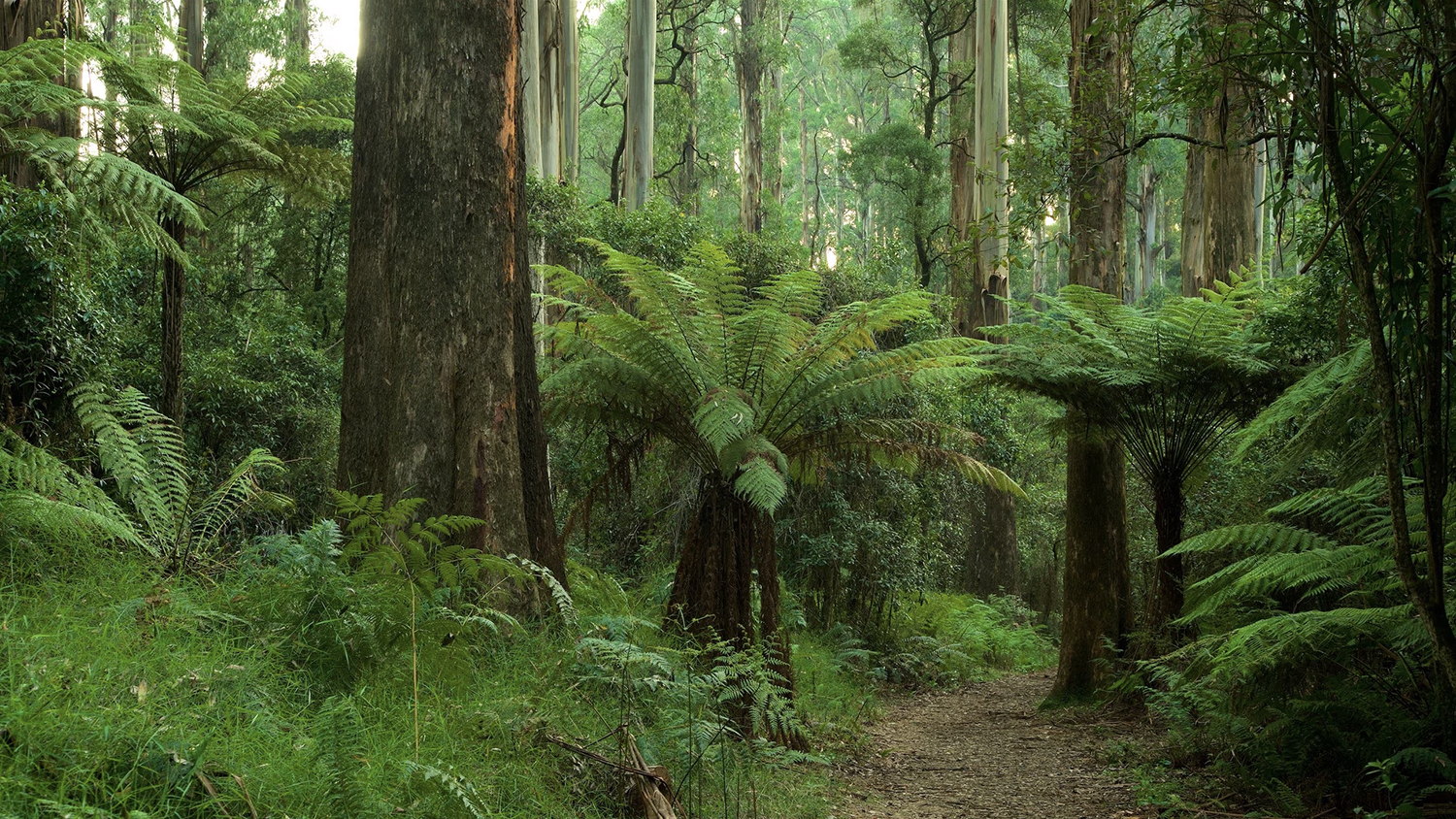
Sherbrooke Forest, Belgrave
We will have lunch with Jeremy Francis, the owner and designer of Cloudehill Gardens. A cool climate garden set on five acres, the gardens evoke the Arts and Craft gardens of Gertrude Jekyll and Edwin Lutyens. The mixture of formal structure and informal plantings are divided into some 25 gardens. A display of bonsai will also be available to view.
Later in the afternoon Don Teese will guide us around the Dandenong Ranges Botanic Garden. Situated 600 m above sea level and receiving 1,200 mm of rain annually, this garden is considered Victoria’s premier cool-climate garden.
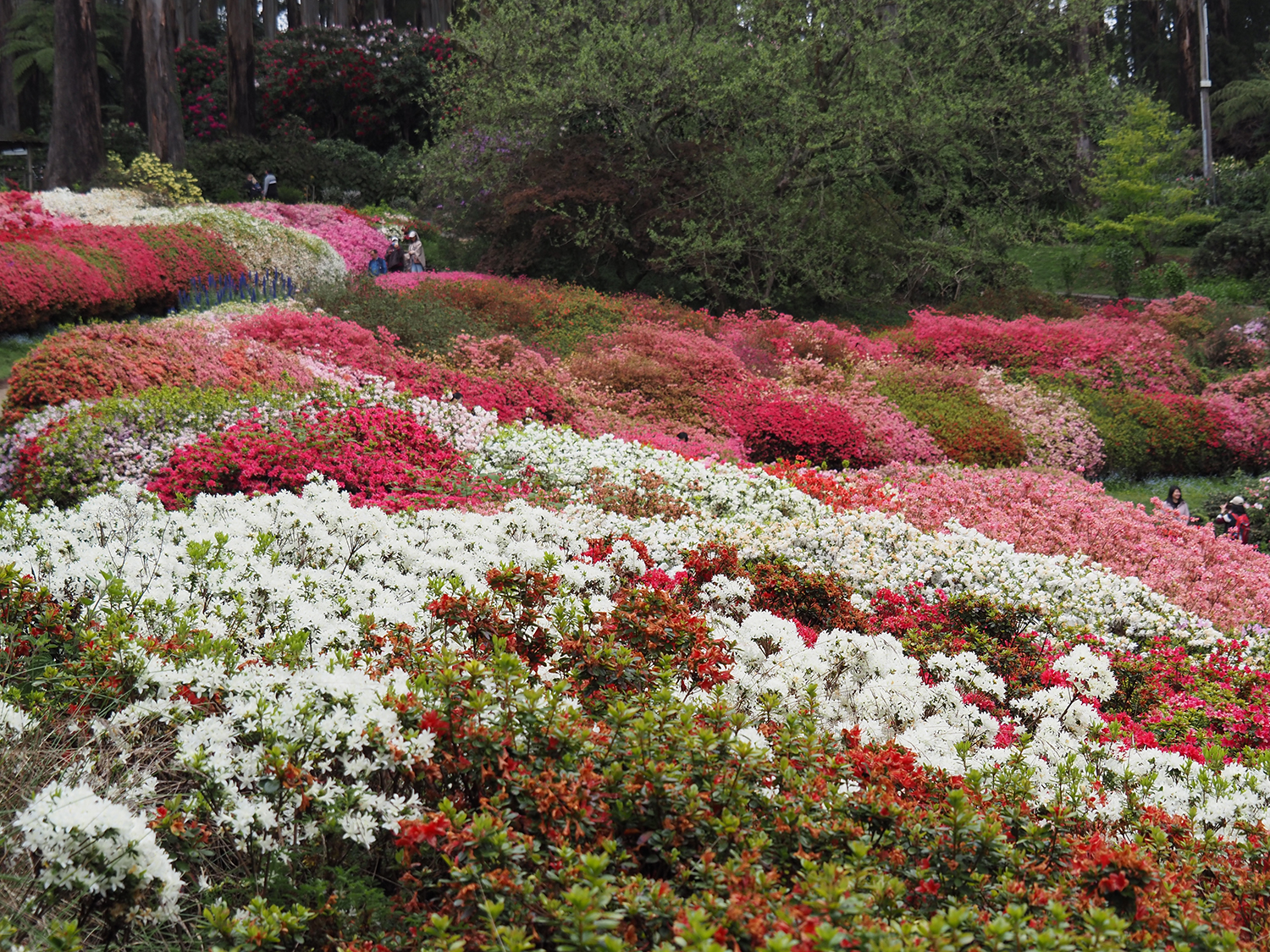
Dandenong Ranges Botanic Garden
Established in 1960 by the Australian Rhododendron Society, its volcanic, free draining soils were considered ideal. Though initially focusing on rhododendrons with material obtained from members as well as national and international visits to areas such as North Queensland, Nepal, India and New Guinea, the gardens also contain a large collection of other cool climate species with more than 50,000 plants.
Overnight: Radisson Flagstaff Gardens Melbourne
Bogle Arboretum and Warburton environs
Today, Don Teese will be joined by John O’Hara guiding us round the 40-hectare Bogle Arboretum which has developed into a world class facility with several significant collections. It has grown to over 4,000 taxa including 1,750 different conifers, 240 different oaks, numerous Magnoliaceae and Acer species, Australian rainforest species and so on. With so much on hand, and with good collections of related species, the arboretum provides an ideal setting to examine selected families and/or genera in greater detail.
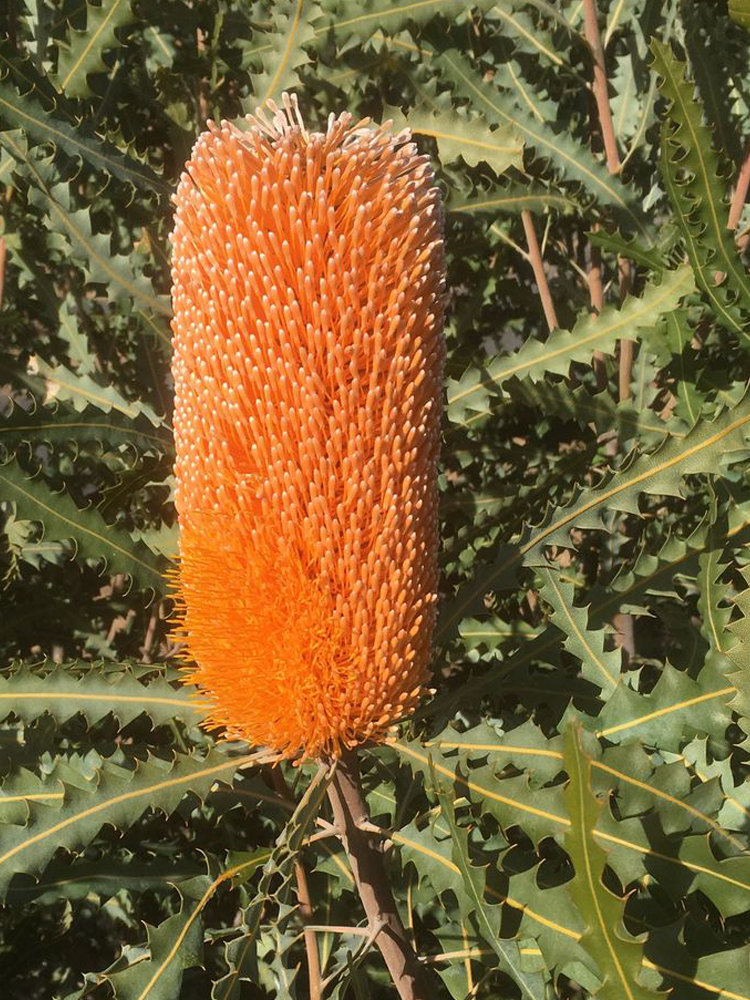
Banksia ashbyi, Melton Botanical Garden.
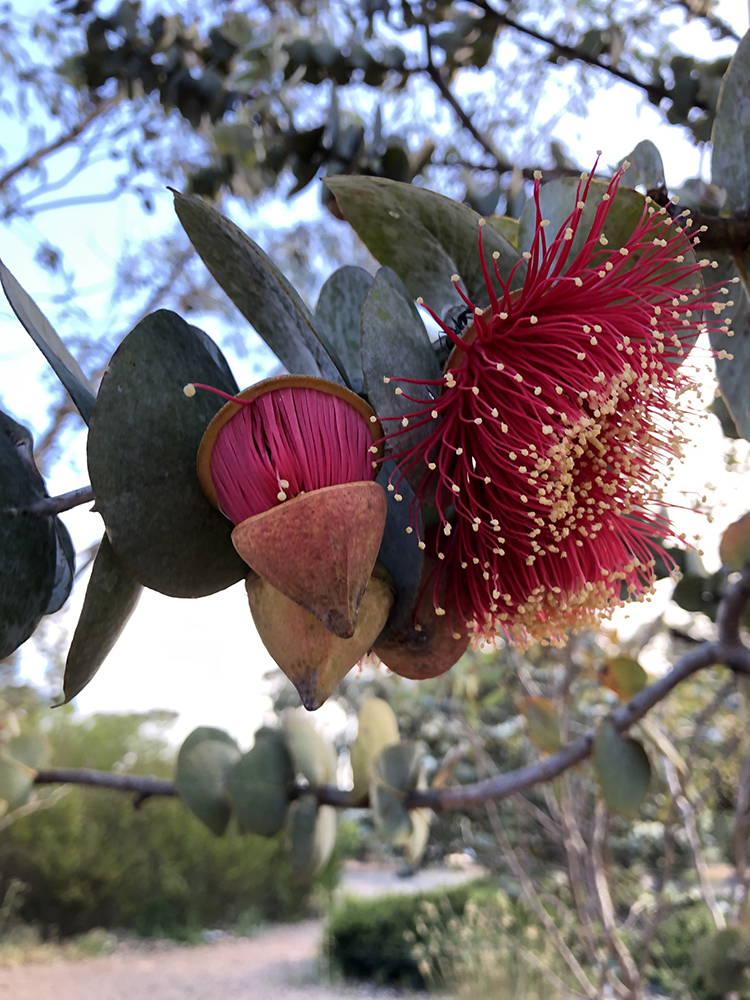
Eucalyptus rhodantha, Melton Botanical Garden.
After lunch we will tour around nearby Warburton. We will first visit the Redwood Forest. The first Californian redwoods were planted here more than 90 years ago as part of a hydrology experiment conducted by the Board of Works in the 1930s. They were planted alongside Bishop Pine (Pinus muricata) and Douglas fir as well as with more recent plantings of Radiata Pine and Western Red Cedar. Even those recent plantings are now over 60 years old. There is/was a Japanese heart nut (Juglans ailantifolia) there.
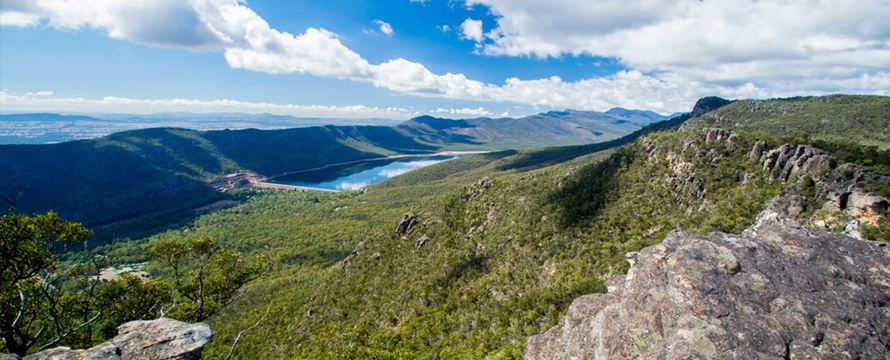
We will then proceed to the Rainforest Gallery. There on an elevated platform, towering Mountain Ash and ancient Myrtle Beech can be viewed. The Mount Donna Buang lookout tower has spectacular views over Melbourne, Cathedral Ranges, Mount Baw Baw and the Alps (weather permitting).
Overnight: Radisson Flagstaff Gardens Melbourne
Mount Macedon
Today, Stephen Ryan, a well-known radio and television presenter and owner of Dicksonia Rare Plants and IDS member will be helping to facilitate our enjoyment of some of the region’s finest private gardens. About 60 kilometres to the north of Melbourne, on the mountain of the same name, is the town of Mt Macedon. It has many fine gardens including Alton, which has one of Australia’s premier gardens. It is described as an Australian terraced hill station type. Hill station gardens are usually associated with Indian colonial times, when the colonialists constructed summer retreats to escape the heat, on steep terrain overlooking valleys and plains. They often had extensive gardens. Mt Macedon has the most cohesive collection of these types of gardens in Australia, but what sets ‘Alton’ apart is its collection of trees. Situated at about 1,000 m above sea level, there are over six hundred noteworthy trees with twenty-four of them listed on the National Register of significant trees. Set around an historic 1870s residence, the garden comprises about four hectares. Stephen has been associated with this garden since childhood.
Close by are the adjacent gardens of two IDS members, P. J. Cushen (PJ) and Eduard Eshuys. PJ and Eduard will be hosting lunch as well as allowing us to explore their seven acres of garden and native bush. Next door is Stephen Ryan’s Dicksonia Rare Plants nursery.
Overnight: Radisson Flagstaff Gardens Melbourne
Melton Botanic Garden, Geelong Botanic Garden and Colac
Though only just over two decades old, the Melton Botanic Garden is fast becoming a recognised centre growing dry climate native plants with its rainfall significantly lower than that of Melbourne. A volunteer-run botanic garden, it features many native plants, and it has a fine collection of over a hundred Eucalyptus species, many of which should be in flower.
We will spend the afternoon at the Geelong Botanic Garden. One of the oldest in Australia Geelong Botanic Garden was established in 1850. Among the things to see are the fine Queensland Bottle Trees (Brachychiton rupestris), one of the oldest gingkoes (Gingko biloba) in the country replete with Chi Chi, and a new Gondwana conifer collection assembled in honour of Alistair and Julie Watt whom we will meet the following day.
Overnight: Baronga Motor Inn Colac
Otway Ridge Arboretum – then overnight ferry to Tasmania
The Otway Ridge Arboretum began as a bare block in 1974. Blessed usually with good rainfall (though summers do appear to be drying) Otway Ridge has been able to support a wide range of species. Many have been collected during Alistair’s and Julie’s (our guides for the day) expeditions to countries such as Chile, New Zealand, Fiji and especially New Caledonia. Themed collection in the garden have been developed such as Rhododendron species, conifers and Gondwana plants but in truth there are many other treasures as well. Many you will be seeing for the first time.
Later in the afternoon we will drive back to Geelong to catch the overnight ferry to Devonport Tasmania.
Arrive Devonport. Pine Lake, the Tasmanian Arboretum
The ferry arrives early in Devonport. We hope to arrange for our bags to be dropped off before driving to Pine Lake.
Our first glimpse into the wet temperate forests of Tasmania takes us to Pine Lake where we will find a level boardwalk that winds through the alpine landscape of the Central Plateau. Here Neil Mitchell will show us many ancient Pencil Pines and unique alpine flora such as cushion plants and pineapple grass, we will be able to admire Celery Top (Phyllocladus aspleniifolius), and the almost shrubby Podocarpus lawrencii.
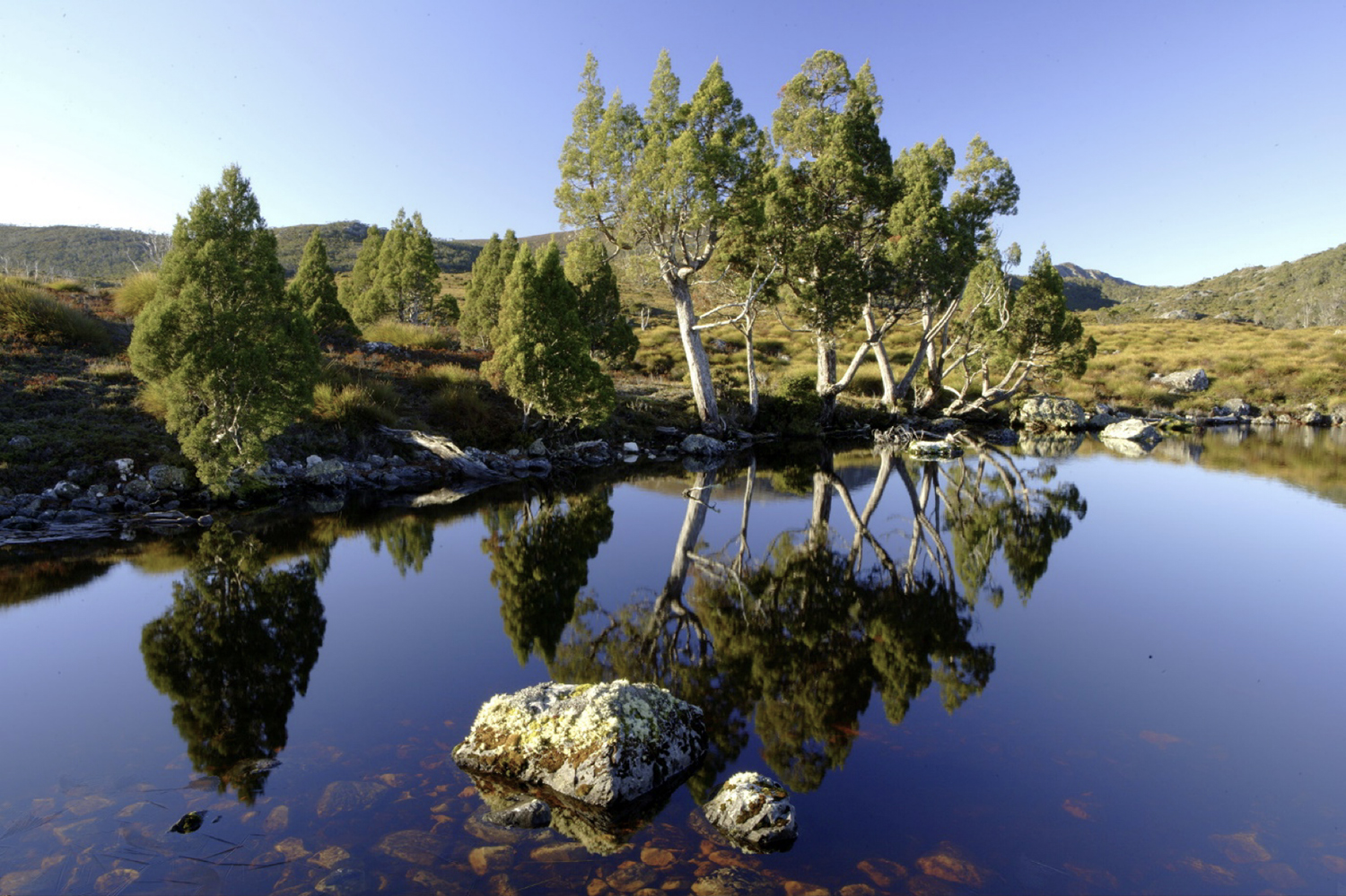
Pine Lake, Central Plateau, Tasmania.
phil Parsons will meet us at the Tasmanian Arboretum at Eugenana. Consisting of 66 hectares in total, the first plantings began in the 1980s. The 40 hectares devoted to the collection contains over 5,000 trees with the world’s largest collection of Tasmanian woody plants, as well as Southern Hemisphere conifers and other temperate plants and collections. The grove of Wollemi Pine alone is worth seeing. Foundation Lake is considered the best place for seeing Platypus in Tasmania. Pademelons and wallaby are also common, and Platypus are regularly seen in the main lake.
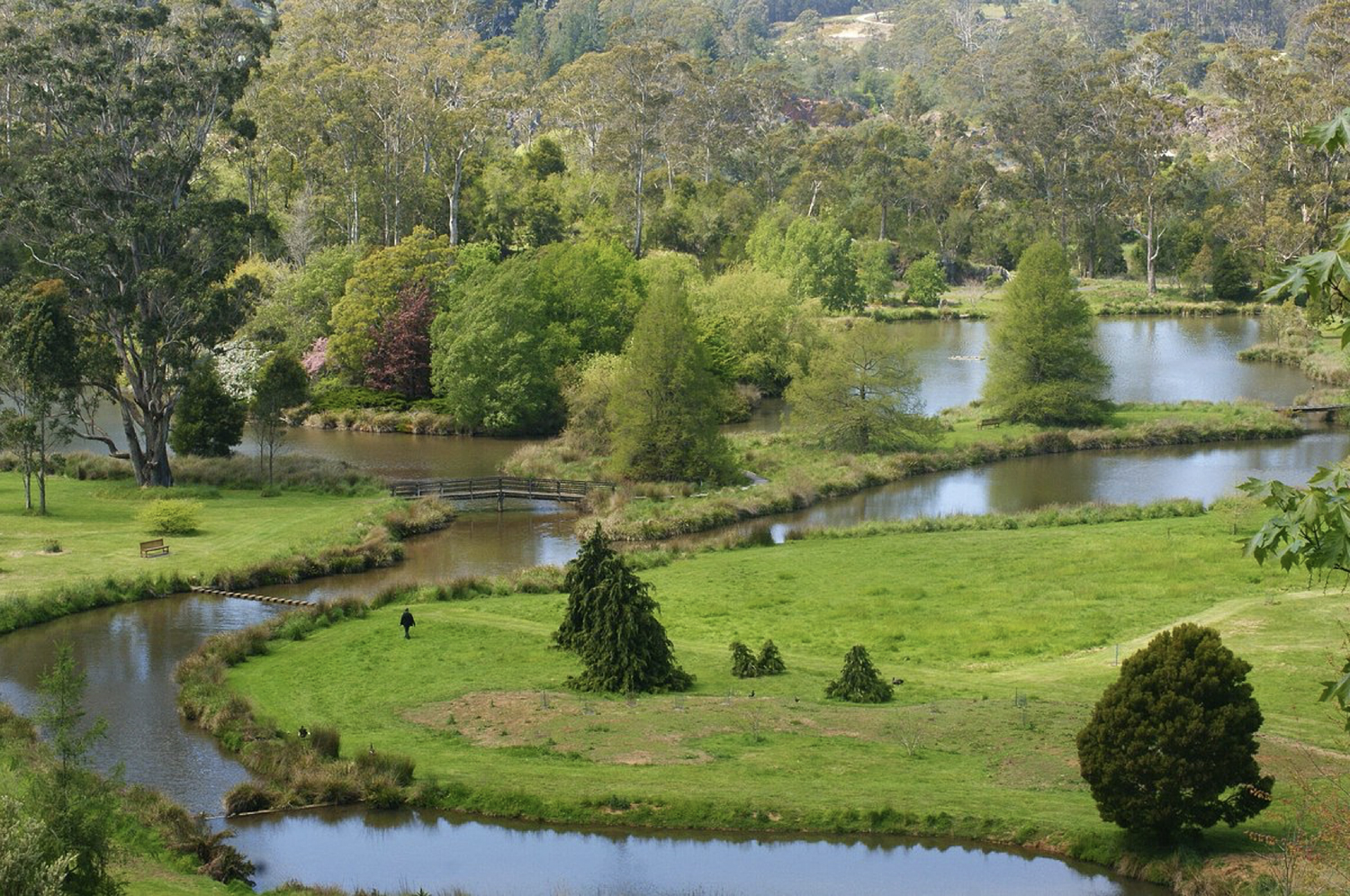
Tasmanian Arboretum
Overnight: Novotel Devonport
Bob and Derelie Cherry’s Garden, Emu Valley Rhododendron Garden
We will start the morning in company with IDS members Bob and Derelie Cherry who will show us around their remarkable garden. Bob has been in horticulture all his life. After training at Ryde Horticultural College and a few short stints working for others, Bob started his own nursery, Paradise Plants north of Sydney. There Bob focussed on plant-growing and breeding, a passion he has continued to this day. His love of plants took him to China and other parts of Asia plant hunting and many of us in Australia are indebted to him for introducing into Australia many beautiful and unusual species. But as Bob says that is a past life and in 2015 he achieved his long-held desire to live in Tasmania, moving with Derelie to Gawler where he and Derelie have of course developed a new garden, where Bob continues to breed new Magnolia and Camellia hybrids, Derelie new roses. The new garden is also full of colourful perennials and bulbs, the climate and soils of Tasmania allowing them to grow plants that struggled north of Sydney.
The 11 hectares of the Emu Valley Rhododendron Garden is an amphitheatre displaying no less than 24,000 rhododendrons and companion plants. Begun in 1981 by the Northwest Tasmanian Branch of the Australian Rhododendron Society, the volcanic soils and protection by its topography have proved ideal for growing a huge range of the species and cultivars. In addition, there is a wide range of interesting cool climate plants providing colour and variety. The ponds are an ideal place to catch sight of a resident platypus.
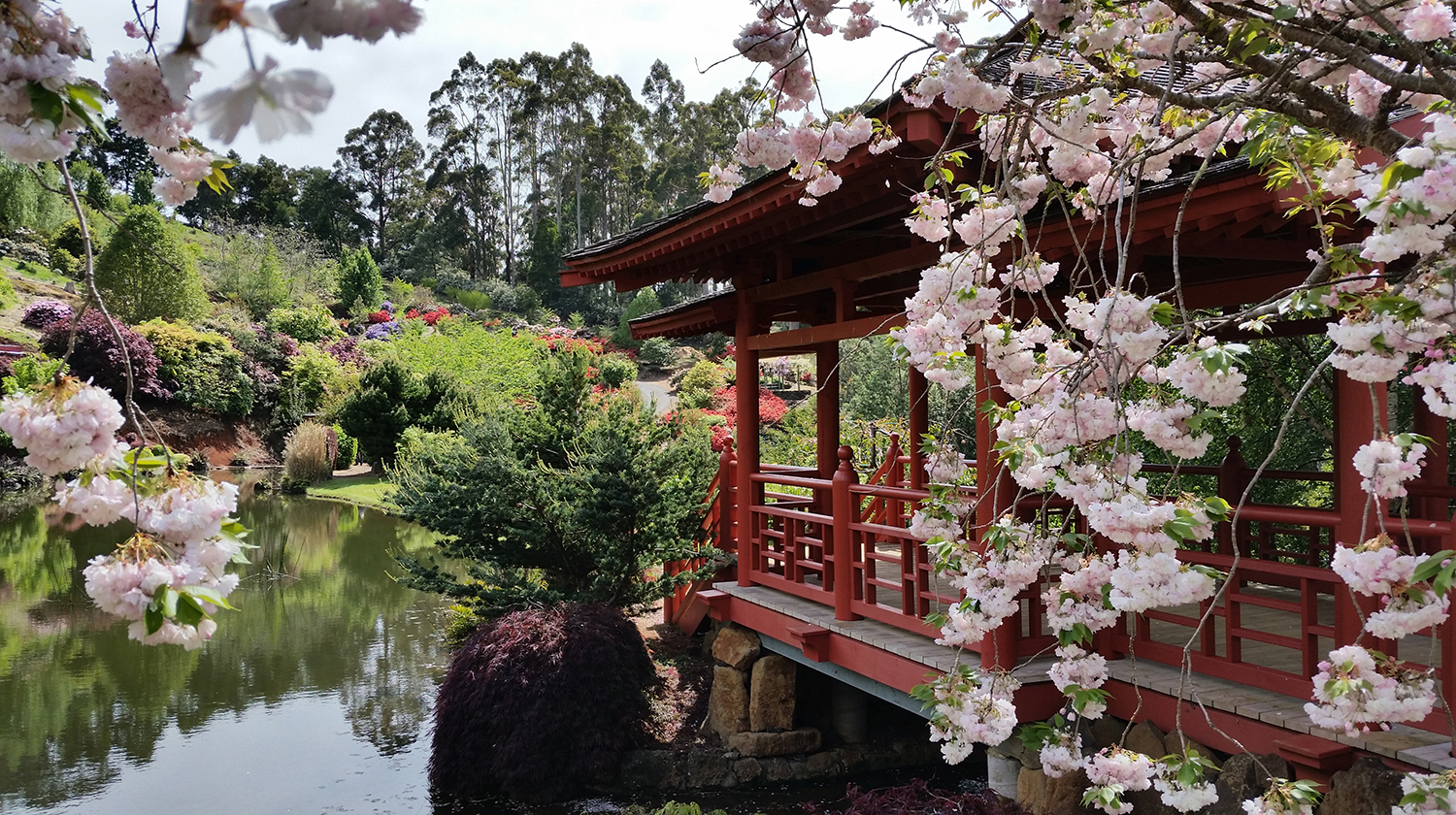
Emu Valley Rhododendron Garden.
Overnight: Novotel Devonport
Cradle Mountain National Park and possibly Philosophers Falls, Tarkine wilderness
The iconic park to experience Tasmania’s rugged highlands and its indigenous vegetation. Here you can see Australia’s only cold-deciduous plant, Nothofagus gunnii, as well as King Billy pine (Athrotaxus selaginoides) and a range of other species. The Dove lake circuit walk is about 6 km with an elevation of 150 m and takes about 2 hours.
This morning, in company with phil Parsons, we will head to the scenic Cradle Mountain National Park and a superb boardwalk trail at Dove Lake. The trail circles Dove Lake while taking you beneath the craggy spires of impressive Cradle Mountain. This 6 km circuit is boardwalk for much of the way and has an elevation gain of 350 m. We will wander through Pencil Pine and King Billy Pine dominated forests. There is much Pandanus, Myrtle Beech and Sassafras too. Here you can see Australia’s only cold-deciduous plant, Nothofagus gunnii.

Dove Lake, Cradle Mountain National Park. © The long way's better.com
We will stop at the lookout near Waratah for coffee before spending the afternoon enjoying the 2.6 km long Philosopher’s Walk. This is an easy walk with only 75m elevation change. It takes us through the remarkable Tarkine Wilderness, Australia’s largest expense of cool-temperate rainforest dominated by tall myrtle beech, (Nothofagus cunninghamii) with an understory of blackwood (Acacia melanoxylon), Sassafras (Atherosperma moschatum) and celery top pine. Everything is covered in moss. A true ‘Alice in Wonderland’ temperate rainforest.
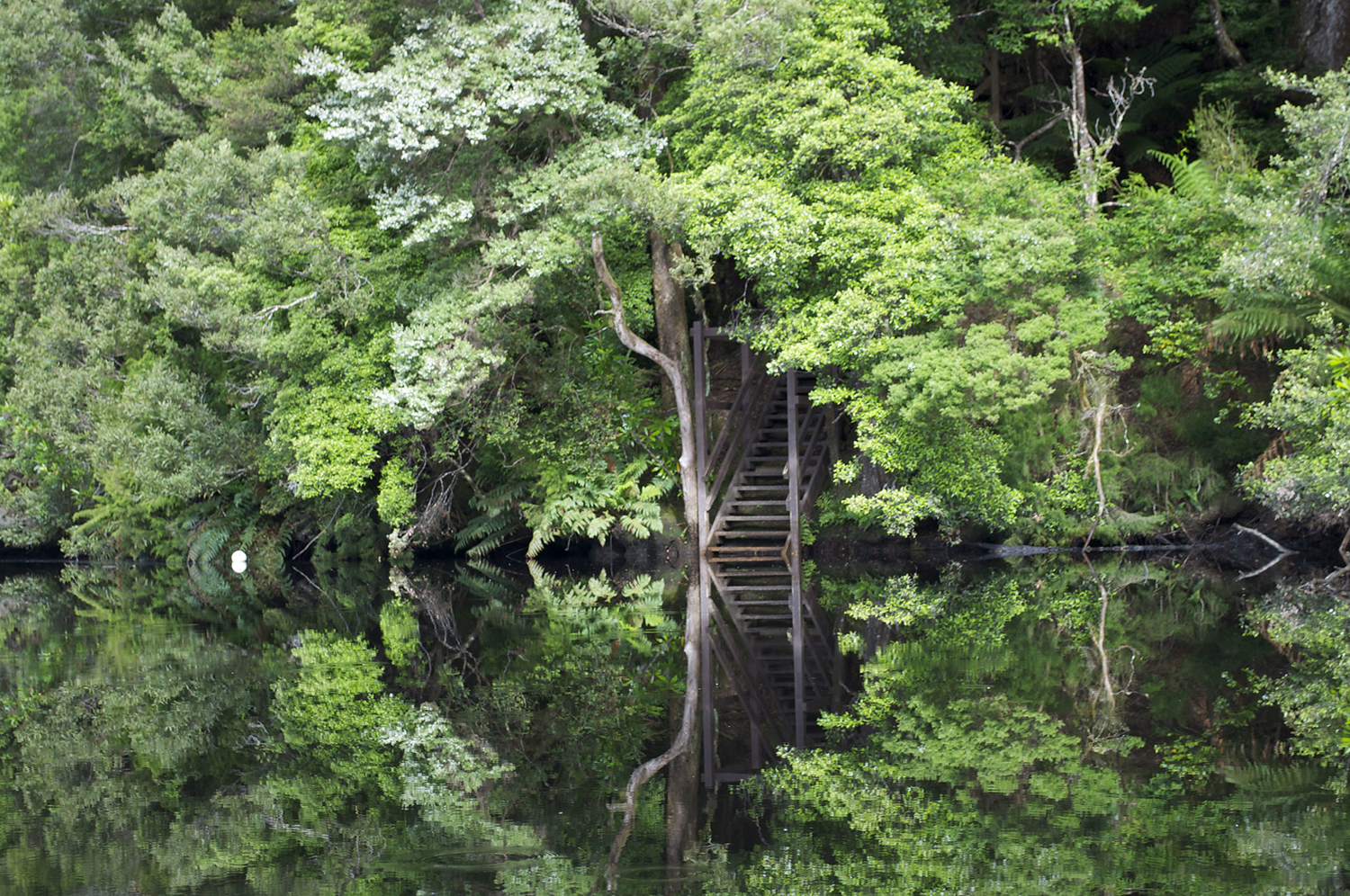
Tarkine Wilderness, Pieman River State Reserve. © Caroline Jones-Flickr
Overnight: Strahan Village Inn, Strahan
Gordon River Boat Trip and Huon Pine Nature Trail
A day-long boat trip that travels up the Gordon River into the World Heritage Area to see remnant Huon Pine (Lagarostrobos franklinii). This species was heavily logged for its prized wood as well as inundation from hydroelectric dams. Slow growing and reaching 2,000 to 3,000 years in age, they are now fully protected. The boat trip will include lunch and a visit to Sarah island, once a dreaded penal colony.
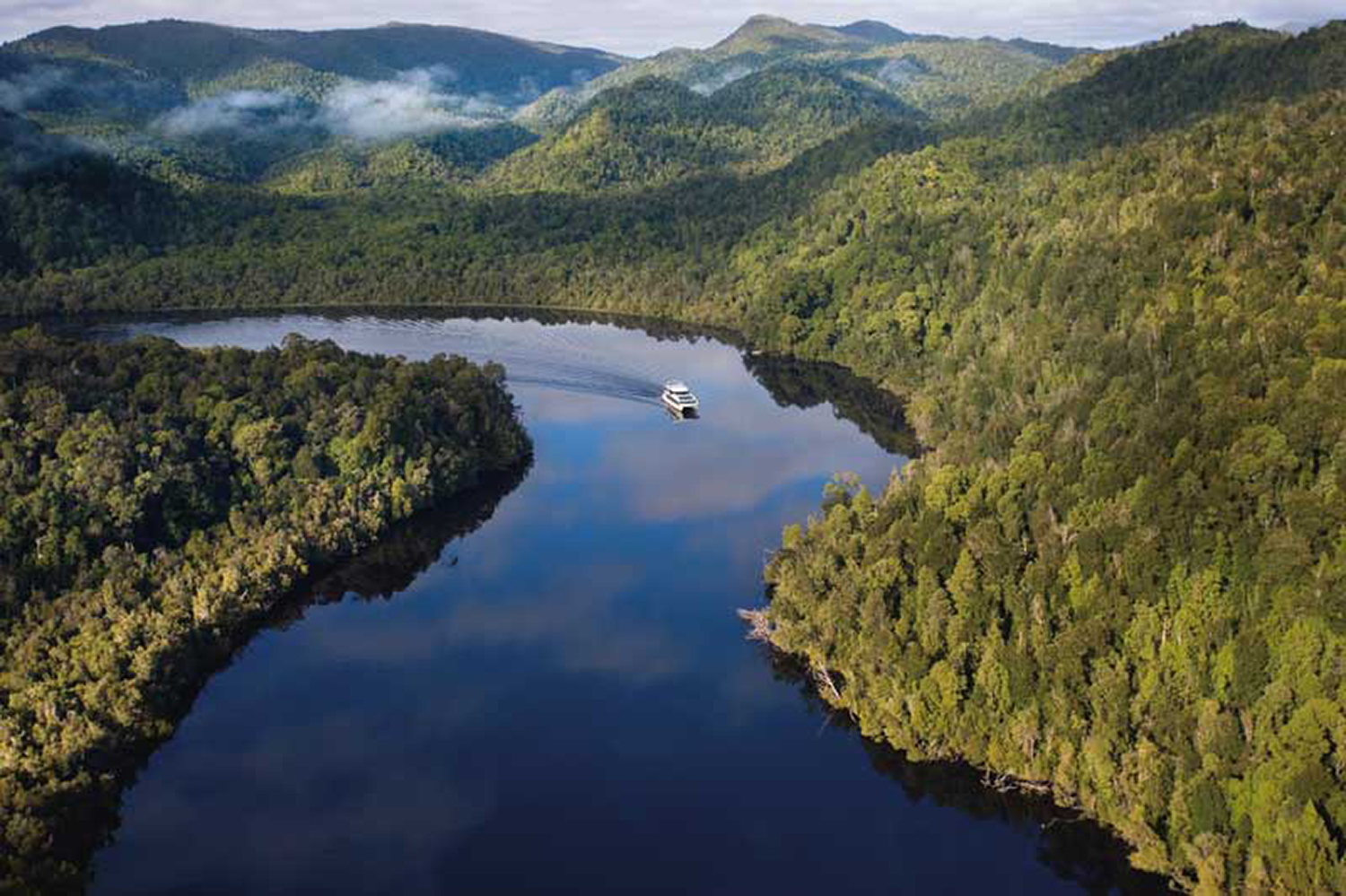
Gordon River boat trip.
In the afternoon is an optional walk on the flat Huon Pine Nature Trail.
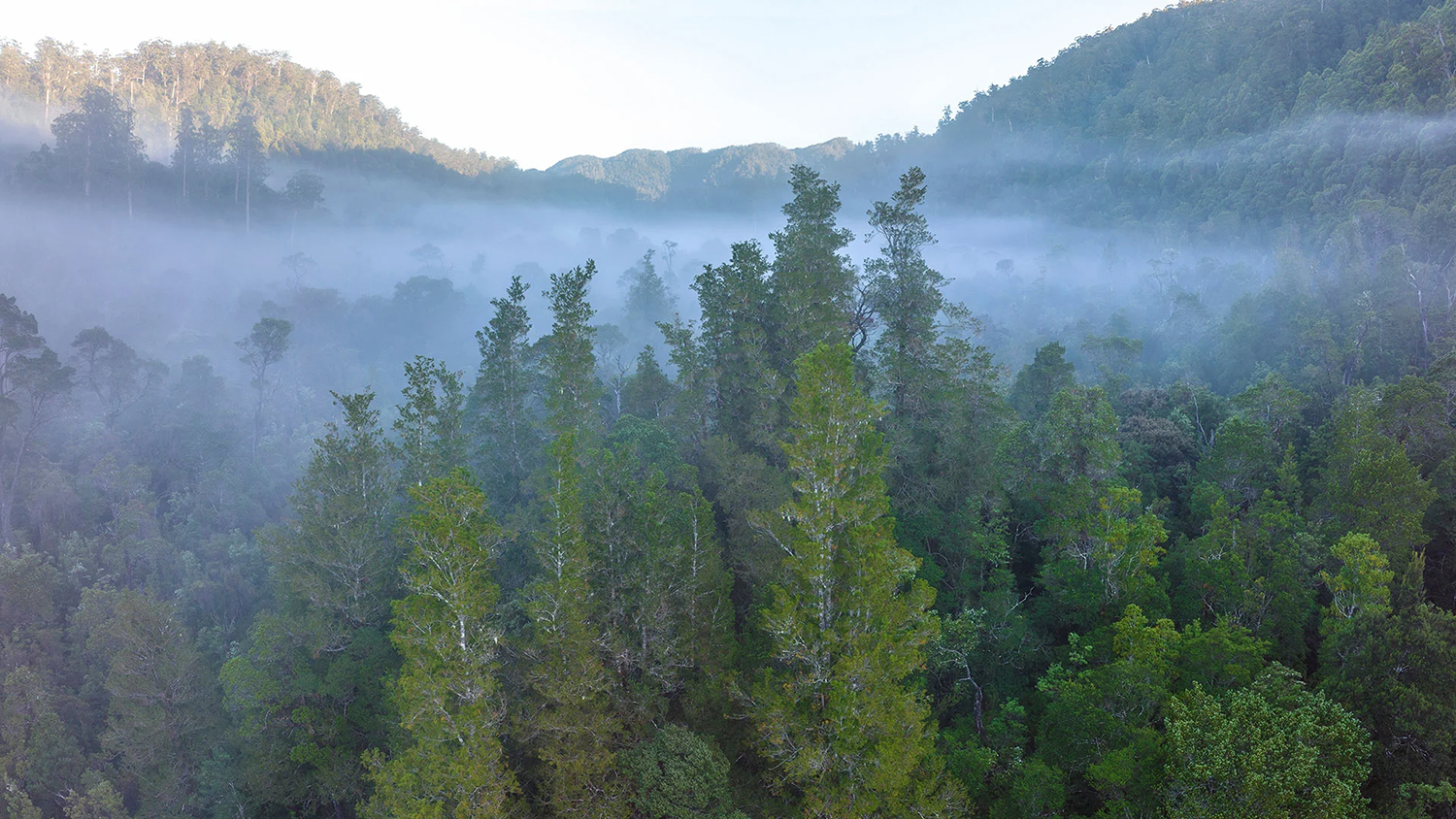
Huon Pines, Bob Brown Foundation. © Rob Blakers
In town there is a craft centre that specialises in using Huon Pine, where we will be able to see what the timber looks like and what its used for.
Overnight: Strahan Village Inn, Strahan
To Hobart. Franklin River Nature Trail
This morning we will head to the Franklin-Gordon Wild Rivers National Park and the Franklin River Nature Trail, a nice easy trail along a rushing river, beset with stunning mossy forest. This river was made famous by a controversial dam project which if it had gone ahead would have flooded much of its course. The walk is through a patch of rainforest which has good specimens of beech, eucryphia, celery-top pine and some large Eucalyptus delegatensis.
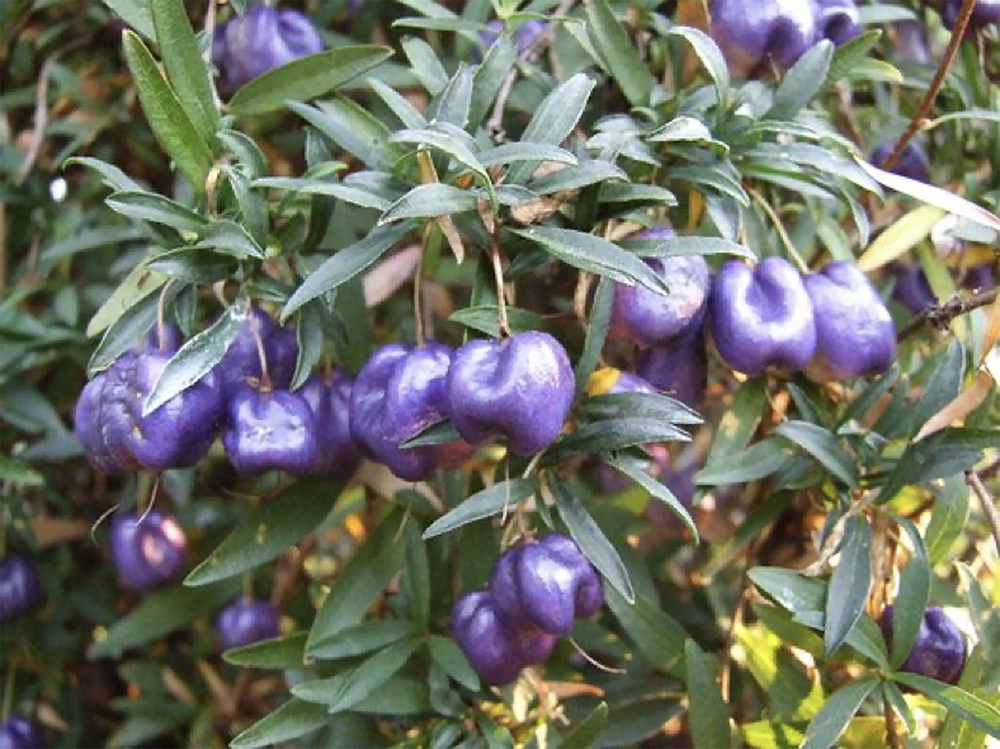
Billardiera longiflora

Callistemon © Melbournebushfood.com.au
We will then head to Derwent Bridge for lunch and in the afternoon visit the King William Saddle where we will look for Tasmanian bottlebrush (Billardieras and Callistemons). Then we will head for Hobart.
Overnight: Old Woolstore Hotel, Hobart
Hobart Huon Valley and Mount Wellington
In the morning we will head the Huon Valley south of Hobart, nestling under the Hartz Mountains. Here in company of Jim Cane we will visit the canopy walkway at Tahune which will enable greater insight to be gained into the myrtle and sassafras forest, while the productive heartland with its picturesque orchards provides a delightful contrast.
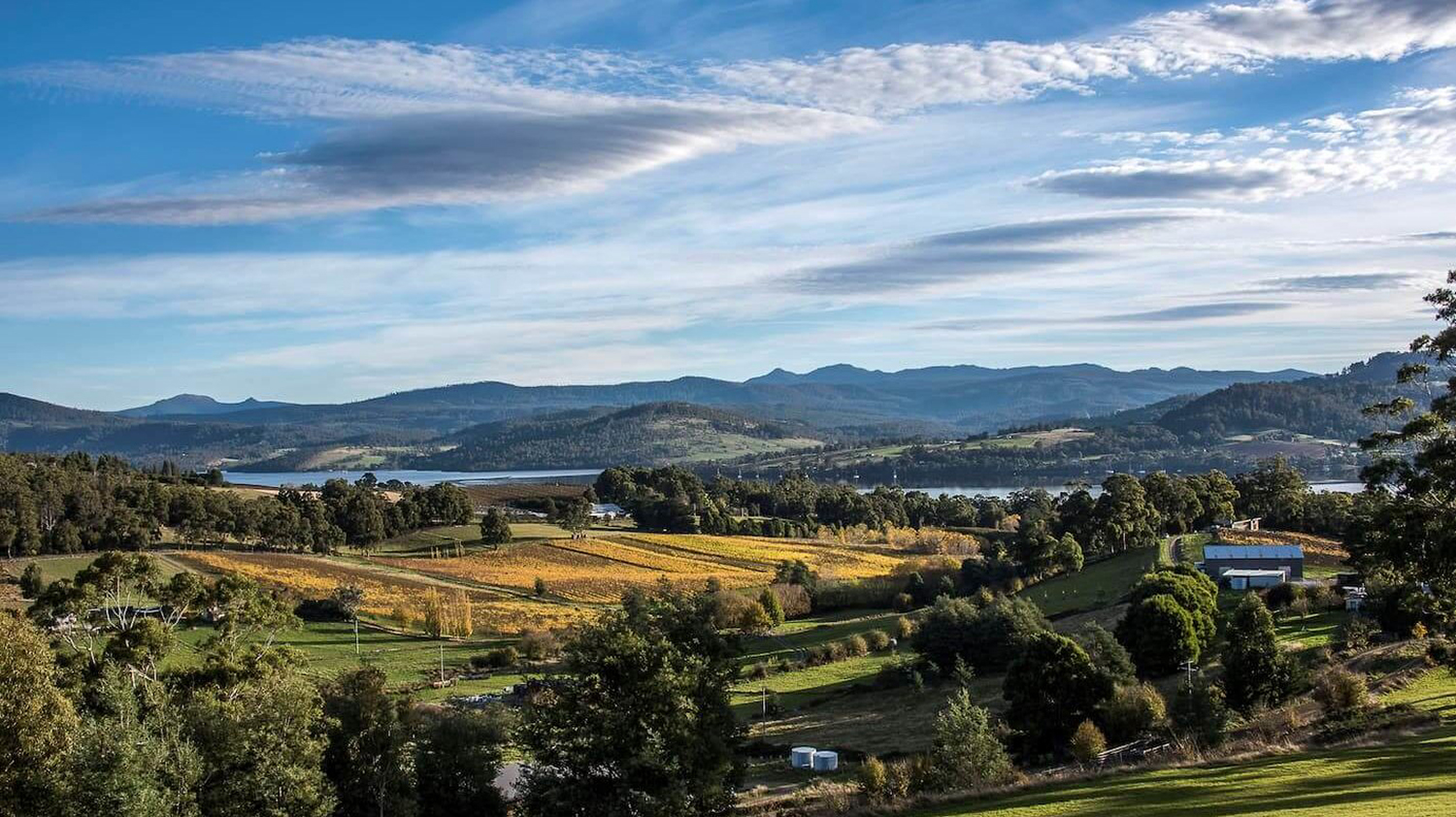
A view across Huon Valley, south west of Hobart.
In the afternoon we will return to the edge of the city. Mount Wellington provides a dramatic backdrop to the city of Hobart. We gain an insight into the Tasmanian alpine environment followed by walks through montane dry sclerophyll forest mid slopes on the peak. The trip to Mt Wellington may need to be cancelled at short notice due to cloud cover or snow or ice. In the event of that, the alternative will be a trip to The Royal Tasmanian Botanical Gardens. The second oldest botanical garden in Australia, it was established in 1818. It holds a number of significant trees including King’s Lomatia (Lomatia tasmanica). Sterile, there are only about 500 plants in the wild, the clonal colony thought to be 43,000 to 135,000 years old!
Overnight: Old Woolstore Hotel, Hobart
Styx Valley Walking Trails
We will spend the day exploring various easy walking trails in the Styx Valley. These are some of the lushest rainforests in Tasmania and the Styx Valley has many of the island’s tallest trees, indeed these are some of the tallest trees in the world.
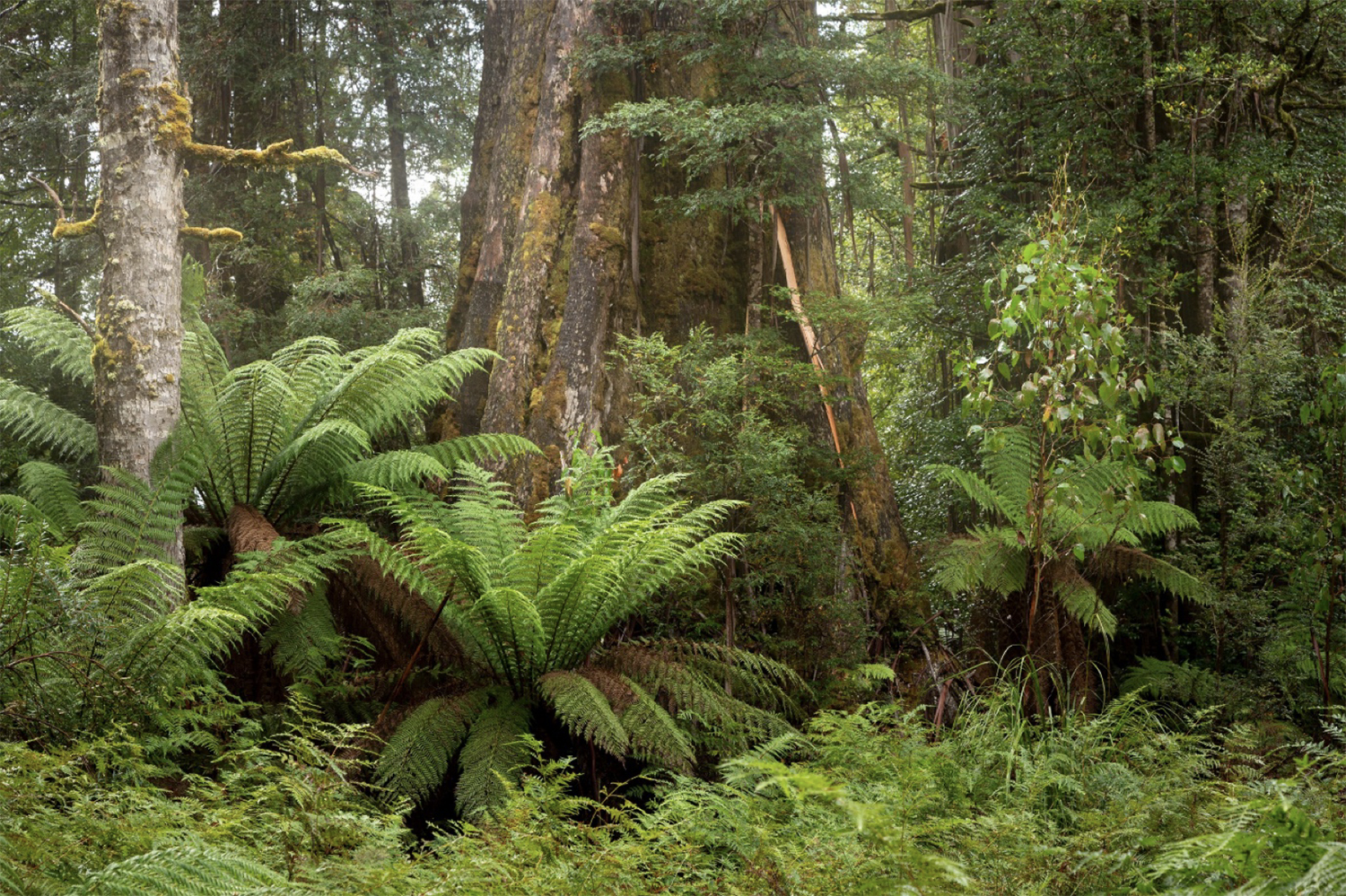
Styx Tall Trees Conservation Area.
Gandalf’s Staff is an 84 m giant Eucalyptus regnans found in the Tolkien Grove. The references to Tolkien are legion here!

Gandalf's staff (84m Eucalyptus regnans), Styx Tall Trees Conservation Area.
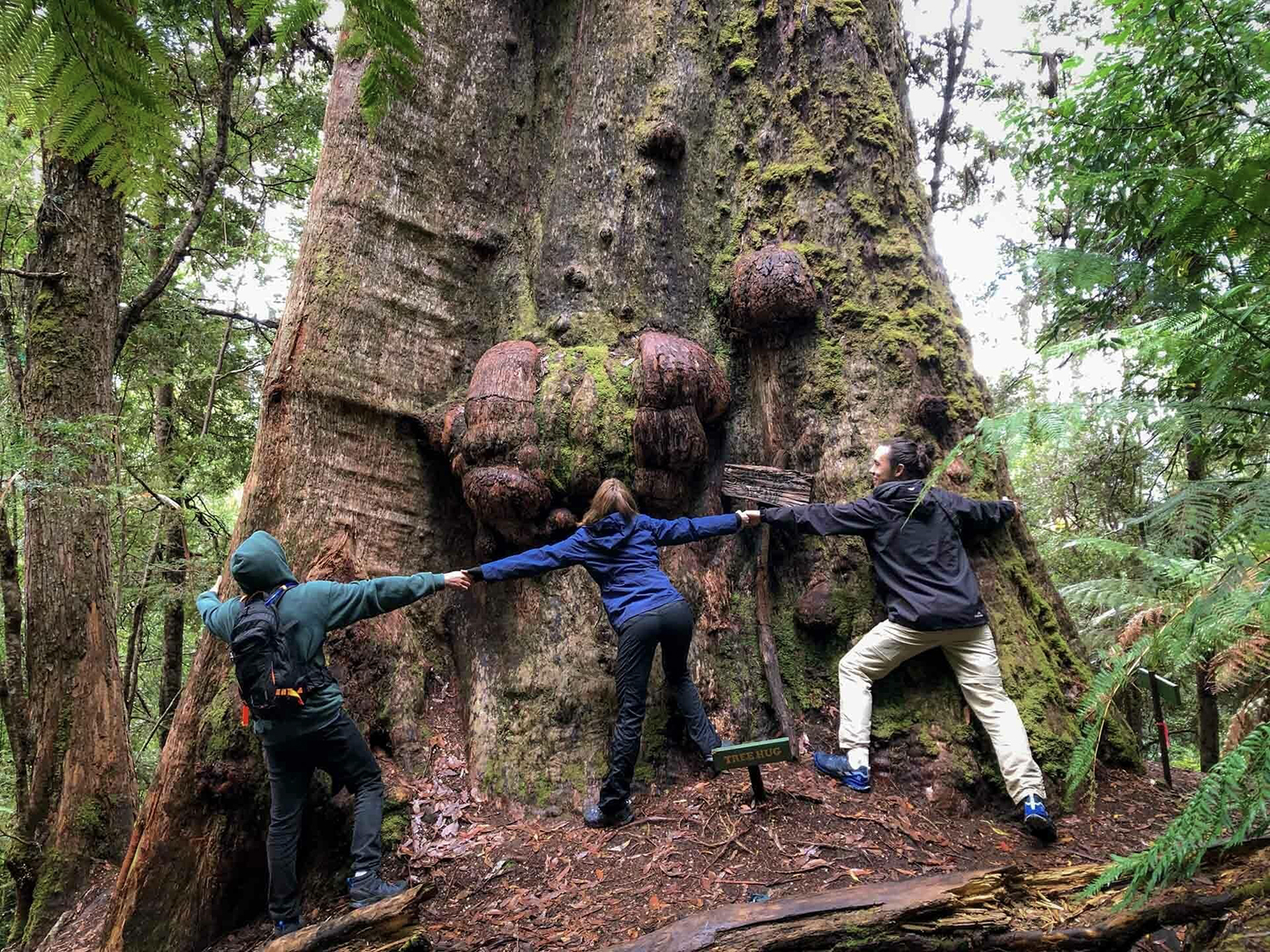
Tree hug at Styx Tall Trees Conservation Area.
Overnight: Old Woolstore Hotel, Hobart
Departure from Hobart
Domestic flight to Sydney, NSW
For many, the tour will finish in Hobart. For fitter members, a tour of Sydney sandstone environments will complete the tours on offer.
The Sydney environs is characterised by a rugged landscape with sandstone ridges and valleys with spectacular vistas. The unique landscape creates diverse environments and huge botanic variety with many endemic species. It is also of historical interest as one of the stopping points (Botany Bay) of James Cook’s first voyage in 1770 where Joseph Banks and Daniel Solander collected in eight days some 165 vascular plants new to the scientific world.
This tour will explore representative areas in this region with hikes in preserved vegetation along Sydney Harbour, the Blue Mountains and the Southern Highlands combined with visits to the three facilities that make up the Royal Botanic Gardens, Sydney.
NB. This tour will involve hiking into some of the National Parks of NSW around Sydney and most activities require a level of fitness. Participants should be able to comfortably walk on uneven ground for over 10 km (6 miles).
Flight to Sydney. Afternoon in Sydney Botanic Garden. Evening at the Sydney Opera House
After a morning flight to Sydney there will be a visit to the Sydney Botanic Garden before an evening at Opera!
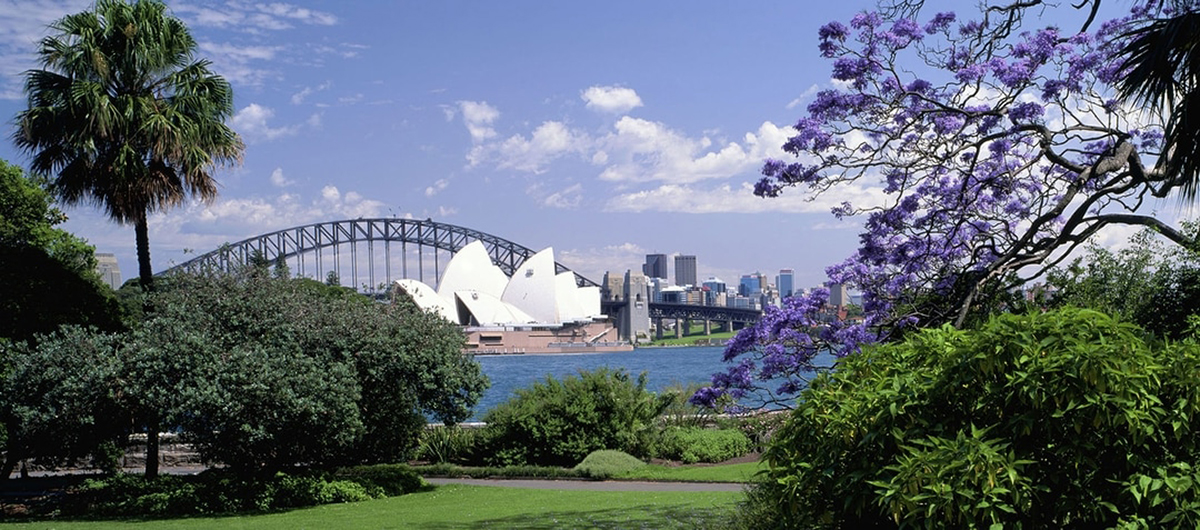
Royal Botanic Garden Sydney.
Established in 1816, the Royal Botanic Garden Sydney is Australia’s oldest botanic garden and oldest living scientific institution. Situated across 30 hectares on the edge of the iconic Sydney Harbour, it is home to an outstanding collection of more than 27,000 plants from around the world. Encompassing 15 themed gardens, including an Australian Rainforest Garden, a Tropical Garden and one of the largest green walls in the southern hemisphere inside The Calyx – it is a living testament to the beauty of nature.
IDS member Stuart Read will take us round early plantings of hoop pines (Araucaria cunninghamii), red cedar (Toona ciliata) and weeping lilly pillys (Syzygium floribundum). The gardens have a fine collection of Araucariaceae especially Agathis sps and the rare Calycanthus relative from north Queensland Idiospermum australiense should be flowering. Do not eat the seed, it has an interesting rediscovery story! The gardens have a nice backdrop with the harbour and Sydney Opera House next door, and we will have the chance to visit in the evening.
Overnight: Hyatt Regency, Sydney
Spit to Manly Walk. Kirribilli
We will walk some (or maybe some will walk all) of the harbourside trail to one of Sydney’s most beloved beach suburbs – Manly. The 10 km Manly Scenic Walkway begins at the Spit Bridge and passes sandy beaches, ancient Aboriginal sites (rock carvings…) and incredible lookouts, before arriving at the cosmopolitan restaurants, cafés and bars in Manly. As well as the fine city views there’s some interesting dry sclerophyll forest with some fine specimens of the Sydney Red Gum (Angophora costata) as well as coastal sandstone plateau heathland. Closer to Manly along North Steyne we will find plenty of Araucaria heterophylla planted.
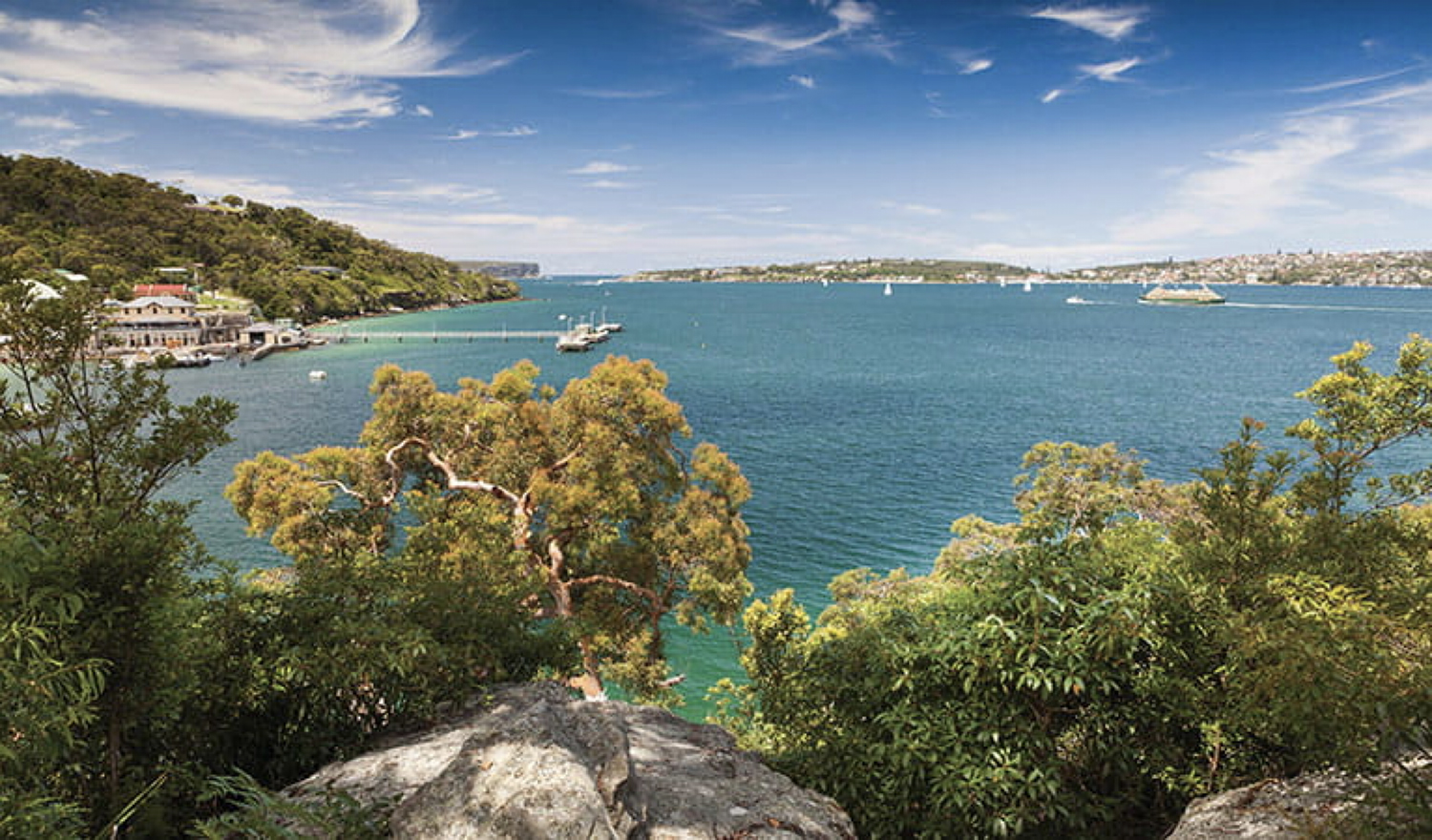
Scenic walkway, Manly.
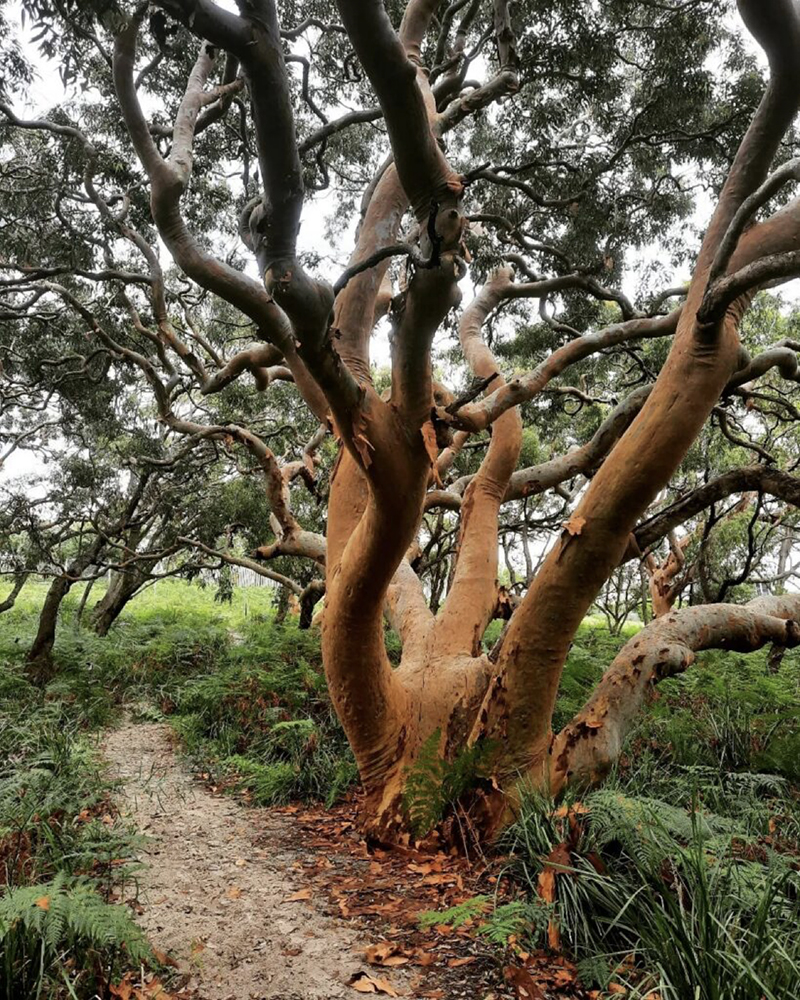
Angophora costata
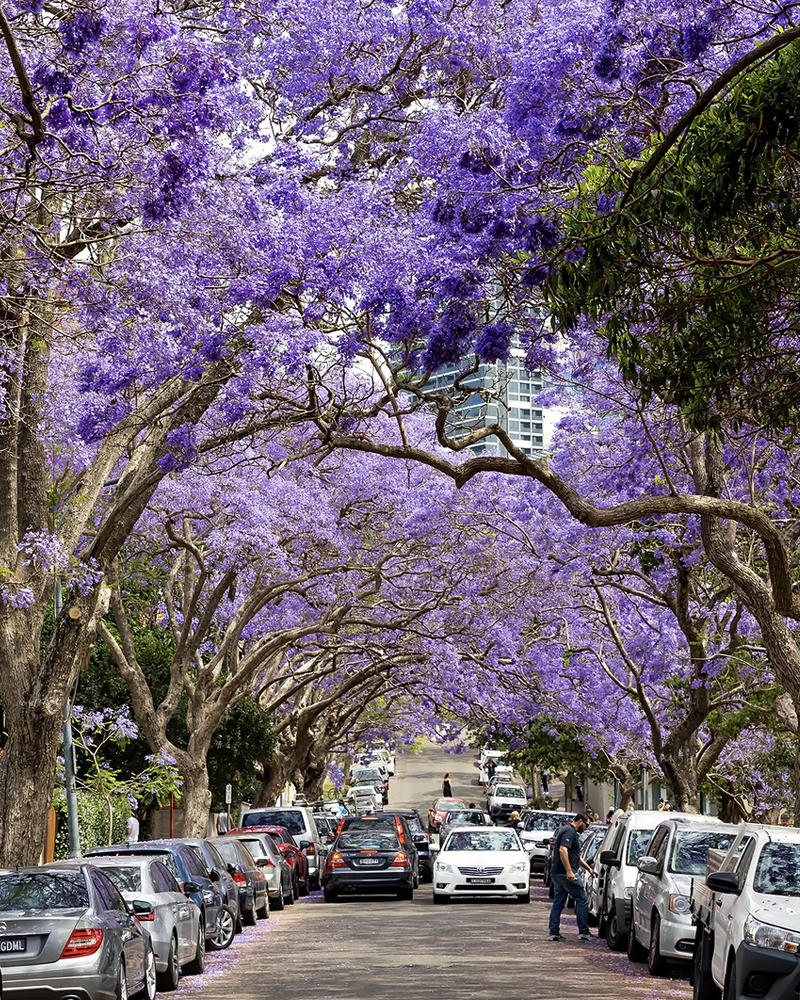
Jacarandas, McDougall Street. © AussiePomm - Flickr
If the Jacarandas are mass-flowering (usually later in October) on McDougall Street then we will take a walk across the bridge to Kirribilli to see them in the afternoon.
The ferry trip back from Manly provides more views of the harbour and city.
Overnight: Hyatt Regency, Sydney
Blue Mountains Botanic Garden, Katoomba Echo Point
Situated in the UNESCO World Heritage Blue Mountains at 1,000 m above sea level, the 28 hectare Blue Mountains Botanic Garden specialises in a number of cool-climate plants that are unsuitable for Sydney. It has good collections of Gondwana species including a number of New Caledonian Araucaria and Proteaceae, and Podocarpaceae. There are also the first Wollemia nobilis planted in cultivation following their discovery in the nearby Wollemi National Park. They are now sizeable trees. There are also good collections of camellias, maples and other temperate trees including a regularly flowering Emmenopterys henryi.
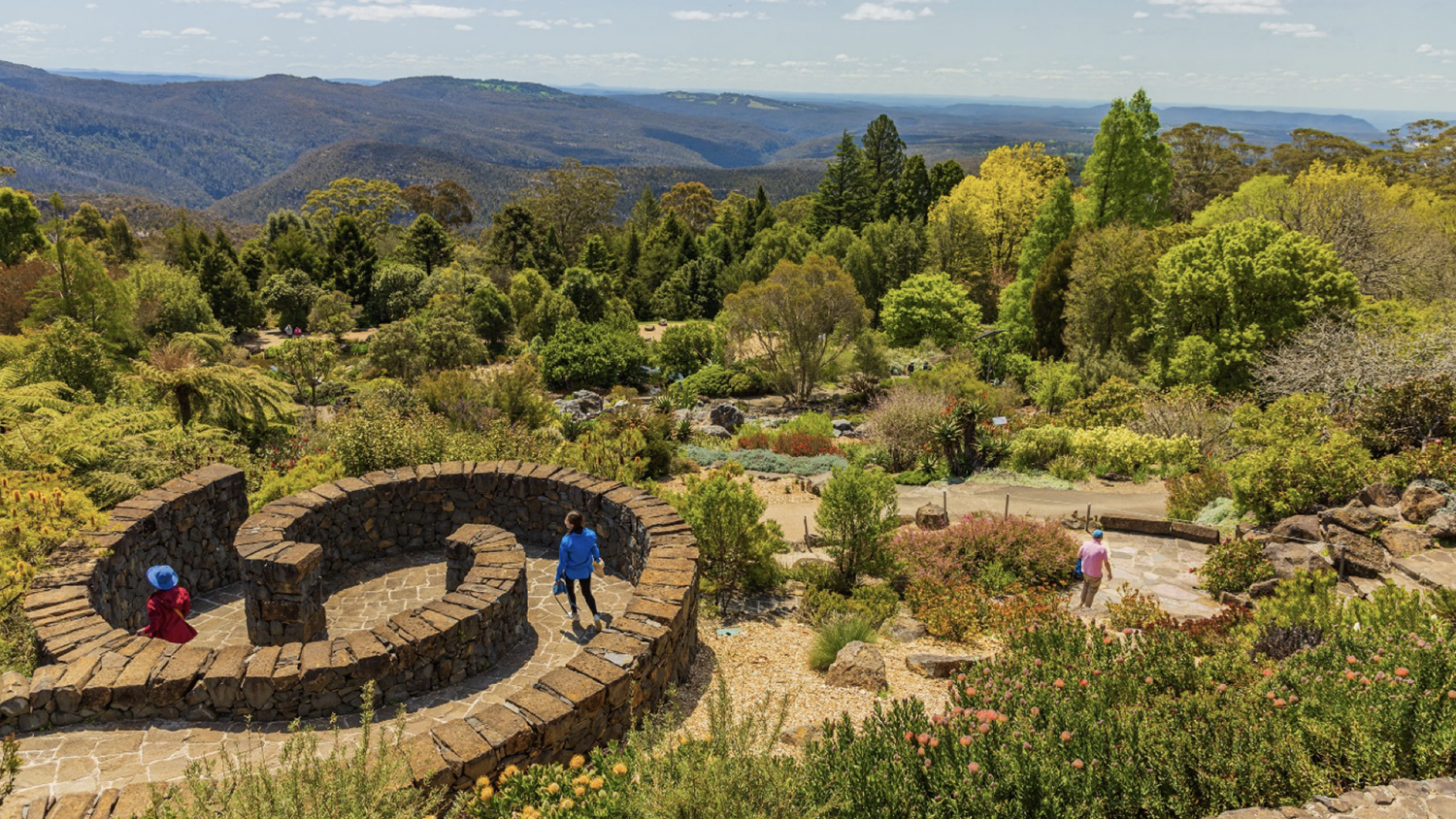
Blue Mountains Botanical Garden.
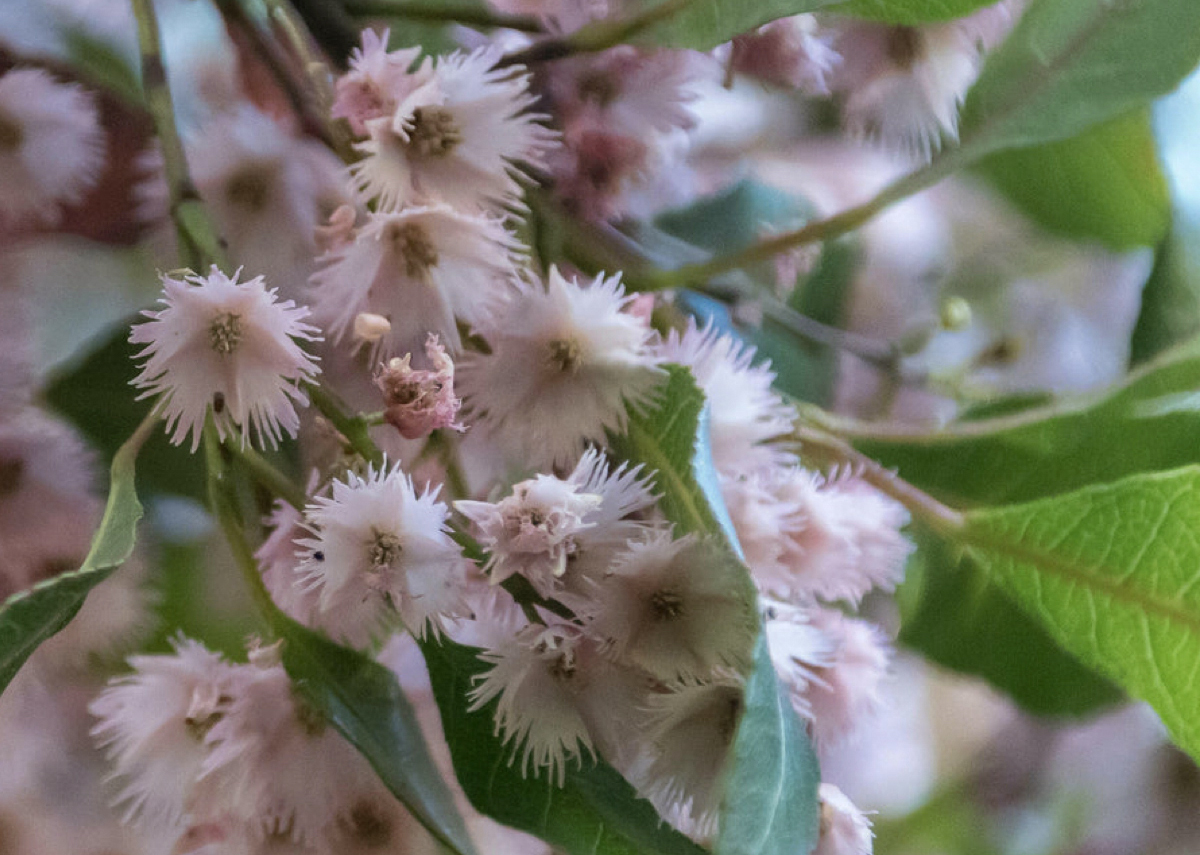
Elaeocarpus reticulatus
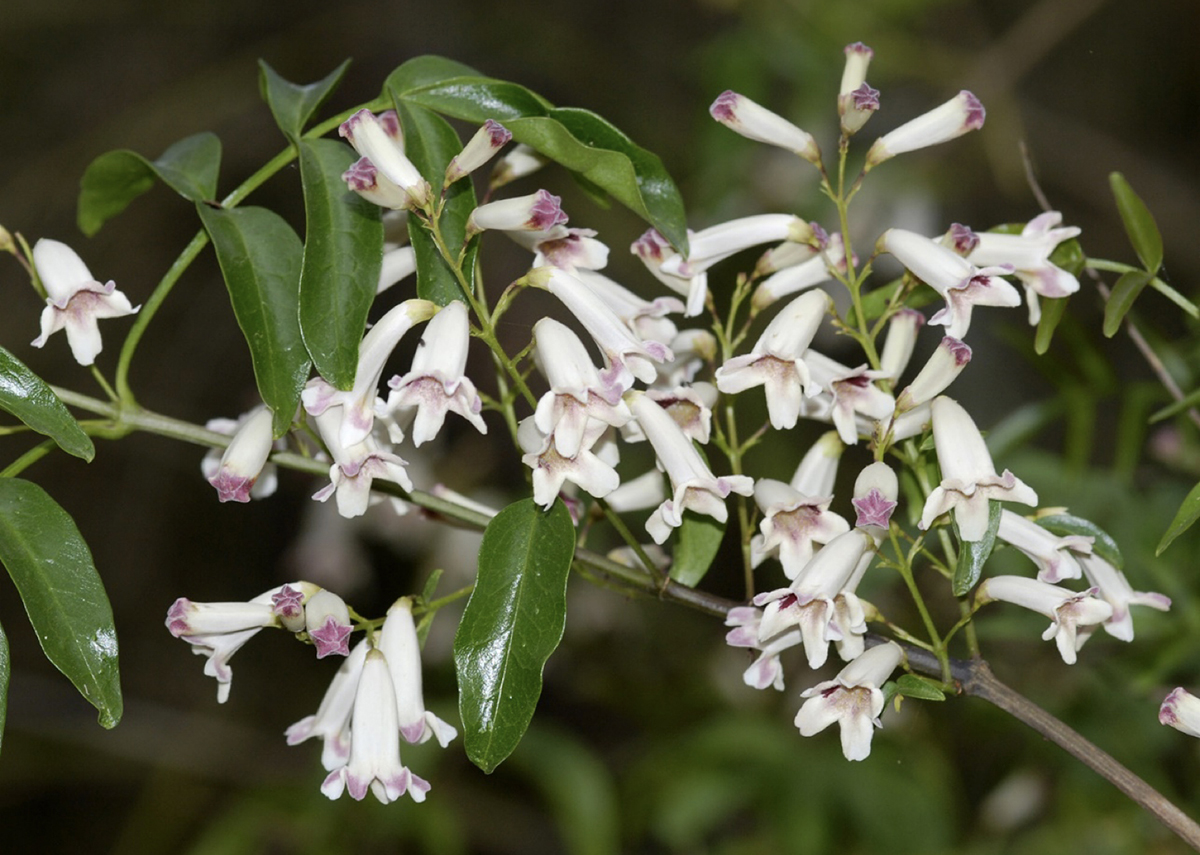
Pandorea pandorana
Lunch will be provided at the gardens allowing further exploration after before heading to Katoomba. Just down the street from our hotel are extensive views of the Jamison Valley, also part of the Blue Mountains National Park. We should arrive in time for a walk to nearby Echo Point and views over the Jamison Valley.
Overnight: Carrington Hotel, Katoomba
Hike to see Pherosphaera fitzgeraldii, Mount Annan Botanical Garden
We will start the day in the company of Marion Whitehead and Mitch Carle who will, after a short drive, take us on a hike down into the Jamison Valley. The hike though not long is steep and at time slippery, so care needed. The valley floor is cool temperate rainforest with the Pherosphaera fitzgeraldii confined to a waterfall. There are only about 450 specimens in half a dozen nearby locations of this endangered species.
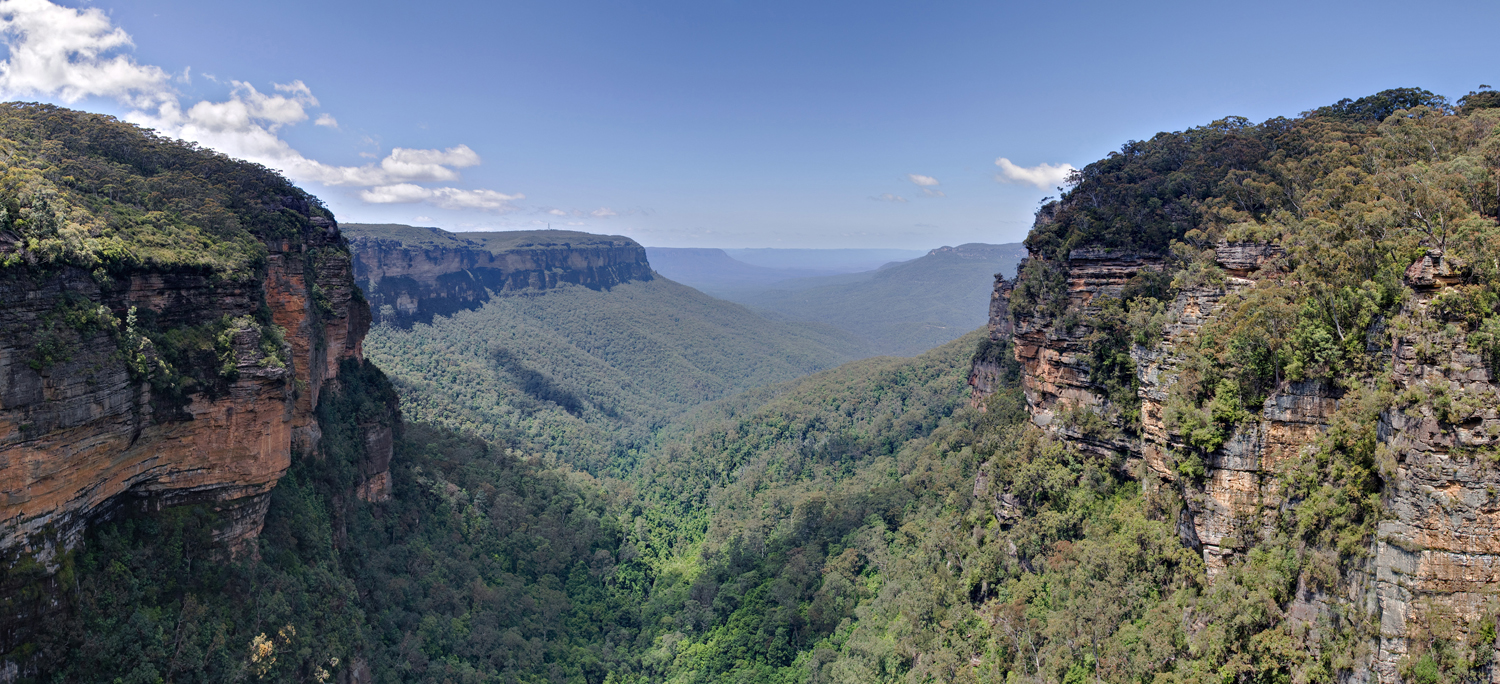
Jamison Valley, Blue Mountains, Katoomba © Diliff, Wikimedia CC BY SA 3.0
In the afternoon we will visit the Australian Botanic Garden Mount Annan, the largest botanic garden in Australia, covering 416 hectares between Camden and Campbelltown.
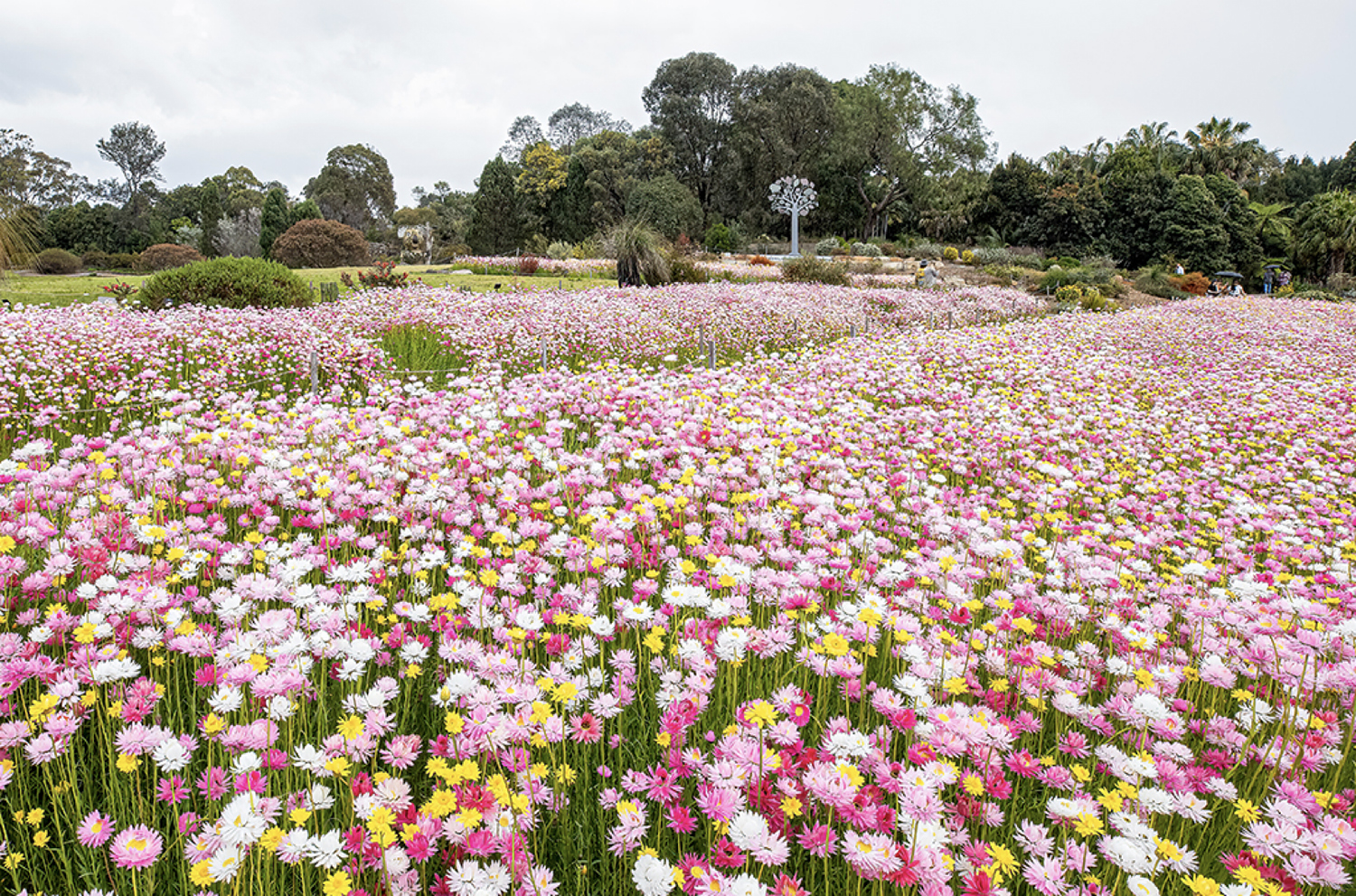
Australian Botanic Garden Mount Annan.
With more than 4,000 species of native plants representing all of Australia's major vegetation types, the garden is a living collection showcasing the enormous diversity of our country’s unique flora. The garden is also home to the award-winning Australian PlantBank, which houses the New South Wales Seedbank, and the collection of over one million plant specimens at the National Herbarium of New South Wales.
Overnight: Berida Hotel, Bowral
Hike in Nattai National Park
The Nattai National Park is a southeastern extension of the Blue Mountains World Heritage Area. In spring the bush is alive with colour with a huge variety of typical dry sclerophyll native vegetation in flower. We will hike in the national park along a sandstone ridge reaching a viewpoint several hundred metres above the Nattai River.
Overnight: Berida Hotel, Bowral
Carrington Falls and Barren Grounds
A ninety-metre plunge waterfall, on the Kangaroo river, is spectacular particularly after rain. The area is the second wettest in New South Wales. The bushland is a mixture of cool temperate rainforest in the valleys and sclerophyll forests on the more exposed areas. In October, the native waratah, Telopea speciosissima should be in flower around the waterfall.
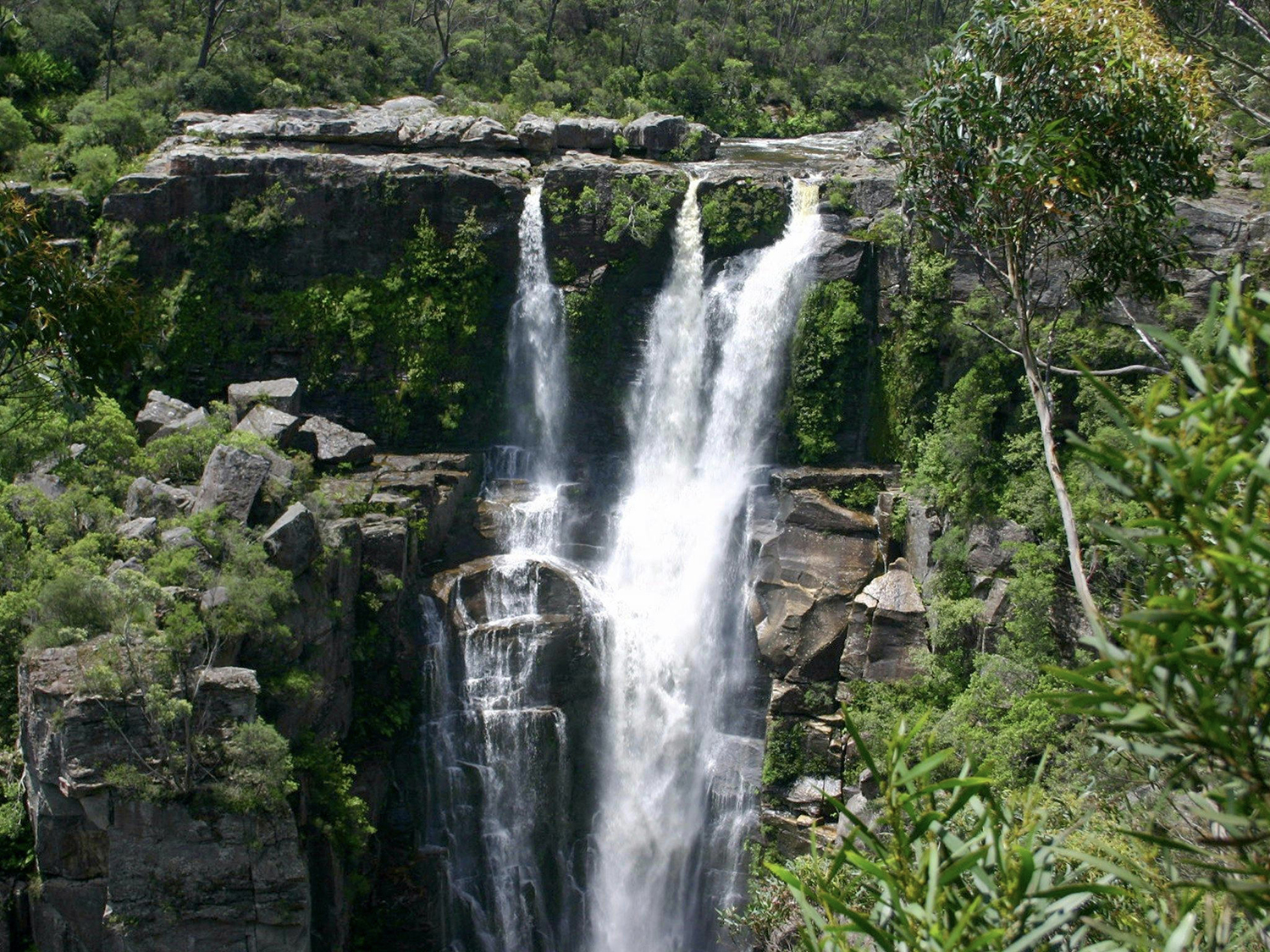
Carrington Falls.
From there we travel to Barren Grounds Nature Reserve, and its hanging swamp. Generally, at least 600 m above sea level, hanging swamps are areas that occur over sandstone with groundwater seeping through the permeable rock. The characteristic vegetation is a mixture of Proteaceae, Ericaceae, Myrtaceae, Boronea species and sedges. Barren Grounds is also an important bird sanctuary for several rare species such as the ground parrot.
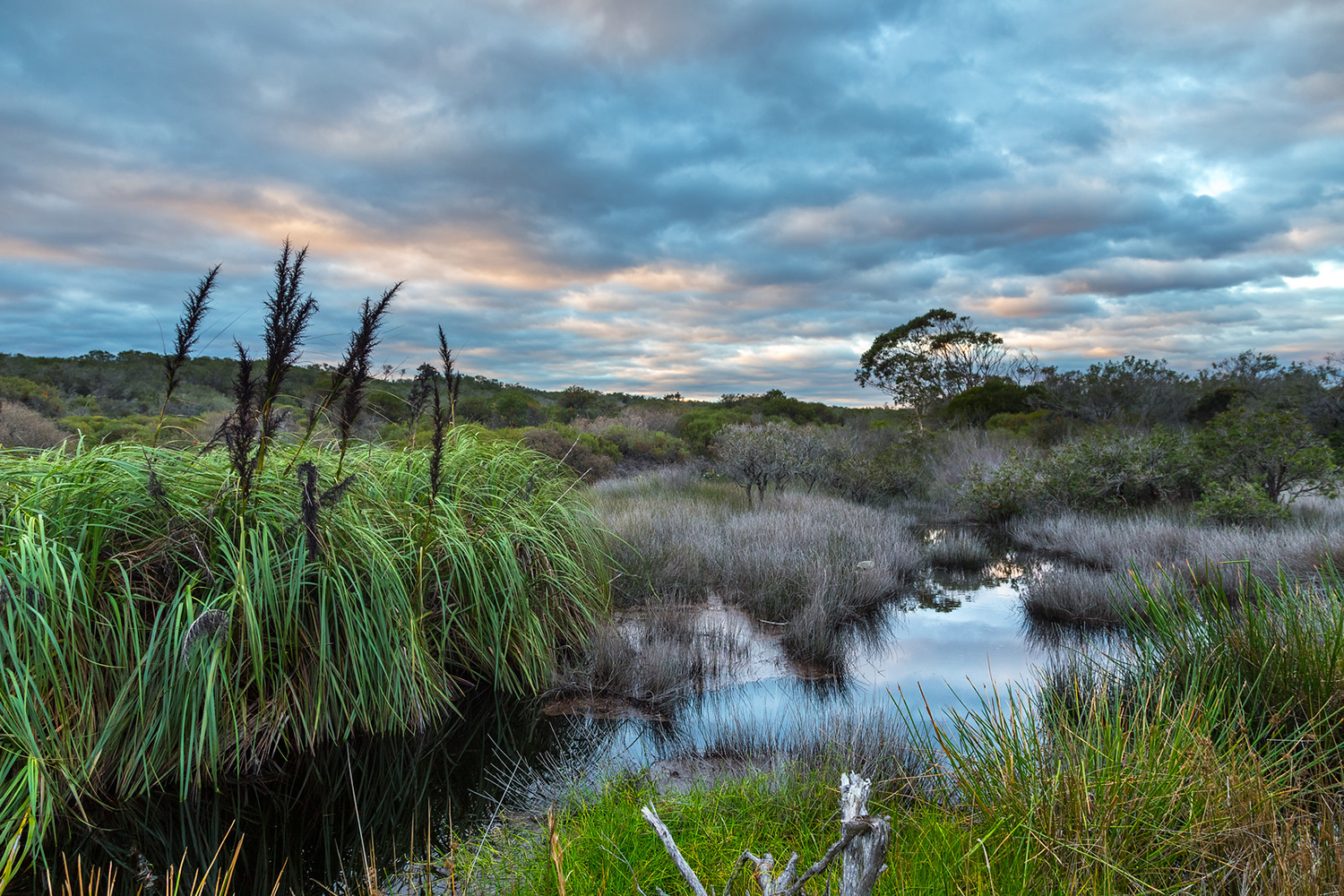
Hanging swamp. © mraadsen/flickr
In the evening we will return to Coombe Wood, Mittagong, home of Simon Grant for our Farewell Dinner/Barbecue.
Overnight: Berida Hotel, Bowral
End of post tour and departures
Ian Green
Ian is the co-founder of Greentours and since graduating in Ecology, has led over 180 tours in various fields of natural history, and has organised many, many more. This has taken him to countries all over the world and has fine-tuned his knowledge of all plants and fauna. Ian has led nine IDS tours.
| Location | South East Australia & Tasmania |
| Main Tour dates, arrival | Tuesday 14 September 2027 |
| Main Tour dates, departure | Tuesday 28 September 2027 |
| Post tour, optional | Tuesday 28 September to Monday 4 October 2027 |
| Tour organiser | Greentours |
| Tour coordinator | Marie-Christine de Laubarède |
| Assisted by | Simon Grant, IDS VP for Australia |
| Availability | Tour restricted to 25 participants |
| Accessibility | Main tour: Level 2 to 3 (easy with mostly short walks of less than 2 km but some moderate walks up to 4km, occasional uneven ground). Post-tour: Level 3 to 4 (a mix of easy and moderate walks of up to 4 km, with some up to 10km, including some lengthy steep sections and occasional uneven ground). |
| Tour cost | Main tour: Post-tour: A deposit of £800 per person will be payable by 1 February 2027. |
| What's included? | Overnight boat trip, internal domestic flight from Tasmania to Sydney, all meals, accommodation, transport, guides, entry fees, tips and wine |
| What's not included? | International flights, additional alcoholic drinks, minibars, laundry, and travel insurance. |